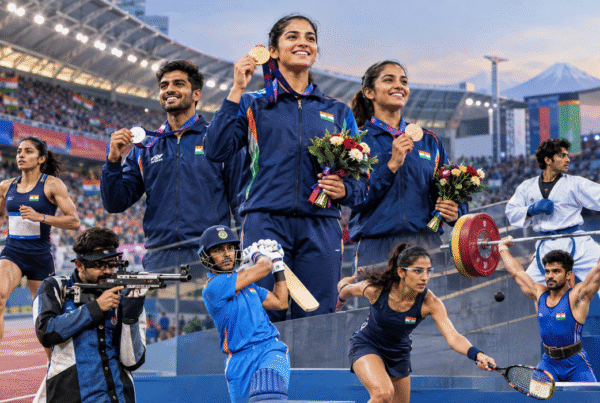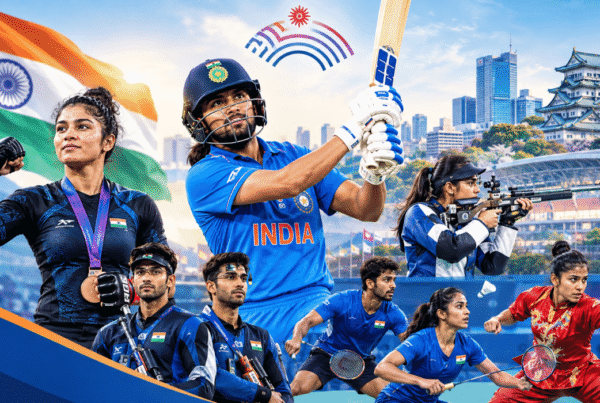
India delivered a remarkable performance at the 2026 Asian Para Games in Aichi-Nagoya, Japan, finishing the continental competition with a record 114 medals. The Indian contingent secured 30 gold, 35 silver and 49 bronze medals to finish fourth in the overall standings, marking a major milestone in the country’s para-sports journey.
Track and field events, officially known as para-athletics, played the biggest role in India’s success. The discipline contributed 65 medals, including 22 gold, 19 silver and 24 bronze, accounting for more than half of the country’s total medal tally. Athletes across sprinting, middle-distance running, jumping and throwing events delivered impressive results, setting records and securing multiple podium finishes.
India’s performance demonstrated the growing strength of its para-athletics programme and the determination of athletes competing across different impairment classifications.
India Achieves Its Best-Ever Asian Para Games Result
The 2026 edition proved particularly significant for India as the country surpassed its previous best medal performance at the Asian Para Games. Indian athletes had achieved a strong result at the 2023 Hangzhou edition, but the latest campaign took the country’s total to a new high of 114 medals.
The achievement was even more notable because India sent a smaller contingent to Aichi-Nagoya. According to reports, 168 Indian para-athletes competed at the 2026 Games, compared with more than 300 participants at the previous edition.
Despite the smaller team, Indian athletes performed consistently across several sports. Para-athletics emerged as the leading contributor, while para-badminton, para-swimming, para-archery and para-shooting also helped India build its overall medal tally.
The results reflected improvements in competitive preparation, athlete development and India’s growing presence in international para-sports.
Nishad Kumar Leads India’s Gold Medal Charge
Nishad Kumar was among India’s standout performers in para-athletics, winning two gold medals in Aichi-Nagoya.
He opened his campaign with victory in the men’s long jump T47 event, recording a distance of 7.11 metres. He followed that performance with another gold in the men’s high jump T47 category, clearing 2.04 metres to establish a new Asian Para Games record.
His double-gold achievement highlighted his versatility across two demanding field events. Nishad, who has previously won medals at the Paralympic Games, continued to demonstrate his ability to perform consistently at major international competitions.
His success also illustrated the importance of specialised training, technical development and experience in helping Indian para-athletes compete against Asia’s leading performers.
Simran Sharma Sets Records in Sprinting
Indian sprinter Simran Sharma delivered another memorable campaign, winning gold medals in both the women’s 100-metre and 200-metre T12 events.
Simran won the 200-metre final in 24.80 seconds before securing victory in the 100 metres with a time of 12.02 seconds. Both performances established new Asian Para Games records.
Competing in the T12 classification for athletes with visual impairments, Simran demonstrated excellent speed and consistency across both distances. Her double victory was particularly important for India’s track events, adding two gold medals to the country’s growing tally.
Her performance underlined the strength of India’s sprinting contingent and highlighted the achievements of athletes who continue to challenge established standards in para-athletics.
Sumit Antil Leads a Dominant Javelin Throw Performance
Javelin throwing was another major source of success for India at the 2026 Asian Para Games.
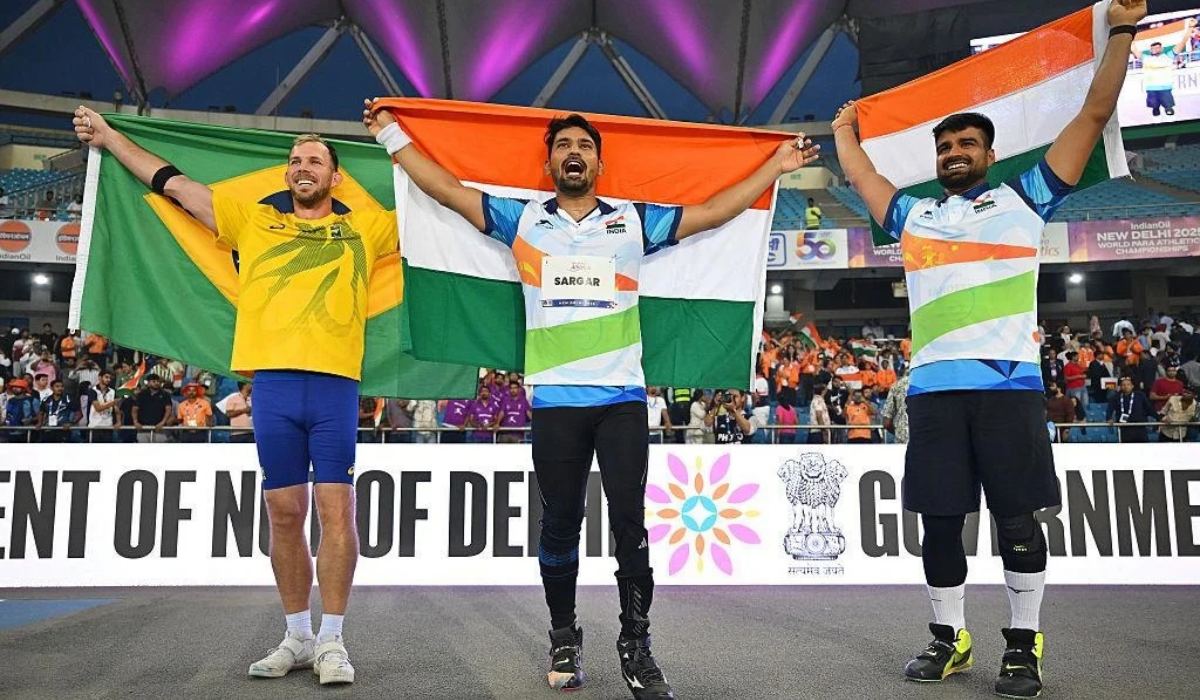
Paralympic champion Sumit Antil won gold in the men’s combined F42-F44 and F61-F64 javelin event with a throw of 72.46 metres. His performance helped India secure a dominant result in the competition.
Mahendra Gurjar claimed silver with a throw of 59.03 metres, while Sandip Sanjay Sargar secured bronze with an effort of 64.48 metres. The three Indian athletes occupied all three podium positions, producing one of the most notable results of the country’s campaign.
The podium sweep demonstrated India’s depth in javelin throwing. Rather than depending on a single medal contender, the country had multiple athletes capable of competing for top honours.
Pranav Soorma also made a significant contribution in the throwing events. He won gold in the men’s club throw F51 with a Games-record performance of 32.87 metres. He had also secured gold in the men’s discus throw F51, producing an Asian record of 11.66 metres.
These results reinforced India’s strength in technically demanding field events.
World Records and Breakthrough Performances
Beyond established champions, several Indian athletes produced performances that brought additional attention to the country’s para-athletics programme.
Haney won gold in the men’s javelin F37/38 event with a throw of 60.49 metres, setting a world record in the T37 category, according to competition reports.
Sandeep also delivered an exceptional performance in the men’s 400-metre T64 event, winning gold in 52.28 seconds and setting a world record in the T44 category. He additionally secured bronze in the men’s 100-metre T44 event.
These results demonstrated that India’s success extended beyond athletes with established international reputations. Emerging performers also made their mark, contributing to the country’s growing competitiveness across different classifications.
World-record performances are especially significant in para-athletics because they reflect improvements in technique, physical preparation and competitive execution. They also provide important benchmarks for athletes preparing for future international championships.
Deepthi Jeevanji and Dilip Gavit Strengthen India’s Track Events
Indian athletes also delivered strong results in middle-distance and sprint competitions.
Deepthi Jeevanji won gold in the women’s 400-metre T20 event, completing the race in 56.36 seconds and setting a Games record. Her performance added another major achievement to India’s campaign on the track.
Dilip Gavit also enjoyed an outstanding competition. He won gold in the men’s 100-metre T47 event in 10.69 seconds and followed it with victory in the 400-metre T47 final in 48.27 seconds.
His second victory included another encouraging result for India, as compatriot Bhavikkumar Bharwad finished second in the 400-metre event with a time of 49.31 seconds.
These performances showed that India’s medal-winning strength was spread across multiple sprint distances and classifications, rather than concentrated in only a few events.
Women’s Para-Athletics Makes a Strong Contribution
Indian women athletes played an important role in the country’s medal success.
Simran Sharma’s two gold medals were among the most prominent results, while Deepthi Jeevanji added another gold through her record-setting 400-metre performance.
Preeti Pal also contributed two silver medals in the women’s 100-metre and 200-metre T35 events. Her results added valuable points to India’s overall performance and highlighted the contribution of women competing in track events.
The performances of these athletes demonstrated the importance of supporting women’s participation in para-sports through access to coaching, competition opportunities and specialised training facilities.
Their achievements can also encourage more young athletes with disabilities to explore competitive sport and pursue opportunities at national and international levels.
Para-Athletics Outperforms Other Disciplines
Although India enjoyed success across several sports, para-athletics remained the biggest contributor to the final medal tally.
The discipline’s 65 medals included 22 gold, 19 silver and 24 bronze. Para-badminton followed with 16 medals, while para-swimming contributed 11.
The distribution highlights the central role of track and field in India’s campaign. Running, jumping and throwing events collectively provided a strong foundation for the country’s fourth-place finish.
At the same time, contributions from other sports showed that India’s para-sports development is becoming more diversified. Success in archery, shooting, badminton, swimming and table tennis demonstrated that Indian athletes are increasingly competitive across a wider range of disciplines.
What India’s Performance Means for the Future of Para-Sports
India’s record medal haul at Aichi-Nagoya represents more than a successful tournament. It offers an indication of the progress being made in identifying, training and supporting athletes with disabilities.
The performances of Nishad Kumar, Simran Sharma, Sumit Antil, Pranav Soorma and other medal winners provide examples of what athletes can achieve through sustained preparation and access to competitive opportunities.
However, maintaining this progress will require continued investment in coaching, accessible sporting facilities, sports science, rehabilitation support and international competition experience. Developing a wider pool of athletes will also be essential to ensure that India’s results remain consistent across future championships.
Grassroots participation is another important consideration. Providing opportunities for young athletes with disabilities to train and compete can help identify future talent and make sports more accessible to communities across the country.
The 2026 results also create a valuable foundation for India’s preparations for upcoming international para-sports competitions, including future Asian Para Games and Paralympic events.
Conclusion
India’s performance at the 2026 Asian Para Games in Aichi-Nagoya was a landmark achievement, with 114 medals and a fourth-place finish in the overall standings. Para-athletics led the campaign with 65 medals, supported by record-breaking performances, double-gold victories and podium sweeps.
From Nishad Kumar’s success in jumping events to Simran Sharma’s sprint double and Sumit Antil’s javelin triumph, Indian athletes delivered results that demonstrated the depth and potential of the country’s para-sports programme.
The achievement reflects the dedication of the athletes and the importance of sustained investment in training and competitive opportunities. As India looks towards future international events, the challenge will be to build on this momentum, develop emerging talent and continue expanding opportunities for athletes with disabilities.
The Aichi-Nagoya campaign has established a new benchmark for Indian para-sports and provided a strong platform for future success.