India’s Nuclear Posture Enters a New Phase
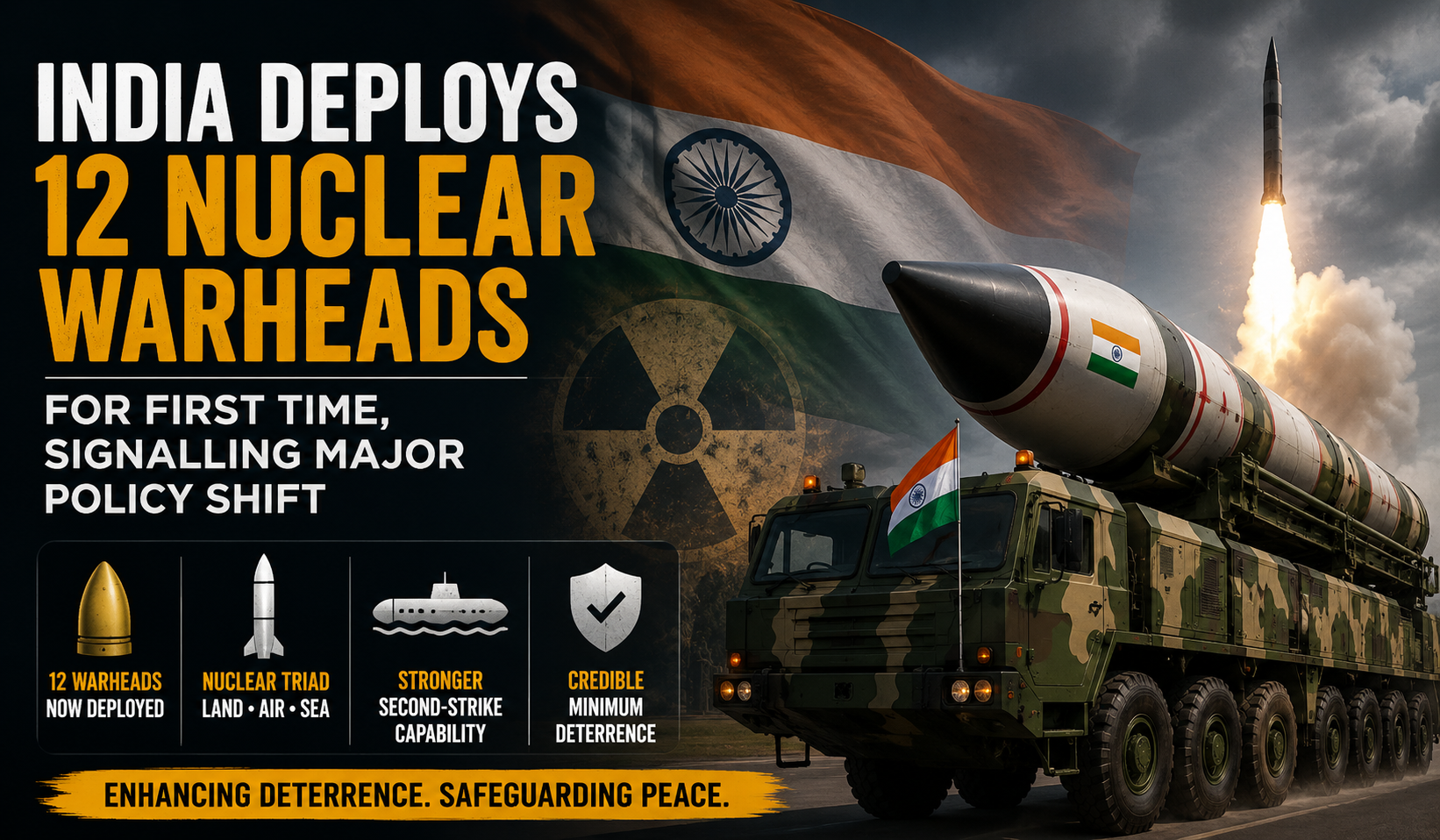
India has reportedly deployed 12 nuclear warheads for the first time, marking what defense analysts describe as a significant evolution in the country’s nuclear strategy. The development, highlighted in the latest assessment by the Stockholm International Peace Research Institute (SIPRI), suggests that India may be transitioning from a posture centered on stored nuclear weapons to one that includes a limited number of operationally deployed warheads.
The report has attracted international attention because it potentially reflects a change in how India manages its nuclear deterrent amid an increasingly complex regional security environment.
While the Indian government has not officially confirmed the deployment, the assessment has sparked debate among strategic experts regarding the future of India’s nuclear doctrine and military preparedness.
What the SIPRI Report Says
According to SIPRI’s annual assessment of global nuclear arsenals, India is estimated to possess approximately 190 nuclear warheads as of early 2026, an increase from around 180 warheads the previous year.
More significantly, the report indicates that about 12 of these warheads may now be deployed with operational forces. This represents the first time SIPRI has categorized any portion of India’s nuclear stockpile as deployed rather than entirely stored in reserve.
The finding suggests that some nuclear weapons may now be available for rapid deployment if required, reducing response times during a crisis.
Understanding “Deployed” Nuclear Warheads
The term “deployed” does not necessarily mean that nuclear weapons are actively aimed at targets or prepared for immediate launch. Instead, it generally refers to warheads that are integrated with delivery systems or positioned in a manner that allows quicker operational use.
Historically, India has maintained a policy of separating nuclear warheads from their delivery platforms. This arrangement was intended to ensure political control over nuclear weapons and reduce the risk of accidental escalation.
If the SIPRI assessment is accurate, it could indicate that India has begun maintaining a small number of warheads in a more operational state while still adhering to strict command-and-control mechanisms.
Why the Shift Matters
The reported deployment is significant for several reasons.
1. Enhanced Deterrence
A limited number of deployed warheads can strengthen deterrence by demonstrating that a country possesses a credible and survivable nuclear response capability.
Potential adversaries may perceive a more operational force as a stronger deterrent against aggression.
2. Improved Second-Strike Capability
One of the cornerstones of India’s nuclear strategy is the ability to conduct a “second strike” — responding with nuclear force even after suffering a nuclear attack.
India has invested heavily in developing a nuclear triad consisting of:
- Land-based ballistic missiles
- Aircraft capable of delivering nuclear weapons
- Nuclear-powered ballistic missile submarines
Submarine-based nuclear forces are particularly important because they are difficult to detect and destroy, ensuring that a retaliatory capability remains intact.
3. Changing Regional Security Dynamics
India’s strategic environment has become increasingly complex over the past decade.
China continues to expand and modernize its nuclear arsenal, while Pakistan maintains a growing stockpile of nuclear weapons and delivery systems.
Military tensions along India’s northern borders and evolving regional security challenges have likely influenced defense planning and force modernization efforts.
No Change to India’s No First Use Policy
Despite speculation surrounding the report, there is currently no evidence that India has abandoned its long-standing No First Use (NFU) policy.
Under the NFU doctrine, India pledges not to use nuclear weapons first in a conflict but reserves the right to retaliate massively if attacked with nuclear weapons.
The reported deployment concerns operational readiness rather than a change in doctrine.
Indian officials have not announced any revision to the country’s nuclear policy, and analysts caution against interpreting the deployment as a shift toward a more aggressive nuclear stance.
India’s Growing Nuclear Arsenal
India’s estimated arsenal of 190 warheads remains significantly smaller than those of the world’s largest nuclear powers.
Approximate nuclear warhead inventories in 2026 include:
- Russia: Over 5,000 warheads
- United States: Over 5,000 warheads
- China: More than 600 warheads
- France: Around 290 warheads
- United Kingdom: Around 225 warheads
- India: About 190 warheads
- Pakistan: Around 170–180 warheads
India continues to follow a strategy of “credible minimum deterrence,” maintaining only the capabilities necessary to deter potential adversaries rather than pursuing numerical parity with larger nuclear powers.
Modernization of India’s Strategic Forces
Over the past several years, India has accelerated efforts to modernize its strategic forces.
Key developments include:
- Expansion of the Agni ballistic missile series
- Development of canisterized missile systems for faster launch readiness
- Strengthening of sea-based nuclear deterrence
- Enhanced command, control, and communication infrastructure
- Continued advancement of strategic surveillance and early-warning systems
These initiatives aim to improve survivability, reliability, and responsiveness without fundamentally altering India’s defensive nuclear doctrine.
Global Reactions
The reported deployment has been closely monitored by defense analysts and policymakers worldwide.
Supporters argue that the move reflects the realities of an increasingly challenging security environment and strengthens India’s ability to deter threats.
Critics, however, warn that greater operational readiness among nuclear powers can contribute to arms competition and increase tensions in regions where strategic rivalries already exist.
The development also underscores the broader trend of nuclear modernization taking place across multiple countries, including the United States, Russia, China, and other nuclear-armed states.
Looking Ahead
Whether the reported deployment represents a permanent shift or a limited operational adjustment remains unclear. Much will depend on future statements from Indian authorities and further assessments by independent defense organizations.
What is clear is that India’s nuclear posture is evolving alongside changes in regional and global security dynamics. The reported deployment of 12 nuclear warheads, if confirmed, would represent an important milestone in the country’s strategic deterrence framework while maintaining its broader commitment to credible minimum deterrence and responsible nuclear stewardship.
As geopolitical competition intensifies across Asia, India’s nuclear modernization efforts are likely to remain under close scrutiny from both allies and adversaries alike.