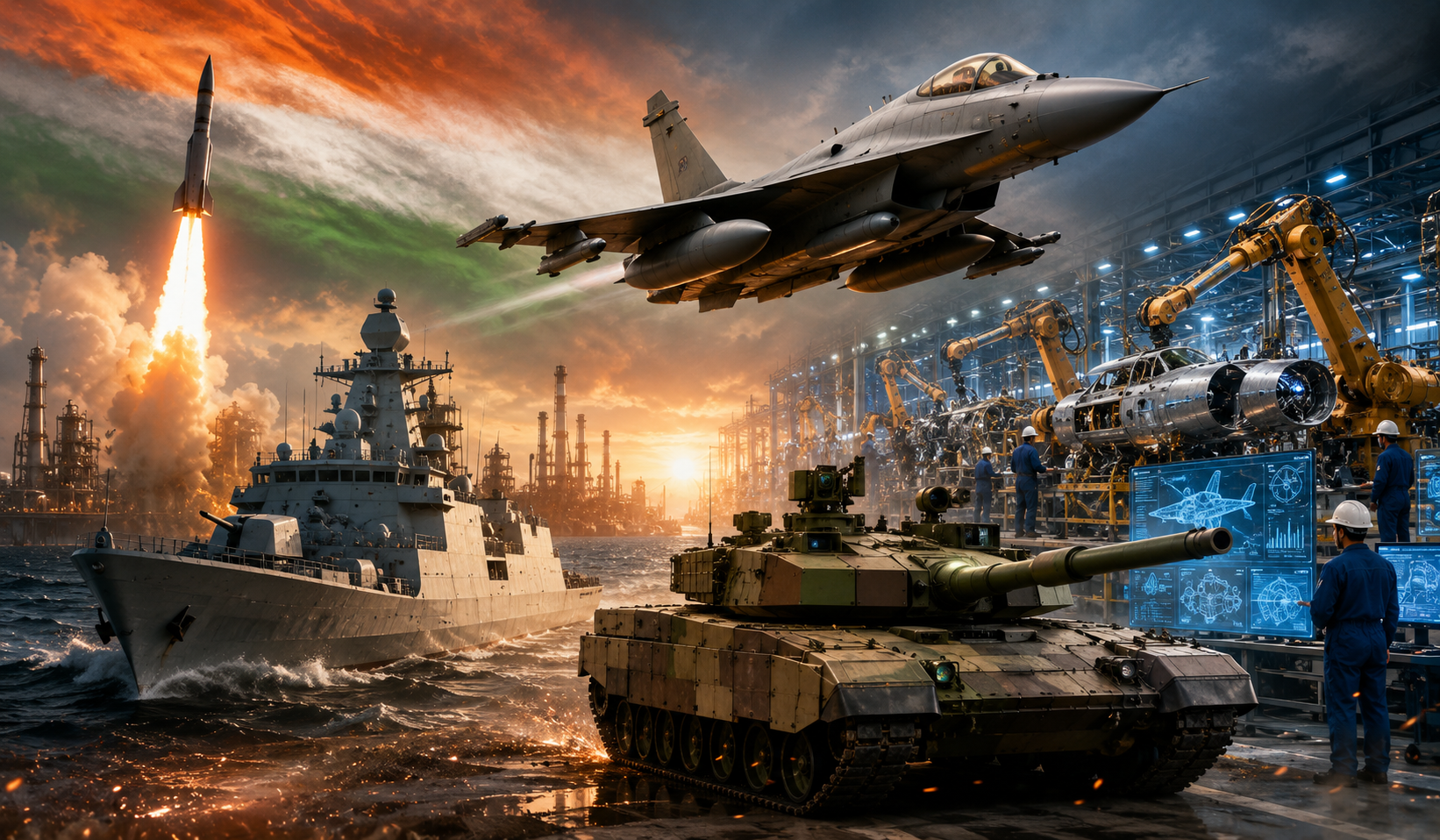
India has reached a historic milestone in its defence sector by recording its highest-ever annual defence production. The achievement reflects years of investment in domestic manufacturing, technological innovation, and policy reforms aimed at reducing dependence on foreign suppliers. As the country continues to modernize its armed forces and expand exports, this record highlights India’s growing capabilities in the global defence industry.
A New Milestone for Indian Defence Manufacturing
The latest figures show that India’s defence production has climbed to a record level, marking significant year-on-year growth. This progress is driven by the government’s emphasis on self-reliance, stronger collaboration between public and private industries, and increased investment in research and development.
The milestone demonstrates that India is not only strengthening its military preparedness but also building an industrial ecosystem capable of supporting long-term strategic goals.
The Push for Self-Reliance
One of the biggest drivers behind this achievement is the government’s focus on indigenous production. Over the past few years, several initiatives have encouraged domestic companies to design, manufacture, and supply advanced defence equipment within the country.
By promoting local production, India aims to:
- Reduce reliance on imported military hardware.
- Strengthen national security through domestic capabilities.
- Create skilled jobs in engineering and manufacturing.
- Encourage innovation among startups and established defence firms.
- Build a sustainable defence supply chain.
This strategy has also helped develop partnerships between government organizations, private manufacturers, and research institutions.
Growth Across Public and Private Sectors
India’s defence ecosystem now includes a mix of public-sector enterprises, private companies, and emerging technology firms. Traditional defence manufacturers continue to produce aircraft, warships, missiles, and armored vehicles, while private players are increasingly contributing components, electronics, drones, and advanced software systems.
The participation of private industry has accelerated production timelines and introduced new technologies that enhance operational efficiency.
Key Indigenous Defence Platforms
Several homegrown defence projects symbolize India’s manufacturing progress:
1. Tejas Light Combat Aircraft
The indigenously developed fighter aircraft showcases India’s aerospace engineering capabilities and has become a flagship example of domestic defence production.
2. BrahMos Missile System
Developed through international collaboration and manufactured extensively in India, the BrahMos missile remains one of the world’s fastest operational supersonic cruise missiles.
3. Akash Air Defence System
The Akash missile system provides air defence capabilities and has gained attention both domestically and internationally for its performance.
4. Indigenous Naval Platforms
India has significantly expanded domestic shipbuilding, producing aircraft carriers, destroyers, frigates, submarines, and patrol vessels in Indian shipyards.
These projects demonstrate how local manufacturing contributes directly to national defence readiness.
Rising Defence Exports
Another major factor behind the sector’s growth is the expansion of defence exports. Indian-made military equipment, surveillance systems, protective gear, and aerospace components are reaching customers across Asia, Africa, Europe, and other regions.
Growing exports help:
- Increase foreign exchange earnings.
- Improve economies of scale for manufacturers.
- Strengthen diplomatic and strategic partnerships.
- Enhance India’s reputation as a reliable defence supplier.
As more countries seek cost-effective and capable defence solutions, Indian manufacturers have an opportunity to expand their international footprint.
Economic Benefits Beyond Security
Record defence production delivers benefits that extend beyond military preparedness. The industry supports thousands of jobs across manufacturing, research, logistics, electronics, and information technology.
Small and medium enterprises also benefit by supplying specialized components to larger defence contractors. This creates opportunities for regional economic development and encourages investment in advanced manufacturing infrastructure.
Additionally, innovations developed for defence applications often find uses in civilian industries such as aviation, telecommunications, robotics, and disaster management.
Challenges That Remain
Despite impressive progress, India still faces several challenges:
- Dependence on imported technologies for certain high-end systems.
- Long development cycles for complex military platforms.
- Need for greater investment in cutting-edge research.
- Supply chain constraints for specialized components.
- Global competition from established defence exporters.
Addressing these issues will require continued policy support, collaboration with industry, and sustained funding for innovation.
The Road Ahead
India has set ambitious goals for expanding domestic manufacturing and increasing defence exports in the coming years. Investments in artificial intelligence, autonomous systems, cyber defence, space technologies, and advanced electronics are expected to play an increasingly important role.
If current trends continue, India could emerge as one of the world’s leading defence manufacturing hubs while strengthening its strategic independence and contributing to economic growth.
Conclusion
India’s record-breaking defence production marks a significant achievement in the country’s journey toward self-reliance and technological advancement. With stronger domestic capabilities, rising exports, and growing participation from both public and private sectors, the defence industry is becoming an important pillar of national development.
While challenges remain, continued investment in innovation, manufacturing, and skilled talent can help India build a resilient defence ecosystem that supports both national security and global competitiveness for years to come.