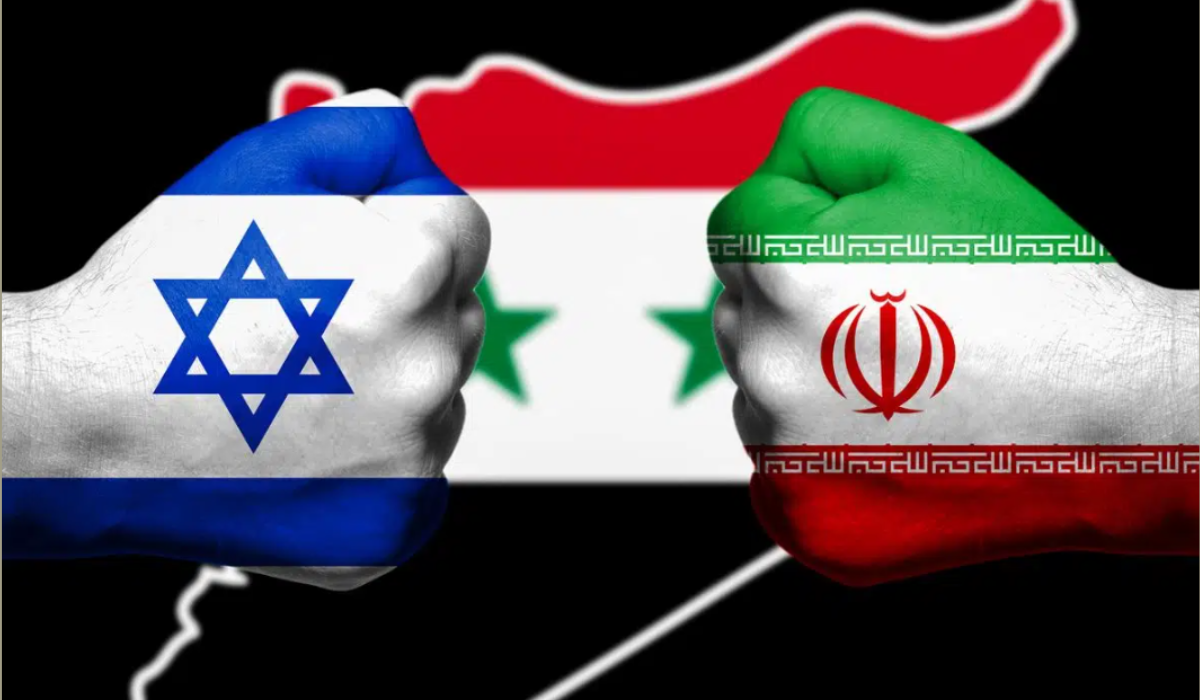
As the Israel Iran conflict intensifies, both nations are ramping up military operations and exchanging escalating threats. This deadly confrontation—already one of the most direct and destructive clashes between the two longtime rivals—has captured global attention and sparked growing fears of a wider Middle East war.
A Timeline of Escalation
The Israel Iran conflict escalated dramatically in the early hours of Friday, June 13, when Israeli fighter jets launched a series of coordinated airstrikes targeting Iranian nuclear and military installations, including the high-profile Natanz facility. Dubbed Operation Rising Lion, the offensive was framed by Israeli Prime Minister Benjamin Netanyahu as a critical step to halt Iran’s alleged pursuit of nuclear weapons.
Iran responded swiftly with Operation True Promise 3, unleashing over 100 ballistic missiles at Israeli cities such as Tel Aviv and Haifa. While Israel’s Iron Dome defense system intercepted many of the missiles, several managed to hit residential neighborhoods, resulting in civilian casualties and extensive destruction.
For six consecutive days, the violence has persisted in both directions, transforming urban landscapes into battlegrounds and endangering millions of lives, as the Israel Iran conflict intensifies with no immediate resolution in sight.
Night of Firepower
Overnight into Wednesday, June 18, the Israeli military launched one of its most extensive waves of airstrikes to date, deploying 50 fighter jets to hit around 20 strategic sites in Tehran. A centrifuge production vegetation, which is crucial for Iran’s uranium enrichment program, was the primary target, according to the IDF. The UN nuclear watchdog later confirmed that two such facilities had been struck.
Meanwhile, Iran’s Islamic Revolutionary Guard Corps (IRGC) claimed to have launched hypersonic Fattah-1 missiles toward Tel Aviv. These missiles, which can travel at speeds exceeding Mach 5 and maneuver mid-flight, are harder to intercept. However, Israeli officials reported that no missiles reached their intended targets, though explosions and air raid sirens disrupted life in Tel Aviv.
Iran also launched two missile barrages toward Israel in the early hours of Wednesday. The IDF stated that it successfully intercepted 10 drone attacks during the same timeframe.
Rising Civilian Toll
The conflict’s human cost continues increasing. Iran’s health ministry reported at least 224 fatalities, including military commanders, scientists, and civilians, while Israel confirmed 24 civilian deaths and hundreds more injured. Foreign embassies in both countries are working urgently to evacuate their citizens.
Reports from Tehran describe a city in panic, with families fleeing District 18—an area targeted by Israeli warnings ahead of strikes. Fuel shortages and blocked roads have added to the chaos. In Israel, air defenses remain on high alert as citizens rush to shelters multiple times a day.
War of Words: Trump vs. Khamenei
Tensions between Washington and Tehran have also escalated. U.S. President Donald Trump called for Iran’s “unconditional surrender” and stated that while America is aware of the exact position of Ayatollah Ali Khamenei, Iran’s Supreme Leader, it has chosen not to strike him just yet.
In response, Khamenei said in a nationwide speech on Wednesday that Iran is united and will not yield to outside pressure. He warned the U.S. any military action could have “serious irreparable consequences
President Trump’s National Security Council has met behind closed doors to talk about the issue, but he has not yet committed to direct U.S. military intervention. U.S. While officials acknowledge that American tolerance is “wearing thin,” they insist that Washington is not taking part in Israel’s military campaign.
Regional Reactions and Global Concerns
International leaders have expressed deep concern over the escalation. French President Emmanuel Macron warned that any effort to overthrow the Iranian government could lead to “chaos,” while German Chancellor Friedrich Merz voiced support for Israel’s actions, stating Israelis are engaging in “dirty work” in disagreement to the Iranian government
Israeli Foreign Minister Gideon Saar clarified that regime change is not Israel’s primary objective, though he acknowledged it could be a possible outcome of the conflict.
Digital Crackdown in Iran
Amid the bombardment, Iran has tightened control over digital communication. The government has imposed temporary internet restrictions, rendering many websites and messaging platforms inaccessible. Authorities have urged citizens to minimize the use of internet-connected devices and instructed civil servants to avoid smartphones, smartwatches, and laptops for security reasons.
On Tuesday, Iranian state television urged users to delete WhatsApp, claiming the app collects personal data and shares it with “Zionist enemies.” WhatsApp denied the allegations, warning that the misinformation may be used as a pretext to restrict digital access during a time of national crisis.
Iran additionally claimed that five people who were reportedly hired by Israel’s Mossad intelligence agency had been seized for reportedly using internet platforms to promote terror and lower public morale.
What Lies Ahead?
As the Israel Iran conflict moves into a potentially more volatile stage, uncertainty remains over what either side ultimately hopes to accomplish. Israeli officials have stated their primary aim is to cripple Iran’s nuclear capabilities—not topple its government. But analysts caution that unless heavily fortified sites like the Fordo nuclear facility are taken out, the mission could fail to meet its long-term strategic goals.
Military experts note that Israel may lack the advanced bunker-busting munitions needed to destroy such deeply buried facilities. That could necessitate direct U.S. involvement—an escalation that would significantly raise the risk of a broader regional war.
Amid these high-level military calculations, ordinary citizens on both sides are bearing the brunt of the violence, as the conflict spirals with no clear resolution in sight.