Last updated: September 2, 2026
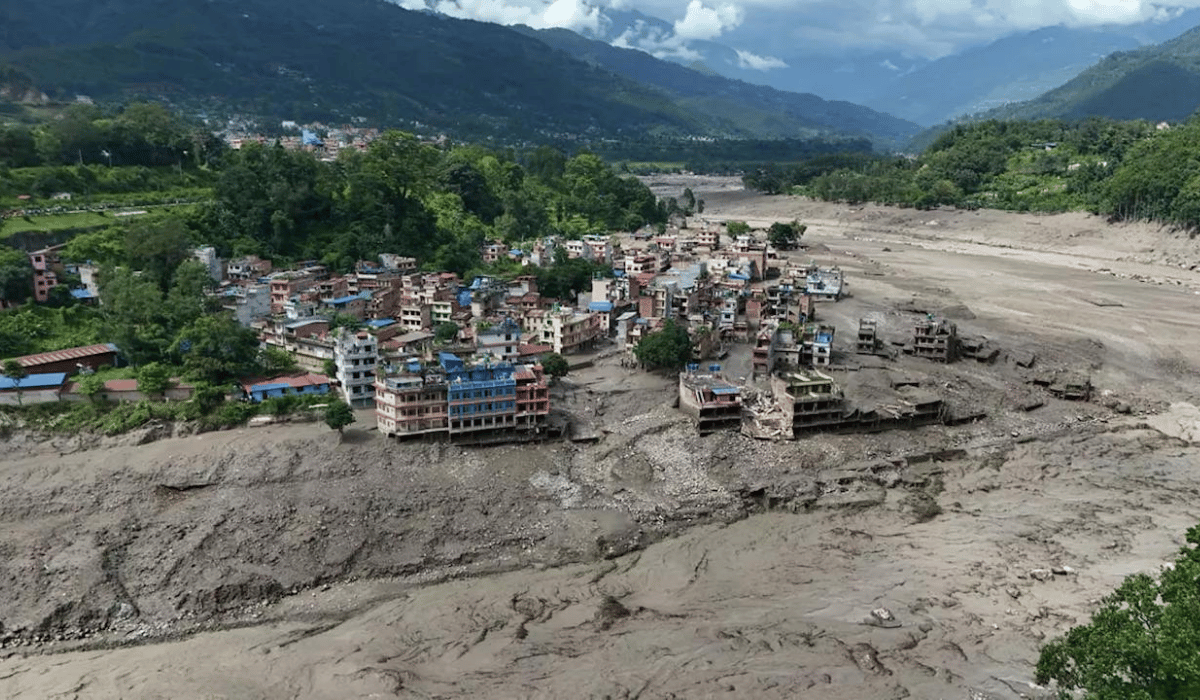
On August 26, 2026, a catastrophic flash flood struck northern Nepal along the border with Tibet, devastating communities in the Rasuwa, Nuwakot, and Dhading districts. The disaster is among the deadliest of its kind in Nepal’s recent history, and rescue operations remained active as of the most recently verified reports.
What Caused It
According to official reporting, the flooding was triggered by an ice-rock avalanche following a glacial collapse near the Nepal-Tibet border. Scientists studying satellite imagery said the collapse appears to have involved the failure of bedrock beneath a glacier. The collapse sent a torrent of water, mud, and debris downstream through the Bhote Koshi and Trishuli river systems, wiping out towns, hydropower stations, and critical infrastructure across northern and central Nepal. The flood struck settlements along the Trishuli River corridor and destroyed the road connecting Betrawati (Nuwakot) to the Rasuwagadhi border checkpoint, Nepal’s main crossing point into Tibet.
Confirmed Casualties (as of September 1, 2026)
According to Al Jazeera, citing Nepal’s National Disaster Risk Reduction and Management Authority (NDRRMA):
- 1,003 people confirmed dead across Nepal and Tibet combined, after NDRRMA raised Nepal’s toll from 987 to 1,003 in a Tuesday update
- 3,916 people still missing in Nepal, including 583 foreign nationals
- More than 11,000 people rescued across the affected region, including 279 workers pulled from hydropower project sites
- Chinese authorities in Tibet’s Gyirong County have confirmed 16 deaths and 546 missing on their side of the border, bringing the combined missing total to roughly 4,462
Nepal’s Prime Minister, Balendra Shah, said aid exceeding $42 million has come into the country since the disaster began, with contributions expected to increase, according to Reuters.
Who Is Among the Missing
A large share of the missing were workers at hydropower project sites and tunnels in the Rasuwa and Nuwakot districts, several of which sat directly in the flood’s path. Hundreds of workers are feared trapped in tunnels at devastated hydropower stations, and rescue teams have made that a primary focus. Officials have also confirmed that police, army, armed police force, customs, and immigration personnel are among the missing, alongside a large group of pilgrims, including Kailash Mansarovar pilgrims, who were traveling through the border crossing toward Tibet at the time of the flood (Mappr).
Infrastructure Damage
According to CARE, 32 bridges and nearly 25 miles of road were swept away, including the entire route connecting Betrawati (Nuwakot) to the Rasuwagadhi crossing, a key trade and travel link between Nepal and Tibet. Nepal’s Department of Roads has separately put the toll at roughly 40 bridges and 40 kilometers of road across nine districts, per the Kathmandu Post. With Rasuwagadhi impassable, Korala in Mustang has become Nepal’s only functioning overland trade route to China.
The worst-hit settlements include Timure and Syabrubesi, communities near the border that support much of the trade and tourism between the two countries. Police recovered several bodies swept downstream as far as India, and a search team recovered 24 bodies from a single house in Betrabati village, Nuwakot district, believed to include pilgrims who were staying there, according to Al Jazeera and local police.
Humanitarian Impact
UNICEF’s latest assessment estimates that roughly 65,000 people have been affected by the disaster, including approximately 22,100 children, an upward revision from earlier estimates as the full scope of the disaster became clearer. Entire communities have been cut off from clean water, healthcare, and other essential services as a result of the damage to roads and infrastructure. Power and communication lines have been restored in some areas, aiding both rescue operations and efforts to verify the true scale of the missing.
The Response
Nepal’s government has declared the affected districts disaster crisis zones for the next three months. Multiple organizations are actively responding:
- The Nepal Red Cross Society is delivering clean water, shelter, first aid, and emergency supplies to affected communities.
- CARE Nepal is working alongside government and local partners to reach the hardest-hit families.
- UNICEF is coordinating with the Nepali government to restore healthcare, nutrition support, and other essential services, with a particular focus on children affected by the disaster.
More than 21,000 security personnel and at least 16 helicopters have been deployed in the search and rescue effort, which was ongoing as of the most recently verified reporting.