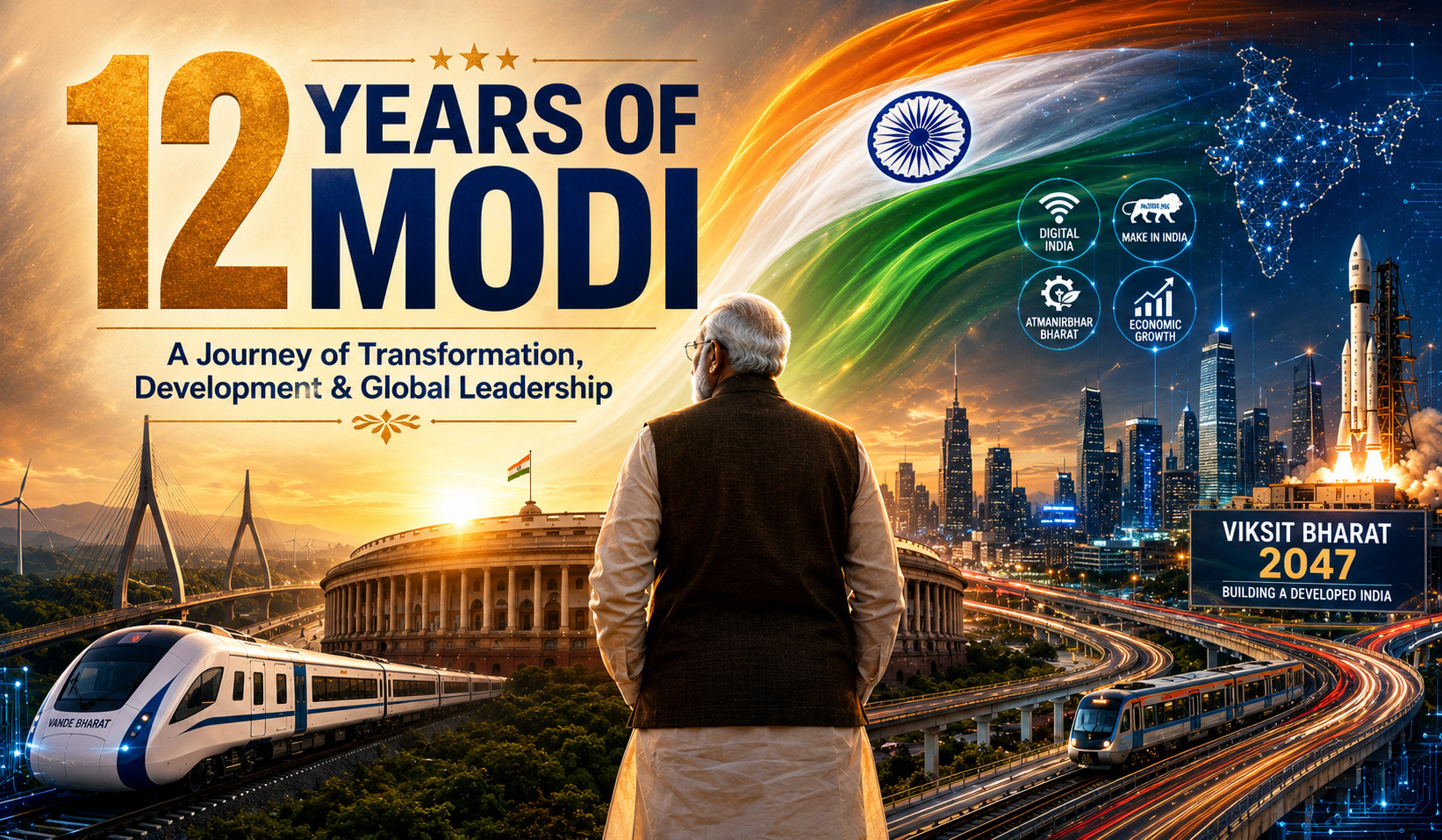
Prime Minister Narendra Modi has completed 12 years in office, marking a significant milestone in India’s political history. Since taking oath as the country’s Prime Minister on May 26, 2014, Modi has led three consecutive governments and emerged as one of the most influential leaders in modern India.
The completion of 12 years in office is not just a personal achievement for Modi but also a defining chapter in India’s political landscape. During this period, India has witnessed major economic reforms, rapid infrastructure development, technological transformation, and significant geopolitical shifts.
As the government celebrates the milestone, supporters hail Modi’s leadership as transformative, while critics continue to question several aspects of governance and policy implementation. Regardless of political perspectives, the last twelve years have undoubtedly reshaped India’s trajectory.
From Gujarat Chief Minister to Prime Minister
Before becoming Prime Minister, Narendra Modi served as the Chief Minister of Gujarat for more than a decade. His governance model in Gujarat became a major talking point during the 2014 general election campaign.
The Bharatiya Janata Party (BJP) secured a historic majority in the 2014 Lok Sabha elections, ending years of coalition politics at the Centre. Modi’s campaign focused on development, economic growth, job creation, and good governance.
His victory marked the beginning of a new political era characterized by strong central leadership and an ambitious vision for national development.
Key Achievements During the Last 12 Years
Digital Revolution and Financial Inclusion
One of the most significant transformations during Modi’s tenure has been India’s digital revolution.
The launch and expansion of initiatives such as:
- Digital India
- Unified Payments Interface (UPI)
- Jan Dhan Yojana
- Direct Benefit Transfer (DBT)
have fundamentally changed how citizens interact with government services and financial institutions.
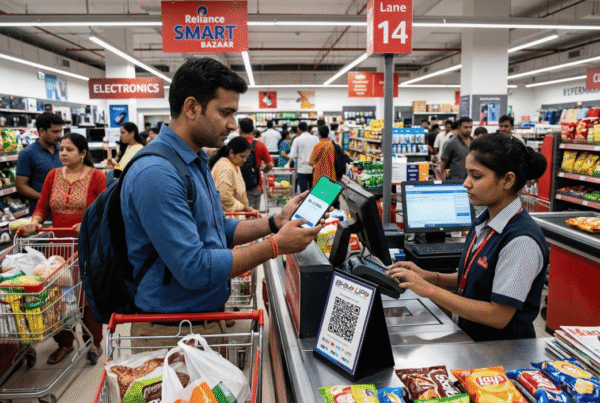
India has emerged as one of the world’s leading digital payment economies, with UPI transactions reaching record levels every year. Millions of citizens who previously lacked access to banking services were brought into the formal financial system through Jan Dhan accounts.
Massive Infrastructure Development
Infrastructure development has remained a cornerstone of the Modi government’s agenda.
Major investments have been made in:
- National highways
- Expressways
- Railways
- Airports
- Metro rail projects
- Ports and logistics networks
Projects such as the Delhi-Mumbai Expressway, Vande Bharat trains, new airport terminals, and expanded metro systems have become symbols of India’s infrastructure push.
The government argues that these investments are laying the foundation for long-term economic growth and improved connectivity.
Welfare Programs and Social Schemes
Several welfare initiatives launched during the past 12 years have targeted housing, healthcare, sanitation, and rural development.
Key schemes include:
- Pradhan Mantri Awas Yojana
- Ayushman Bharat
- Jal Jeevan Mission
- Swachh Bharat Mission
- PM Kisan Samman Nidhi
- Ujjwala Yojana
These programs have aimed to improve living standards and extend essential services to millions of households across urban and rural India.
India’s Rising Global Profile
India’s international standing has also undergone significant changes during Modi’s tenure.
The government has emphasized:
- Strong diplomatic engagement
- Strategic partnerships
- Defense modernization
- Global economic cooperation
India has played an increasingly important role in international forums such as the G20, BRICS, Quad, and the United Nations.
The successful hosting of the G20 Summit in 2023 further highlighted India’s growing influence on the global stage.
Major Reforms That Defined the Modi Era
Goods and Services Tax (GST)
The implementation of the Goods and Services Tax remains one of the most significant tax reforms in India’s history.
GST replaced multiple indirect taxes with a unified tax structure aimed at simplifying business operations and improving tax compliance.
While businesses initially faced challenges adapting to the new system, GST is now considered a major structural reform.
Insolvency and Bankruptcy Code
The Insolvency and Bankruptcy Code (IBC) was introduced to improve India’s financial ecosystem by creating a time-bound process for resolving corporate insolvency.
The reform aimed to strengthen banking stability and improve investor confidence.
Production-Linked Incentive (PLI) Schemes
The government introduced PLI schemes to boost domestic manufacturing and reduce dependence on imports.
Industries benefiting from these initiatives include:
- Electronics
- Pharmaceuticals
- Automobile manufacturing
- Renewable energy
The schemes are part of India’s broader vision of becoming a global manufacturing hub.
Challenges and Criticisms
Despite notable achievements, Modi’s 12-year tenure has not been free from criticism.
Opposition parties and critics have raised concerns regarding:
Unemployment
Job creation remains one of the most debated issues in India. Critics argue that employment growth has not kept pace with the aspirations of the country’s young population.
Inflation and Cost of Living
Rising food prices, fuel costs, and inflationary pressures have affected household budgets across the country.
Agricultural Concerns
Farmer protests and debates over agricultural reforms have highlighted ongoing challenges in the rural economy.
Economic Inequality
Some economists argue that while overall economic growth has improved, wealth inequality remains a concern that requires greater policy attention.
Political Dominance and Electoral Success
A defining feature of Modi’s tenure has been the BJP’s electoral success.
The party secured:
- Majority in 2014
- Larger mandate in 2019
- Historic third consecutive term in 2024
This sustained success reflects Modi’s popularity among a large section of voters and his ability to maintain political relevance over an extended period.
Political analysts often compare his influence to some of India’s most dominant leaders in post-independence history.
Vision for Viksit Bharat 2047
As India approaches the centenary of its independence in 2047, the Modi government has outlined its vision for a developed nation under the banner of “Viksit Bharat 2047.”
The roadmap focuses on:
- Economic growth
- Infrastructure modernization
- Technological innovation
- Energy security
- Manufacturing expansion
- Human capital development
The coming years are expected to determine whether India can achieve these ambitious goals.
Looking Ahead
Completing 12 years in office places Narendra Modi among the most influential leaders in independent India’s history. His tenure has witnessed transformative changes across governance, technology, infrastructure, welfare delivery, and international diplomacy.
Supporters view these years as a period of unprecedented development and national confidence, while critics continue to debate the government’s performance on employment, inflation, and social issues.
As Modi begins the next phase of his leadership journey, the focus will increasingly shift toward delivering long-term economic prosperity and realizing the vision of a developed India by 2047.
Whether viewed through the lens of achievement or scrutiny, the last twelve years have undeniably left a lasting impact on the nation and will continue to shape India’s future for decades to come.