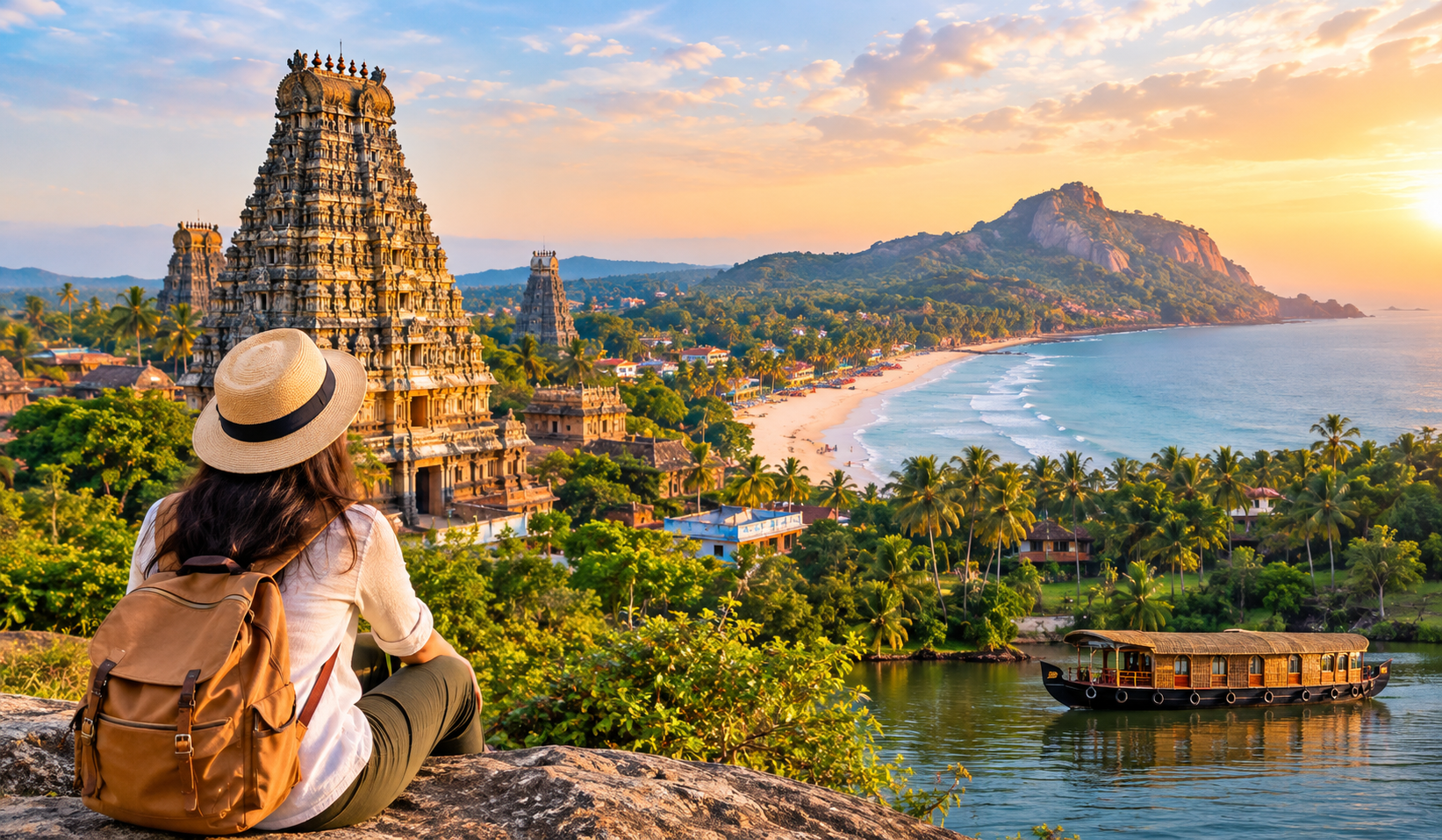
South India packs a lot into one region: tranquil backwaters, cloud-draped hills, centuries-old temples, sunny shorelines, and food that varies from one state to the next. Across Tamil Nadu, Kerala, Karnataka, Andhra Pradesh, Telangana, and Puducherry, history and scenery sit side by side, and the locals are famously hospitable. Whether you’re traveling with family, planning a romantic escape, seeking a spiritual retreat, or chasing adventure, there’s a place here for you.
Here is a list of ten places that you should see.
Rameshwaram, Tamil Nadu
Set on Pamban Island, Rameshwaram blends deep religious tradition with calm sea views. Pilgrims, history lovers, and curious travelers all find something to appreciate here.
What to see
- Ramanathaswamy Temple: One of the most important pilgrim destinations among Hindus, known for its corridors, beautifully carved pillars, and wells of holy water.
- Dhanushkodi: Found where the Bay of Bengal meets the Indian Ocean, this ghost town holds the ruins of structures wrecked by the 1964 cyclone, set against dramatic coastal views.
- Pamban Bridge: This landmark links the island to the mainland and gives wide views over the water.
Add seaside strolls and fresh seafood, and you have a trip that mixes faith, history, and scenery.
Tip: Visit the temple in the early hours, and confirm current access conditions before heading to Dhanushkodi.
Ooty, Tamil Nadu
Udhagamandalam, also known as Ooty, is a well-known hill station in Nilgiris that offers fresh air, green valleys, tea gardens, and scenic surroundings.Families, couples, and nature enthusiasts all enjoy it.
What to see
- Nilgiri Mountain Railway: A scenic toy-train ride through tunnels, over bridges, and past forested slopes.
- Government Botanical Garden: Lawns landscaped with flowers, shrubs, and trees.
- Tea estates: Tour a plantation or factory to see how tea goes from leaf to cup.
- Doddabetta Peak: Another very popular viewpoint that offers the sights of the Nilgiris.
But if you do have the time, Coonoor has beautiful tea gardens and vantage points such as Dolphin’s Nose.
Tip: One such window period is from October to June.Pack warmly, particularly in the mornings and during winters.
Kumbakonam, Tamil Nadu
This temple town in the fertile Cauvery delta is a great introduction to Tamil Nadu’s religious traditions and artisan heritage.
What to see
- Adi Kumbeswarar Temple: A significant Shiva temple admired for its architecture.
- Airavatesvara Temple: In nearby Darasuram, this UNESCO World Heritage monument displays the fine stone carving of the Chola era.
- Mahamaham Tank: A historic temple tank tied to the Mahamaham festival, held once every twelve years.
- Local bazaars: Shop for bronze work, textiles, and regional specialties.
The town is also celebrated for its filter coffee, and Thanjavur makes an easy add-on for even more temples and culture.
Tip: Give yourself time to explore without hurrying, and check each temple’s visiting hours beforehand.
Madurai, Tamil Nadu
Madurai – one of the oldest cities in India – is an important part of Tamil culture. This is a city that will definitely appeal to those who appreciate heritage and the buzz of life.
What to see
- Meenakshi Amman Temple: The city’s showpiece, with tall gateway towers covered in vividly painted sculptures.
- Thirumalai Nayakkar Palace: A palace known for its tall arches and large halls.
- Gandhi Memorial Museum: Explores the independence movement and Gandhi’s legacy.
- Street food: Try idli, kari dosai, and the cooling dessert drink jigarthanda.
Temple Street along with the markets give one side of Madurai that is beyond regular tourism.
Tip: Arrive at Meenakshi Amman early to beat the crowds, and follow the current photography and entry rules.
Tirupati, Andhra Pradesh
Tirupati draws pilgrims from across India and overseas, and it serves as the base for Tirumala, the hill home of a famously sacred shrine.
What to see
- Sri Venkateswara Temple (Tirumala): The temple is dedicated to Lord Venkateswara and is one of the most prominent places of worship in India.
- Sri Kapileswara Swamy Temple: It is a Shiva temple located near a picturesque waterfall.
- Sri Kalahasti Temple: A historic shrine in the wider region, noted for its traditional design.
- Hills of Tirumala: Tranquil surroundings for the pilgrim journey.
The visit offers a window into local devotional practices and regional heritage.
Tip: Book darshan tickets well ahead through the official system, particularly around holidays and festivals, and review entry guidelines before you travel.
The Kerala Backwaters
Backwaters of Kerala comprise a system of lakes, lagoons, and canals that wind their way through paddy fields, coconut plantations, and little hamlets. The ideal trip to experience Kerala at leisure is a trip down its backwaters.
What to see
- Alappuzha (Alleppey): Known for boat rides in the greenery of the village.
- Kumarakom: Peaceful lakeside resort with excellent bird watching opportunities.
- Village experiences: Watch traditional fishing, browse local markets, see coconut crafts, and taste regional dishes.
- Vembanad Lake: One of the state’s largest lakes, ideal for boat rides.
Available options include the possibility of opting for day cruise, boat excursion, or even staying overnight in the houseboat.
Tip: October to March is a favored season. Reserve houseboats early for busy periods and pick operators who practice responsible boating.
Munnar, Kerala
The town of Munnar has a backdrop of Western Ghats and is famous for its tea plantations, misty surroundings, cool climate, and hill roads. This place appeals to couples, families, and photographers.
What to see
- Eravikulam National Park: Protected highland home to the endangered Nilgiri tahr.
- Tea estates: Wander the plantations and learn about tea production.
- Mattupetty Dam: A scenic stop framed by green hills.
- Echo Point: A viewpoint of the hills and the lake.
- Top Station: A high viewpoint with broad Western Ghats vistas on clear days.
You can also go on nature walks or visit spice gardens, or simply soak in the mountain air.
Tip: September to March is often a good time, though conditions vary.Check the forecast and availability prior to longer trips.
Mahabalipuram, Tamil Nadu
Also called Mamallapuram, this seaside town is home to ancient stone monuments and rock-cut architecture that showcase the artistry of the Pallava dynasty. It’s a draw for history and architecture fans.
What to see
- Shore Temple: A centuries-old stone temple facing the Bay of Bengal.
- Pancha Rathas: Five monolithic structures carved from single rocks, each with its own style.
- Arjuna’s Penance: A huge open-air relief showing scenes from Hindu mythology.
- Mahabalipuram Beach: A pleasant spot to unwind after a day among the monuments.
It’s easy to reach from Chennai, so it works as either a day trip or a longer beach stay.
Tip: Start early, before the afternoon heat sets in, and wear comfortable shoes for the open-air sites.
Puducherry
Puducherry (Pondicherry) offers a unique mix of French colonial charm, Tamil traditions, cafés, and seafront. Its easygoing mood suits couples, solo travelers, and anyone craving a slow holiday.
What to see
- French Quarter: Pastel-hued colonial buildings, boutique guesthouses, and cafés.
- Promenade Beach: A favorite spot for sunset walks by the sea.
- Serenity Beach: Laid-back and, when conditions allow, good for surfing.
- Paradise Beach: Reached by boat from Chunnambar, depending on local operating conditions.
- Auroville: An experimental international township centered on community living and sustainability, just outside town.
The food scene ranges from French-style pastries to classic Tamil meals.
Tip: October to March is comfortable for visiting. Heed beach safety notices before swimming or trying water sports.
Hampi, Karnataka
A UNESCO World Heritage Site, Hampi preserves the ruins of the Vijayanagara Empire amid giant granite boulders and rugged terrain. History buffs, photographers, and adventurers will all feel at home.
What to see
- Virupaksha Temple: A living temple and one of Hampi’s central landmarks.
- Vijaya Vittala Temple: Renowned for its detailed carvings and iconic stone chariot.
- Hampi Bazaar: An old market street hinting at the city’s trading past.
- Hemakuta Hill: Scattered temple remains and wide landscape views.
- Tungabhadra River: Adds to the area’s natural beauty.
Hampi rewards a slow pace, with time to walk among the ruins and absorb the story of the place.
Tip: Set aside at least two days. Bring water, sun protection, and sturdy walking shoes.
Why Choose South India?
- Heritage: Ancient temples, royal monuments, historic settlements, and living art traditions.
- Scenery: Tea-clad hills, forests, beaches, lakes, and quiet waterways.
- Spirituality: Important pilgrimage sites and enduring religious customs.
- Food: Regional dishes, hearty breakfasts, filter coffee, and fresh seafood.
- Variety: City stops, beaches, heritage circuits, hill retreats, and nature escapes can all fit into one itinerary.
When Is the Best Time to Go?
It depends on where you’re headed and what you want to do.
- October to March: Good for sightseeing at many places, including Hampi, Madurai, Puducherry, and the Kerala backwaters.
- April to June: Works well for hill stations like Ooty and Munnar, though they can be crowded and temperatures differ.
- June to September: The monsoon turns Kerala and the Western Ghats lush and green, but heavy rain can disrupt outdoor plans and travel.
December is popular thanks to pleasant weather in many areas, but expect cold nights in the hills, crowds at pilgrimage sites, and higher accommodation prices.
Read More:- 7 Lesser Known Winter Getaways in India
Final Thoughts
From the devotional atmosphere of Rameshwaram and Tirupati to the cool highlands of Ooty and Munnar, South India has something for every traveler. The backwaters offer serenity, Hampi and Mahabalipuram tell stories in stone, and Puducherry delivers a relaxed seaside vibe with a character all its own.
When mapping out your trip, think about how much time you have, what you enjoy doing, the season, and the distances involved. Instead of trying to see everything at once, pick a few complementary destinations and give each the time it deserves. Done well, a South Indian holiday can be far more than a routine vacation.
FAQs
What are the top 10 places to visit in South India?
Some of the top places to visit in South India include Rameshwaram, Ooty, Kumbakonam, Madurai, Tirupati, the Kerala backwaters, Munnar, Mahabalipuram, Puducherry, and Hampi.
What is the best time to visit South India?
October to March is generally a good time to explore many South Indian destinations because the weather is often suitable for sightseeing. Hill stations such as Ooty and Munnar can also be enjoyable during the summer months.
Which places in South India are best for a family vacation?
Ooty, Munnar, Puducherry, and the Kerala backwaters are popular choices for family holidays. These destinations offer scenic landscapes, sightseeing opportunities, relaxing activities, and experiences for different age groups.
Which are the best hill stations to visit in South India?
Ooty and Munnar are two of the most popular hill stations in South India. Both are known for their tea plantations, cool climate, green hills, and beautiful viewpoints.
Which places in South India are best for history and culture lovers?
Hampi, Madurai, Kumbakonam, and Mahabalipuram are excellent choices for travelers interested in history and culture. They feature ancient temples, historic monuments, traditional architecture, and important heritage sites.
How many days are enough to explore South India?
Around 7 to 10 days can be enough to explore a few major destinations in South India. However, covering all ten places comfortably may require two weeks or more, depending on your travel route, transportation, and sightseeing preferences.