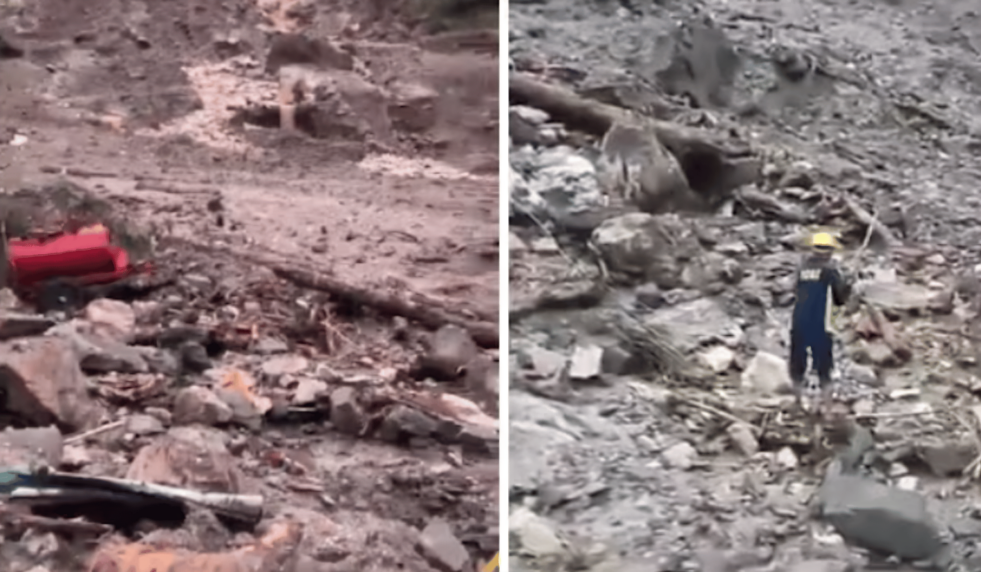
Uttarakhand cloudburst triggered a 24-hour halt to the Char Dham Yatra, but on Monday, June 30, 2025, the ban was lifted, allowing the pilgrimage to resume. This decision followed the restoration of the Barkot-Yamunotri route in Uttarkashi, which had suffered major damage due to a landslide caused by a cloudburst. While connectivity has been reestablished, the tragedy’s impact remains profound. Two workers have died, and seven are still missing, with rescue operations actively underway.
Char Dham Yatra Resumes Amid Caution
Garhwal Divisional Commissioner Vinay Shankar Pandey confirmed that the temporary suspension of the Char Dham Yatra was officially revoked. The ban, imposed on Sunday due to a red alert for heavy rain, was a preventive measure to ensure the safety of thousands of pilgrims visiting the sacred sites. Speaking to ANI, Pandey emphasized that although the Yatra has resumed, all District Magistrates along the pilgrimage route have been advised to remain vigilant. They have been directed to halt vehicle movement in their regions if adverse weather conditions persist.
Red Alert in Himachal, Nearby Areas Affected
Himachal Pradesh, a nearby state, has also been battling the wrath of nature, while Uttarakhand struggles with the consequences of the cloudburst. The Indian Meteorological Department issued a red alert for intense rainfall in various parts of the state. As a result, the Shimla-Kalka rail line was shut down after overnight rains triggered blockages and damage. Heavy downpours also lashed Chamba town, further raising concerns about regional stability and transportation.
Barkot-Yamunotri Road Repaired After Landslide
The devastating landslide near Barkot was triggered by a sudden cloudburst that hit the National Highway at Yamunotri. It happened around the Silai Band region, some four kilometers ahead of Paligad, close to the Silai Band area. This section of the road suffered significant damage. However, by June 29, authorities managed to restore the stretch, allowing smoother vehicular movement once again.
The most severely damaged area prior to Silai Band was effectively restored, according to Uttarkashi District Magistrate Prashant Arya. Arya told ANI that the road has been smoothed out and the washout caused by the cloudburst has been fixed. Work on other damaged parts is ongoing.”
Power Supply Restored, Rescue Work Intensifies
In addition to road repairs, efforts to restore essential infrastructure have been fast-tracked. The 33 KV power line in the affected area was reinstated, ensuring that electricity could be supplied to surrounding villages and service stations. However, the 11 KV line is still under repair, with technicians working around the clock to bring it back online.
The search for the seven missing employees is still ongoing. The search efforts involve personnel from the State Disaster Response Force (SDRF), National Disaster Response Force (NDRF), local police, and revenue departments. The rescue teams are combing through debris and unstable terrain to find any signs of the missing individuals.
Two Workers Confirmed Dead
Tragically, two workers lost their lives in the aftermath of the Uttarakhand cloudburst. The retrieved bodies have been identified as Duje Lal, a 55-year-old from Pilibhit, Uttar Pradesh, and Kewal Bisht, a 43-year-old resident of Karmamohani village in the Rajapur district of Nepal. Authorities have contacted their families, and support measures are being arranged.
Both workers were part of the crew deployed for maintenance and support tasks related to the ongoing Char Dham Yatra. Their loss has cast a somber shadow over the continuing crisis caused by the Uttarakhand cloudburst.
Large-Scale Rescue Operations Underway
As search operations continue, multiple agencies remain on high alert. The rescue mission includes personnel from the police, fire department, health services, and public works teams. Teams are using advanced equipment such as thermal imaging, GPS mapping, and drones to survey inaccessible areas. Despite bad weather conditions, they continue their search with urgency and determination.
Notably, this region often sees cloudbursts during the monsoon season, and the rugged terrain makes rescue operations especially challenging. Slippery roads, falling debris, and fresh landslides continue to pose threats to the safety of the rescue personnel themselves.
Precautionary Measures in Place
Although the Char Dham Yatra has resumed, authorities remain on high alert. District administrations have been instructed to evaluate weather updates in real-time. They have also been told to suspend pilgrim movement whenever necessary to avoid further accidents.
Pilgrims have been urged to remain cautious, travel only in daylight, and avoid halting near landslide-prone zones. Tour operators have also been advised to coordinate with district officials before planning any movement. Temporary shelters, emergency medical camps, and helplines have been set up along the Yatra routes.
Uttarakhand Bus Accident Adds to Tragedy
While the cloudburst incident captured nationwide attention, another tragedy unfolded in the region. The death toll in a recent Uttarakhand bus accident has risen to six. Disturbingly, one of the bodies was discovered nearly 150 kilometres from the crash site. This incident has further stressed the importance of transportation safety and infrastructure resilience in hilly terrains.
Government’s Response and Public Reaction
The Uttarakhand state government has assured the public that all necessary steps are being taken. Chief Minister Pushkar Singh Dhami expressed grief over the loss of lives and said that rescue and restoration remain the top priorities. He also directed officials to provide immediate relief to affected families and expedite the recovery of missing workers.
In the wake of these events, social media has been flooded with messages of support, concern, and prayers for the safe recovery of the missing. Volunteers and local organizations have also stepped in, offering food, blankets, and support to those stranded due to road closures.
A Fragile Landscape
This latest natural disaster serves as a harsh reminder of the fragile nature of Himalayan ecosystems. With climate change intensifying weather patterns, cloudbursts and flash floods are becoming more frequent. As pilgrim numbers rise each year, the pressure on local infrastructure also increases.
It is crucial for authorities to invest in more robust early warning systems, develop landslide-resistant roadways, and train rapid response teams. Additionally, eco-sensitive tourism policies need to be implemented to protect both human life and the environment.
Conclusion
While the lifting of the 24-hour Char Dham Yatra ban has brought relief to many pilgrims, the shadow of tragedy still looms over Uttarkashi. The Uttarakhand cloudburst has already claimed two lives, and the ongoing search for seven missing workers highlights the disaster’s devastating impact. With nature displaying its unpredictable force, preparedness and caution must remain top priorities in such high-risk regions.
As rescue efforts continue, the nation watches with hope and prayers that the missing workers are found and that the region recovers from the Uttarakhand cloudburst safely and swiftly.