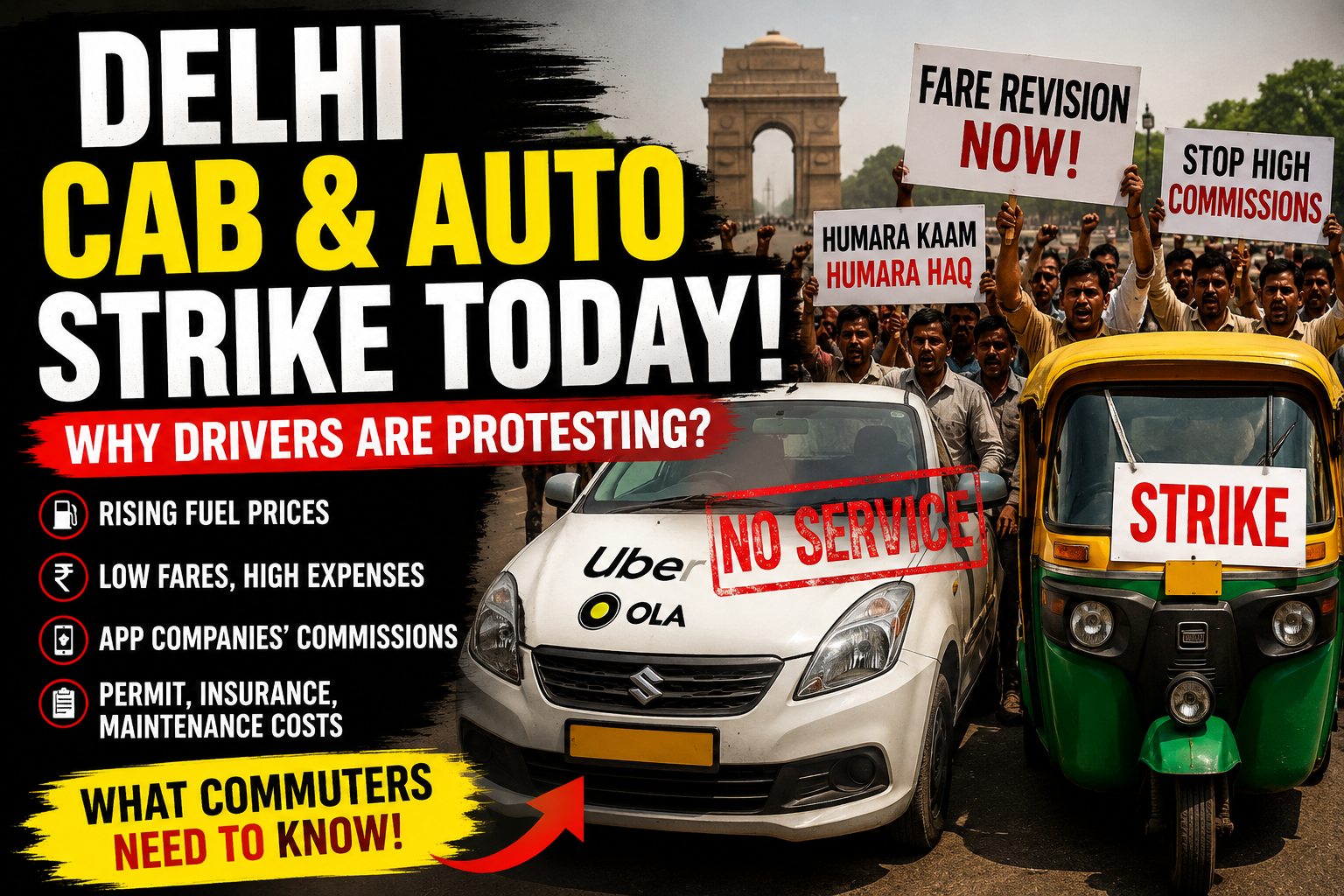
Commuters across Delhi-NCR woke up to a major transport disruption today as thousands of cab drivers, auto-rickshaw operators, and transport workers joined a large-scale strike demanding better working conditions, fare revisions, and government intervention against rising operational costs.
The three-day strike, which began on May 21, has affected daily travel in Delhi, Noida, Gurugram, Ghaziabad, and nearby NCR regions. With fewer autos and app-based taxis on roads, passengers are facing long waiting times, ride cancellations, and surge pricing on platforms like Uber and Ola.
Why Are Cab and Auto Drivers Protesting?
The protest is mainly being organized by several transport unions that claim drivers are struggling to survive financially due to increasing expenses and low earnings.
According to transport unions, the biggest issues include:
1. Rising Fuel Prices
One of the biggest reasons behind the strike is the continuous rise in fuel prices, especially CNG, petrol, and diesel. Most auto-rickshaws and taxis in Delhi run on CNG, and drivers say fuel costs have increased sharply over the last few years.
However, despite these increasing costs, passenger fares have not been revised adequately.
Drivers argue that after paying for fuel, vehicle maintenance, insurance, EMI installments, and permits, very little income remains for their families.
2. Demand for Fare Revision
Auto and taxi unions are demanding that the Delhi government revise fares to match current inflation and fuel prices.
Many drivers claim that existing fares were fixed years ago and are no longer practical in today’s economy. They say daily earnings have dropped significantly while expenses continue to rise.
Some drivers also allege that app-based ride companies take heavy commissions from each ride, reducing their final income even further.
3. Problems With App-Based Cab Aggregators
Cab drivers associated with platforms like Uber, Ola, and Rapido have also joined the protest in several areas.
Drivers claim:
- Incentives have reduced drastically
- Platform commissions are too high
- Long-distance rides often give poor profits
- Drivers face penalties and account suspensions easily
- Customer discounts are affecting driver earnings
Many drivers say that while ride apps advertise cheap fares to customers, drivers themselves are not earning enough to sustain operations.
4. Increasing Maintenance and Permit Costs
Transport unions have highlighted the increasing cost of:
- Vehicle servicing
- Spare parts
- Insurance renewals
- Fitness certificates
- Road taxes
- Permit fees
Drivers say running commercial vehicles in Delhi has become increasingly expensive, especially after stricter pollution-related regulations and compliance requirements.
Which Areas Are Affected?
The strike is impacting major parts of Delhi-NCR, including:
- Central Delhi
- South Delhi
- East Delhi
- Noida
- Gurugram
- Ghaziabad
- Faridabad
Many commuters reported difficulty finding:
- Auto-rickshaws
- Local taxis
- App-based cabs
- Shared rides
Metro services remain operational, but stations are seeing unusually high crowds due to reduced road transport availability.
Are All Drivers Participating?
No. Not every transport union has joined the strike.
Some auto and taxi operators are still working normally. This means transport services are partially available in several locations, though availability remains much lower than usual.
Passengers may still find rides, but:
- Wait times are longer
- Prices are higher
- Drivers are selectively accepting rides
Impact on Daily Commuters
Office workers, students, airport travelers, and daily commuters are among the most affected groups.
Common issues reported today include:
- Ride cancellations
- Surge pricing
- Delays reaching offices
- Traffic congestion
- Overcrowded metro stations
- Difficulty getting transport late at night
People traveling to railway stations and airports are especially advised to leave early and keep backup transport options ready.
What Are the Drivers Demanding?
The unions have submitted several demands to authorities, including:
- Immediate fare revision
- Reduction in fuel costs or subsidies
- Better protection for drivers working with ride-hailing apps
- Lower commissions by aggregators
- Relief in permit and commercial vehicle charges
- Government-level discussions with transport unions
Government Response So Far
Authorities are monitoring the situation closely, and discussions between transport unions and officials are expected during the strike period.
Traffic police and transport departments are also managing congestion in major areas where protests and reduced transport availability are creating problems for commuters.
As of now, no final agreement has been announced.
How Long Will the Strike Continue?
The current strike is expected to continue for three days unless negotiations between unions and authorities result in a settlement earlier.
However, transport experts believe the disruption level may vary each day depending on participation from different unions and driver groups.
What Should Commuters Do?
If you are traveling in Delhi-NCR during the strike period:
- Prefer Delhi Metro whenever possible
- Leave early for offices or airports
- Check cab availability before traveling
- Keep backup travel plans ready
- Avoid peak rush hours if possible
Final Thoughts
The Delhi-NCR cab and auto strike highlights the growing financial pressure on transport workers in India’s major cities. While commuters are facing inconvenience, drivers argue that rising operational costs and shrinking earnings have made survival increasingly difficult.
The coming days will determine whether negotiations between unions and authorities can resolve the situation or if transport disruptions continue across the capital region.