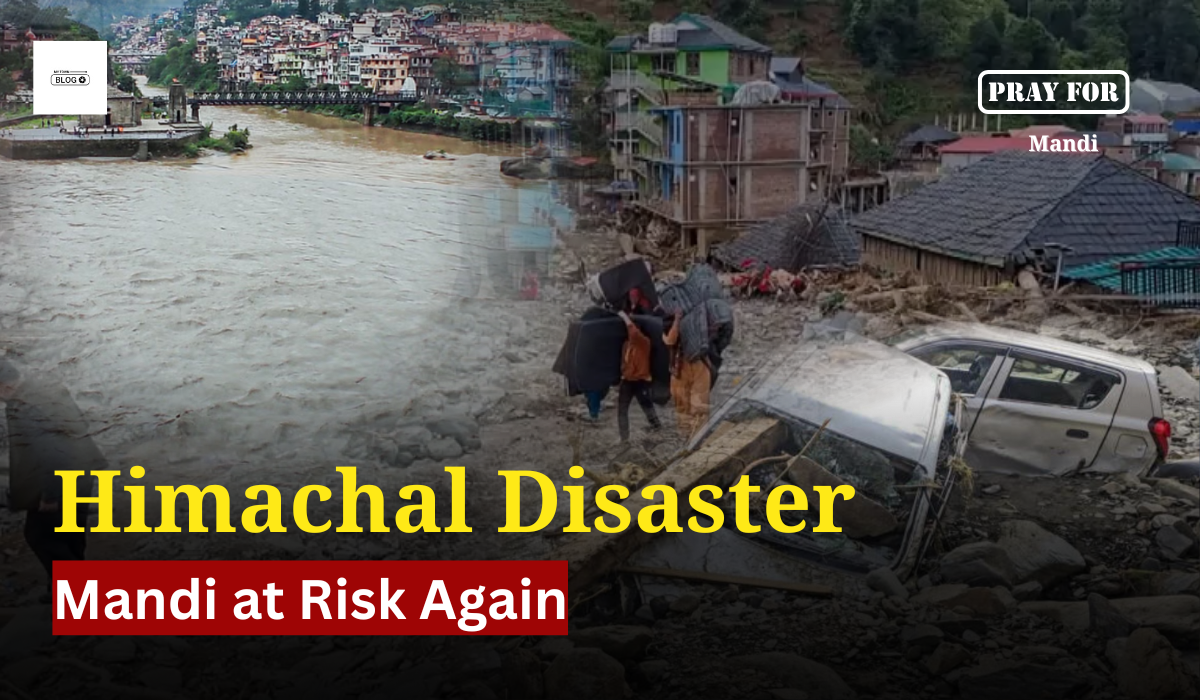
The scenic hills of Mandi are once again in the headlines—not for beauty, but for destruction. The Mandi Disaster is unfolding yet again as the region reels from heavy monsoon rains and multiple cloud bursts. There’s a looming question: is nature alone at fault, or are we also failing to learn?
Latest Update: Today Headlines (as of July 29, 2025)
- A flash flood hit Mandi town in the early hours, particularly along Jail Road—killing at least three people, leaving one missing, and damaging many houses and vehicles. The key Chandigarh–Manali highway was blocked due to landslide.
- The Beas River overflowed, prompting a red alert for Mandi. Torrential downpours have triggered fears of more floods and landslides.
- Earlier in the season, ten cloud bursts, three flash floods, and one major landslide impacted Mandi on July 1—leading to 13 confirmed deaths and 29 people still missing. Numerous homes, bridges, and roads were destroyed.
- Across Himachal Pradesh, since June 20, there have been 43 flash floods, 25 cloud bursts, and 32 major landslides, resulting in 164 deaths, with 90 attributed directly to weather disasters including floods and landslides, and 35 people still missing. Mandi recorded the highest 14 deaths from cloud bursts.
Why Mandi Knows Monsoon Too Well
Unsafe Development on Weak Ground
Buildings and roads are often built on steep hillsides without proper soil testing or drainage. The result: the ground gives way when heavy rain hits.
Loss of Forest Cover
Widespread deforestation in Himachal weakens hill slopes. Without trees to hold soil, landslides become frequent after cloud bursts.
Changing Rain Patterns
Climate change has made rain more unpredictable and intense. Cloud bursts, once rare, are now almost seasonal in parts of Mandi.
Warnings Ignored
Multiple reports have cautioned against unsafe construction practices and ignoring high-risk zones. But enforcement is lax, and development continues regardless.
Numbers That Tell a Story
| Metric | Data |
| Total deaths (Jun 20–Jul 29) | 164 statewide; 90 due to weather events |
| Mandi-specific cloud burst deaths | 14 |
| Mandi flash flood fatalities | 7 |
| Roads blocked in Mandi | Over 121–170 roads blocked |
| Number of incidents | 10 cloud bursts, 3 flash floods, 1 landslide (on July 1 alone) |
These figures are not just statistics—they reflect collapsed homes, lost lives, and roads cut in two.
Human Faces Behind Every Number
- A family living on Jail Road lost their home overnight. “We had hardly time to run,” shared our local contact.
- A six-month-old infant survived a cloud burst but lost both parents. She was declared a “child of the state” under relief schemes.
- Farmers and shop owners, already strained by last year’s monsoon, now face another year of rebuilding.
Government Relief: Now and Beyond
So far, the Himachal cabinet has approved a generous relief package: ₹7 lakh for completely damaged houses and ₹1 lakh for partial damage. Compensation for shops, livestock, and household losses has also been increased significantly. A ₹100‑crore forest conservation scheme has also been launched to rebuild natural safeguards.
Opposition leaders, including former CM Jai Ram Thakur, have urged the central government for region-specific disaster rehabilitation and research into recurring incidents.
What still needs to change:
- Stronger zoning laws—especially against construction in high-risk areas.
- Early warning systems that reach remote villages quickly.
- Locals trained in flood and landslide evacuation drills.
- Forest and watershed restoration to control soil erosion.
Is it All Nature’s Fault?
No. Yes, rain triggered the disaster. But the scale of damage in the Mandi Disaster is equally a result of human decisions—where we build, how we manage forests, whether we heed warnings. Our choices matter.
Conclusion
Mandi Disaster is a recurring and avoidable tragedy. Monsoon fury may be natural, but the devastation we see today is amplified by our neglect. Without long-term planning, caution, and respect for the land, every monsoon may bring another wound.
The focus must shift from short-term relief to sustainable solutions: prevent construction in risky zones, invest in forest restoration, and build resilience through local awareness. Only then can Himachal Disaster truly become history—starting with healing Mandi.
FAQ’s
1. What triggered the latest Mandi Disaster?
A flash flood struck Mandi town early on July 29, damaging homes, blocking major roads, and leading to three deaths and one person missing.
2. What is a cloud burst and why is it dangerous?
A cloud burst is sudden heavy rainfall in a short time. In hills like Mandi, it raises rivers instantly and causes landslides.
3. Why does Mandi suffer more than other areas?
Mandi is prone to unsafe development, steep terrain, deforested hillsides, and frequent cloud bursts—making it particularly vulnerable.
4. Can serious mitigation prevent future disasters?
Yes. With strong zoning laws, early warnings, disaster training, and forest conservation, the Mandi Disaster’s cycle can be broken.
Also Read: Himachal Pradesh: A Paradise Everyone Wants, But Natives Are Forced to Leave