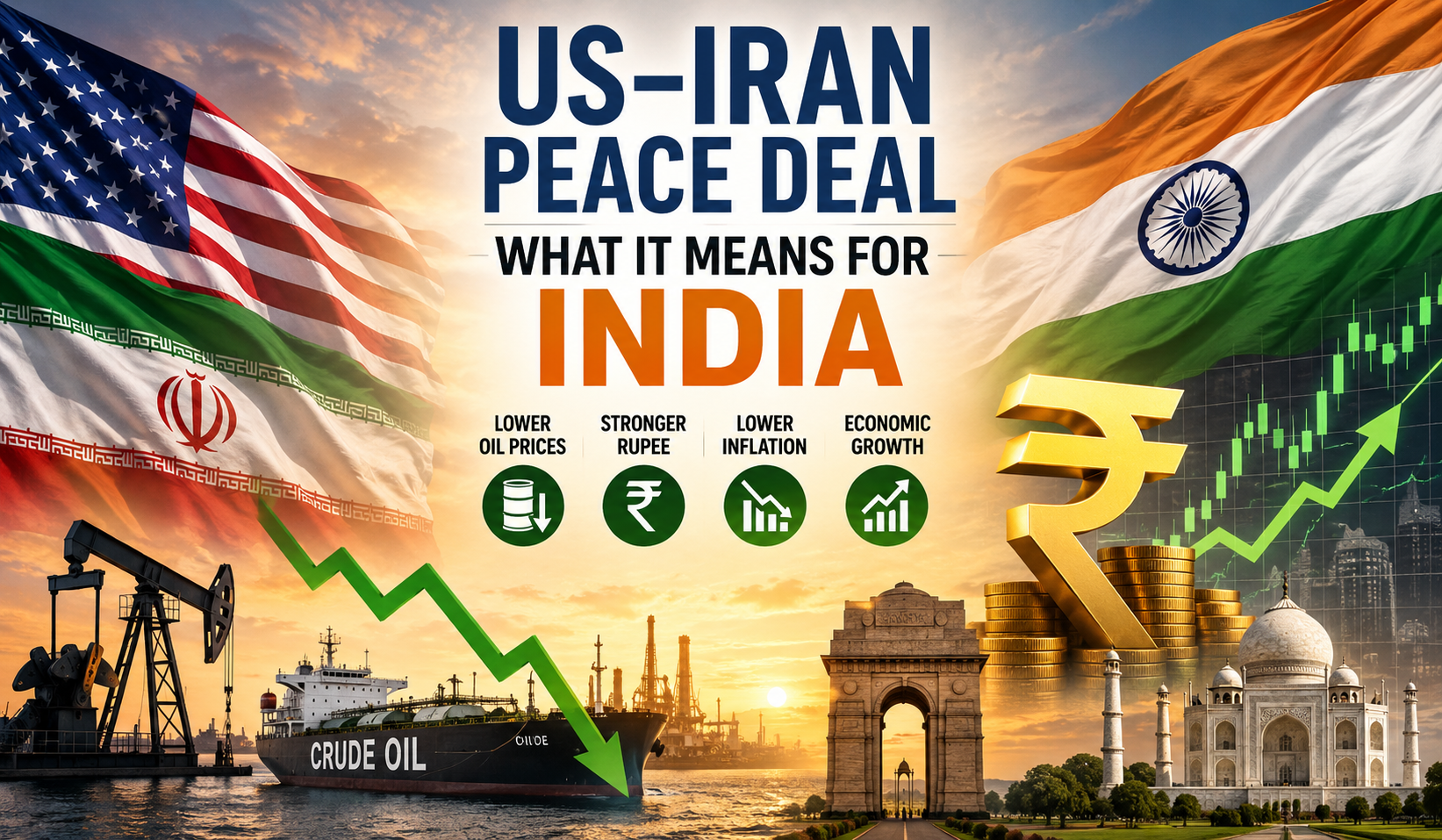
A potential breakthrough in diplomatic relations between the United States and Iran has sparked optimism across global financial markets. One of the biggest beneficiaries of easing tensions could be India, a country that relies heavily on imported crude oil to meet its energy needs. As concerns over supply disruptions fade, crude oil prices have softened, offering hope for lower inflation, a stronger rupee, and improved economic stability.
But what does this development really mean for India’s economy, businesses, and ordinary citizens? Here’s a closer look.
Why the US-Iran Peace Deal Matters
For years, geopolitical tensions involving Iran have had a direct impact on global oil markets. Sanctions, military conflicts, and threats to shipping lanes in the Middle East often caused crude oil prices to spike, affecting countries that depend on imports.
A peace agreement or sustained diplomatic progress between the US and Iran could reduce these risks, improve market confidence, and increase expectations of stable oil supplies. As a result, international crude prices may remain under pressure instead of rising sharply.
Since India imports around 85% of its crude oil requirements, even a modest decline in global prices can significantly reduce the country’s import bill.
Lower Oil Prices Could Benefit India
One of the most immediate advantages for India is the possibility of cheaper crude oil imports.
When global oil prices fall:
- The government and refiners spend less on purchasing crude.
- Energy-intensive industries face lower operating costs.
- Transportation and logistics expenses can decline.
- Manufacturing sectors may see improved profit margins.
These savings can ripple through the economy, benefiting businesses and consumers alike.
Positive Impact on the Indian Rupee
Oil imports require payments in US dollars. When India’s oil bill decreases, the demand for dollars may also reduce, helping support the value of the Indian rupee.
A relatively stronger rupee makes imports more affordable and can reduce pressure on foreign exchange reserves. It may also improve investor confidence by reflecting greater macroeconomic stability.
While exchange rates depend on multiple global and domestic factors, lower energy costs generally provide support to India’s currency.
Can Inflation Come Down?
Fuel prices affect almost every part of the economy. Whether it is transporting vegetables, operating factories, or delivering online orders, energy costs are built into the final price consumers pay.
If crude oil prices remain lower for an extended period:
- Transportation costs may stabilize.
- Manufacturing expenses could decline.
- Food distribution becomes less expensive.
- Overall inflationary pressure may ease.
Lower inflation can give policymakers more flexibility while improving purchasing power for households.
Will Petrol and Diesel Become Cheaper?
Many consumers naturally expect petrol and diesel prices to fall whenever crude oil becomes cheaper. However, the relationship is not always immediate.
Retail fuel prices in India are influenced by several factors, including:
- International crude oil prices
- Taxes imposed by central and state governments
- Refining and transportation costs
- Exchange rate movements
- Pricing decisions by oil marketing companies
Therefore, while lower crude prices improve the possibility of cheaper fuel, any reduction at the pump depends on broader pricing dynamics.
Industries That Could Gain
Several sectors stand to benefit if oil prices remain subdued:
Aviation
Airlines spend a significant portion of their operating budget on aviation fuel. Lower energy costs can improve profitability and reduce financial pressure.
Logistics and Transportation
Trucking companies, shipping operators, and logistics providers may enjoy lower fuel expenses, potentially improving efficiency and margins.
Manufacturing
Industries that depend heavily on energy and transportation could experience lower production costs, making them more competitive.
Consumer Goods
Reduced transportation and packaging expenses can help companies manage costs and potentially keep product prices stable.
Investment and Market Sentiment
Financial markets generally welcome reduced geopolitical tensions. Investors often view easing conflict in energy-producing regions as a positive signal for global growth.
For India, stable oil prices can improve fiscal planning, reduce concerns about inflation, and strengthen confidence among domestic and foreign investors. Equity markets may respond positively, particularly sectors that benefit from lower input costs.
Challenges That Still Remain
Despite the optimistic outlook, uncertainties continue to exist.
The peace process could face political or diplomatic hurdles, and any renewed tensions in the region might quickly push oil prices higher again. Additionally, India’s economy is influenced by other important factors such as monsoon performance, domestic demand, fiscal policy, and global economic conditions.
Therefore, while the agreement is encouraging, policymakers and businesses are likely to remain cautious until long-term stability becomes clearer.
Conclusion
The prospect of improved relations between the US and Iran offers encouraging news for India. Softer crude oil prices could reduce the country’s import bill, support the rupee, ease inflationary pressures, and create a more favorable environment for businesses and consumers.
However, the full impact will depend on whether diplomatic progress translates into lasting regional stability and whether lower global crude prices are sustained over time. For now, the development represents a potentially positive economic opportunity that could provide meaningful relief to one of the world’s fastest-growing major economies.