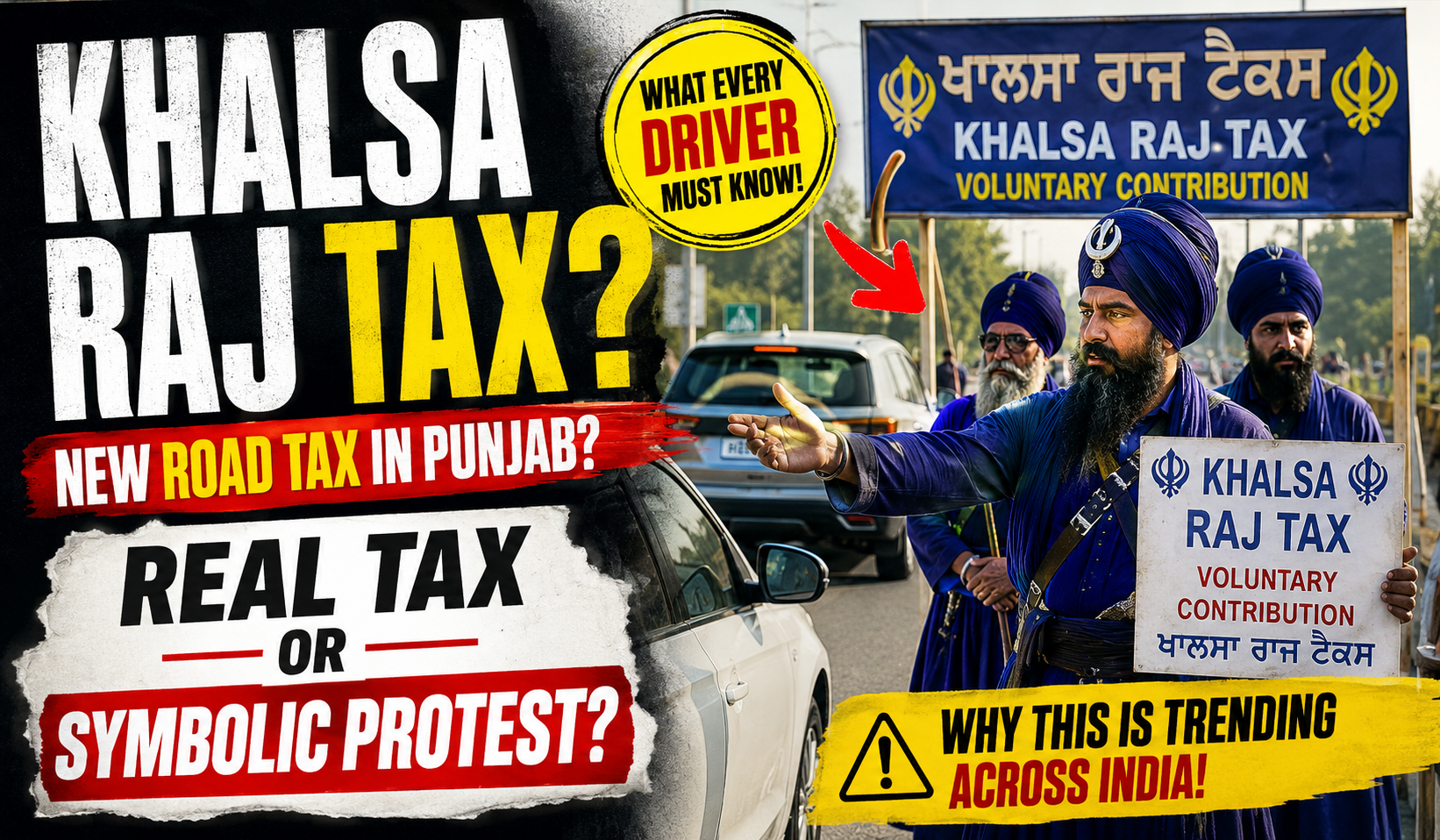
A new controversy has emerged in northern India after reports surfaced of Nihang Sikh groups collecting what they called a “Khalsa Raj Tax” from vehicles entering Punjab. The development quickly sparked debate on social media, with many users questioning whether Punjab had introduced a new road tax.
However, officials and local reports indicate that the so-called “Khalsa Raj Tax” is not an official government levy. Instead, it is being described by organizers as a symbolic protest against Himachal Pradesh’s entry tax imposed on vehicles from outside the state.
The incident has triggered discussions about interstate taxation, regional politics, and the growing frustration among transporters and travelers who frequently move between Punjab and Himachal Pradesh.
What Is the “Khalsa Raj Tax”?
The term “Khalsa Raj Tax” began circulating after Nihang Sikh groups reportedly set up collection points near the Punjab-Himachal Pradesh border. According to local reports, volunteers requested contributions from vehicles entering Punjab, particularly those bearing Himachal Pradesh registration numbers.
Organizers claimed that the collections were voluntary and intended to highlight what they consider unfair treatment of Punjab vehicle owners traveling into Himachal Pradesh.
The move was presented as a symbolic response rather than a legally enforceable tax. Nevertheless, videos and photographs from the protest quickly spread online, leading many people to believe that a new tax had officially been introduced.
Why Did the Protest Begin?
The protest is linked to a long-running dispute regarding entry taxes and fees imposed on vehicles entering Himachal Pradesh.
Many residents, transport operators, and business groups in Punjab have expressed concerns over the costs associated with traveling into Himachal Pradesh. Protesters argue that drivers from Punjab are often required to pay additional charges when entering the neighboring state.
In response, some groups decided to launch a symbolic campaign that mirrors the concept of an entry tax, aiming to draw attention to the issue and pressure authorities to review existing policies.
Supporters of the protest claim that if Punjab residents are required to pay extra fees elsewhere, similar concerns should be raised when vehicles from those states enter Punjab.
Is the Khalsa Raj Tax Legal?
Legal experts and government officials have clarified that the “Khalsa Raj Tax” is not an officially recognized tax under Indian law.
In India, taxes can only be imposed by authorized government bodies through established legal and legislative procedures. Private organizations, community groups, or individuals do not possess the authority to create or enforce taxes on public roads.
Because of this, the collections associated with the protest are generally being viewed as voluntary contributions rather than legally mandated payments.
Authorities continue to monitor the situation to ensure that no motorists are compelled to make payments against their will.
Public Reaction
The protest has generated mixed reactions across social media platforms.
Supporters Say:
- The campaign highlights concerns about interstate taxation.
- It draws attention to the financial burden faced by regular travelers.
- It serves as a peaceful method of protest.
- It encourages governments to revisit disputed tax policies.
Critics Say:
- The name “Khalsa Raj Tax” can create confusion among the public.
- Motorists may mistakenly believe the charge is mandatory.
- Symbolic collections could cause traffic disruptions.
- Such actions may increase tensions between neighboring states.
The debate has intensified online, where users continue to discuss whether the protest effectively addresses the issue or merely creates additional confusion.
Impact on Travelers
For travelers moving between Punjab and Himachal Pradesh, the controversy has raised questions about what fees are officially required.
Transportation experts recommend that motorists rely only on official government notifications and transport department announcements regarding taxes, tolls, and entry charges.
Drivers are also advised to verify information through government portals rather than social media posts, which can sometimes spread inaccurate or incomplete information.
Political Implications
The issue has also taken on political significance.
Several regional groups have used the controversy to highlight broader concerns about interstate cooperation, tourism, transportation costs, and economic policies affecting border regions.
Political observers note that disputes involving taxes, tolls, and vehicle entry fees often become sensitive topics because they directly impact commuters, businesses, and tourism industries.
If the disagreement continues, both Punjab and Himachal Pradesh may face increasing pressure to review existing vehicle taxation policies and seek a mutually acceptable solution.
What Happens Next?
Authorities in both states are expected to keep a close watch on developments. Any long-term resolution will likely require discussions between state governments, transport authorities, and stakeholder groups.
For now, the “Khalsa Raj Tax” remains a symbolic protest rather than an official tax. Nevertheless, the controversy has succeeded in drawing national attention to interstate vehicle charges and the frustrations felt by many drivers who regularly travel between Punjab and Himachal Pradesh.
Conclusion
The “Khalsa Raj Tax” controversy highlights how regional tax disputes can quickly become national talking points in the age of social media. While the collections being made by protest groups are not officially recognized taxes, they have sparked important conversations about fairness, interstate travel costs, and government policies.
As discussions continue, travelers should remain informed through official sources and remember that no government notification has been issued establishing a legal road tax in Punjab under the name “Khalsa Raj Tax.” Whether the protest leads to policy changes remains to be seen, but it has already succeeded in bringing the issue of interstate vehicle taxation into the spotlight.