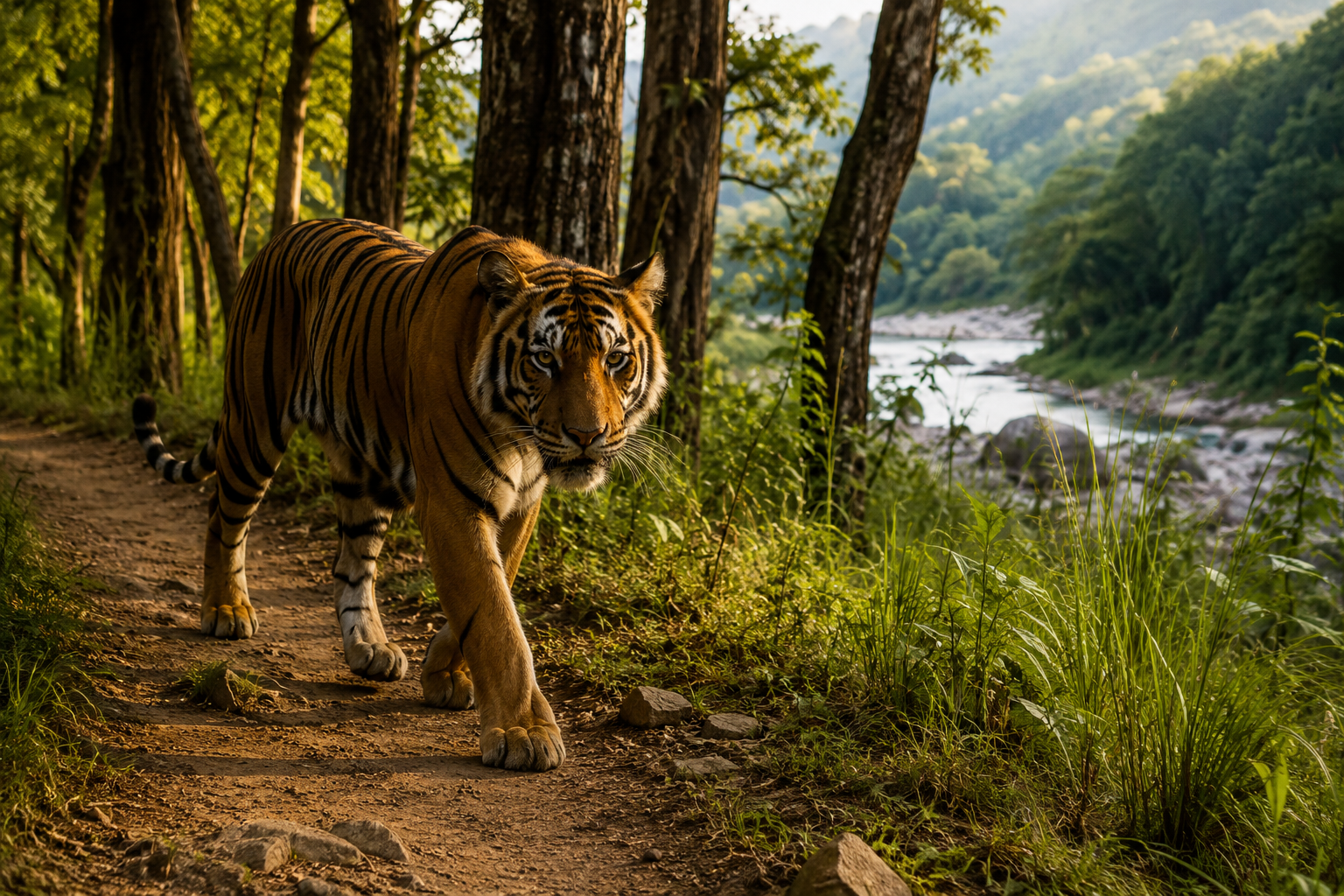
Few conservation stories in the world match India’s effort to protect its tigers. The country holds nearly three-quarters of the world’s wild tiger population. It has also built one of the most extensive networks of protected big-cat habitats anywhere on Earth. Today, India has 58 tiger reserves. They span 18 states and cover roughly 84,487 square kilometers, an area larger than some entire countries. Wildlife lovers, conservationists, and curious travelers can all learn something here. The tiger reserves in India tell a conservation success story. They also showcase some of the country’s most breathtaking forest landscapes.
This guide covers how India’s tiger reserves came to be. It explains what sets them apart from ordinary national parks. It highlights which reserves deserve a spot on your travel list. And it shares the key facts worth knowing about the tigers themselves.
What Exactly Is a Tiger Reserve?
A tiger reserve is a specially notified protected area. Authorities create it specifically to conserve tigers, their prey, and the wider forest ecosystem. Every tiger reserve sits within or overlaps a national park or wildlife sanctuary. But not every national park qualifies as a tiger reserve. The Wildlife Protection Act of 1972 governs these reserves. The National Tiger Conservation Authority (NTCA) manages them, operating under India’s Ministry of Environment, Forests, and Climate Change.
Each reserve follows a “core-buffer” management model. The core zone stays largely undisturbed, giving tigers and their prey room to thrive. The surrounding buffer zone allows limited, regulated activity, including controlled tourism and local community access. This structure helps India balance conservation with tourism and local livelihoods.
The Story Behind Project Tiger
The tiger reserves in India owe their existence to Project Tiger. India launched the initiative in 1973 in response to alarming declines in the tiger population. That same year, the Bengal tiger officially became India’s national animal, replacing the lion. The tiger’s endangered status made the symbolic shift feel urgent at the time. Project Tiger began with just nine reserves, covering around 18,278 square kilometers. More than five decades later, the network has grown more than sixfold to 58 reserves under NTCA oversight.
Recent additions show just how active this expansion remains. Madhya Pradesh’s Madhav Tiger Reserve became the 58th on the list. Before it came the Ratapani Tiger Reserve, also in Madhya Pradesh, and the Guru Ghasidas-Tamor Pingla Tiger Reserve in Chhattisgarh. Rajasthan added its own milestone with the Dholpur-Karauli Tiger Reserve, notified in 2023 in the Aravali range. This steady growth shows that tiger conservation in India remains an active, evolving priority.
How Many Tigers Does India Actually Have?
India conducts the All India Tiger Estimation roughly every four years. The tiger population rose from 2,967 in 2018 to 3,682 in 2022, a striking recovery for a species that once teetered on the edge of extinction in the wild. Madhya Pradesh currently holds the country’s largest tiger population at 785. Karnataka follows with 563, then Uttarakhand with 560, and Maharashtra with 444. A new tiger census cycle began in early 2026. Field teams have largely finished data collection, and researchers now expect results after the analysis phase wraps up.
Some reserves stand out for sheer tiger density. Jim Corbett National Park in Uttarakhand holds the highest number of tigers of any single reserve, at around 260. Bandipur and Nagarhole in Karnataka follow close behind.
The Tiger Reserves in India Worth Visiting First
India’s 58 reserves can make narrowing down a visit feel overwhelming. A handful consistently stand out for their scenery, tiger sightings, and accessibility.
- Jim Corbett National Park, Uttarakhand: Corbett holds the title of India’s oldest national park and arguably its most famous tiger habitat. It combines dense sal forests, grasslands, and river valleys with the country’s highest single-reserve tiger count. Its long-established safari infrastructure makes it an easy pick for first-time visitors.
- Bandipur and Nagarhole, Karnataka: These adjoining reserves form part of the larger Nilgiri Biosphere Reserve. They offer excellent sighting odds and a rich mix of wildlife beyond tigers, including elephants and gaur. Karnataka holds five tiger reserves in total, making it a strong base for a multi-park wildlife trip.
- Ranthambore, Rajasthan: Ranthambore’s tigers move through open, daylight terrain more comfortably than most. Combined with a ruined fortress backdrop, this makes it one of the most photogenic reserves in the country.
- Nagarjunsagar-Srisailam, Andhra Pradesh and Telangana: This reserve holds the title of India’s largest tiger reserve by area, spanning five districts. Its scale and lower tourist footfall appeal to travelers seeking a wilder, less crowded experience.
- Kanha and Bandhavgarh, Madhya Pradesh: Madhya Pradesh holds more tiger reserves than any other state, with nine in total. Locals often call it the “Tiger State” of India as a result. Kanha reportedly inspired parts of Rudyard Kipling’s Jungle Book setting. Bandhavgarh, meanwhile, stands out for its high tiger density.
Planning a Visit to India’s Tiger Reserves
A few practical points make a real difference when planning a trip:
- Best season: Most reserves stay open from October to June. The drier months of March to May often produce the best sightings, since animals gather near remaining water sources. Reserves typically close during the monsoon, from July to September, for ecological recovery.
- Book safaris early: Entry runs on a strict permit system. Popular reserves like Corbett, Ranthambore, and Bandhavgarh can sell out well in advance, especially around weekends and holidays.
- Choose your reserve based on goals: Prioritize a tiger sighting? Reserves with higher recorded densities, like Corbett, Bandipur, or Bandhavgarh, offer better odds. Want fewer crowds and a wilder feel instead? Consider larger, lesser-visited reserves like Nagarjunsagar-Srisailam.
- Respect the buffer zones: Most regulated tourism happens in buffer areas, keeping core zones undisturbed. Understanding this distinction helps set realistic expectations about where jeep safaris actually operate.
Why These Reserves Matter Beyond Tigers
Tiger reserves protect far more than tigers alone. Tigers sit at the top of the food chain, so protecting them means protecting entire forest ecosystems, from prey species and smaller predators to water catchments and carbon-storing forest cover. Manas in Assam even carries UNESCO World Heritage status alongside its role as a biosphere reserve. This overlap shows how tiger conservation often ties into broader ecological and cultural significance.
Final Thoughts
The tiger reserves in India represent one of the most ambitious conservation efforts in the world. The network has grown from nine reserves in 1973 to 58 today, while the tiger population has more than doubled from its lowest points. Corbett’s storied safari trails, Ranthambore’s fortress backdrops, and the vast wilderness of Nagarjunsagar-Srisailam each offer their own version of India’s wild heart. Plan ahead, respect park regulations, and pick the right season, and you’ll turn a good trip into an unforgettable one. Either way, you’ll witness a conservation story that’s still being written.