Bringing greenery indoors is one of the simplest ways to make a home feel calmer, cleaner, and more alive. But with so many options at the nursery, it helps to know your indoor plants’ names before you buy, since every plant comes with its own personality: some are forgiving, some are fussy, and some are downright needy. This guide walks through popular indoor plant names grouped by the kind of plant parent they suit best, with detailed care notes on light, water, humidity, and common issues, so you can build a collection that actually fits your lifestyle.
For the Total Beginner: Indoor Plants Names That Forgive Mistakes
If you’ve killed a plant or two before, start here. These indoor plant names are built to survive irregular watering, inconsistent light, and general neglect.
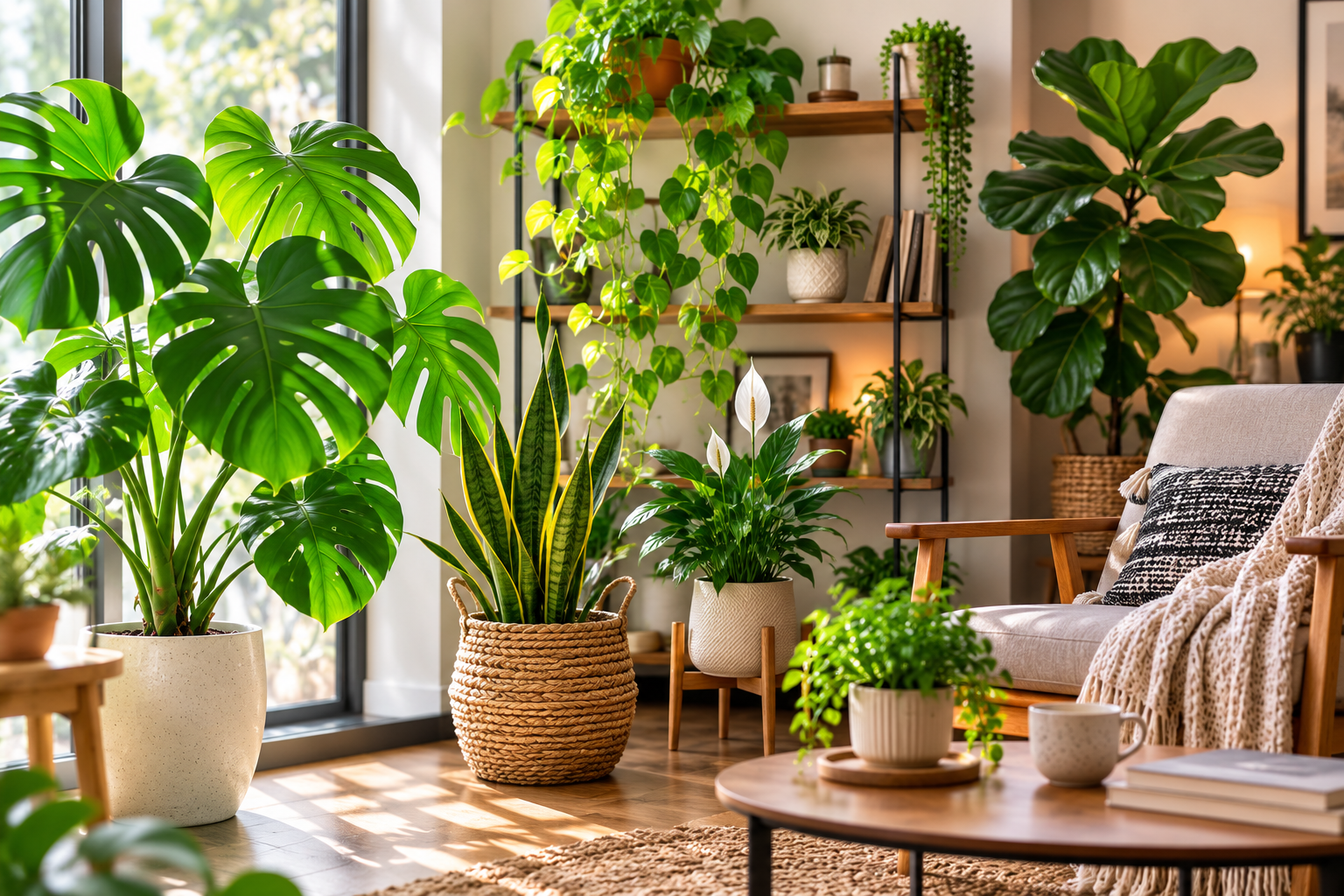
Snake Plant (Sansevieria):
Possibly the most forgiving houseplant that exists. Its thick, upright leaves store water, so the soil can withstand nearly any light condition if you allow it to completely dry out in between waterings, which should happen every two to three weeks. It tolerates dim corners as well as bright rooms, doesn’t mind dry indoor air, and rarely attracts pests. The main risk is root rot from watering too often, so a well-draining pot with a drainage hole is worth the investment. It’s mildly toxic if chewed by pets, so keep it out of reach of curious cats.
Pothos (Epipremnum aureum):
A trailing vine with heart-shaped leaves that bounces back even after being forgotten for a couple of weeks. Once the top inch of soil is dry, add water. Pothos adapts to almost any light level, though variegated varieties keep their patterned leaves better in brighter spots. It’s a fast grower, so occasional trimming keeps vines from getting leggy, and any cutting can easily be rooted in a glass of water to start a new plant. It’s toxic to pets if ingested.
ZZ Plant (Zamioculcas zamiifolia):
Stores water in its stems, so it can go two to three weeks between waterings. Its biggest enemy is overwatering, not underwatering. The glossy, dark green leaves have a naturally waxy sheen that needs no special polishing, and the plant tolerates fluorescent office lighting better than most houseplants. It grows slowly, so it won’t outgrow a small space quickly, but this also means patience is needed if you’re hoping for a fuller look. All parts are toxic if eaten, so it’s best kept away from pets and small children.
For Pet Owners: Indoor Plants Names That Are Safer Around Curious Pets
Some popular houseplants are toxic if chewed on, which matters if you share your home with cats or dogs. These options are generally considered non-toxic, though it’s always worth double-checking with your vet before bringing home anything new.
Spider Plant (Chlorophytum comosum):
Easy to propagate from its dangling babies, and safe enough for homes with playful pets. Water generously whenever the soil feels dry, and expect it to tolerate occasional missed waterings without much complaint. It thrives in bright, indirect light but also does reasonably well in medium light, making it flexible for different rooms. Brown leaf tips are common and usually just mean the air is dry or the water has too many minerals; switching to filtered water often helps.
Parlor Palm (Chamaedorea elegans):
Brings a tropical look to dim entryways and offices and is considered pet-friendly. Don’t let the soil get waterlogged; instead, keep it uniformly moist. It’s naturally slow-growing and stays compact for years, which makes it a good long-term choice for smaller spaces. It also handles lower humidity better than many other palms, so it doesn’t demand frequent misting to stay healthy.
Areca Palm:
A taller, feathery option for pet households that also want a statement plant. Water weekly, keeping the soil consistently moist but never waterlogged. It appreciates higher humidity, so placing it in a bathroom with natural light or near a humidifier can help prevent crispy leaf tips. Given enough space and light, it can eventually grow several feet tall, making it a good option for filling an empty corner.
For Anyone Wanting Cleaner Air: Indoor Plants Names Known for Air Purification
While no houseplant replaces an air purifier, a few indoor plant names are frequently recommended for helping filter indoor air.
Peace Lily (Spathiphyllum):
Its drooping leaves make it easy to know exactly when it needs water. Keep it out of direct sun and away from temperatures below roughly 55°F. It flowers with elegant white blooms under the right conditions, typically in spring or summer, and prefers consistently moist, but not soggy, soil. It’s one of the few houseplants that visibly “tells” you when it’s thirsty, which makes it a good option for beginners who tend to forget watering schedules. It is toxic to pets if chewed.
Rubber Plant (Ficus elastica):
Broad, glossy leaves and a tolerance for a range of indirect light levels. When the soil is only a little bit dry to the touch, water it. Wiping the large leaves occasionally with a damp cloth keeps them dust-free and helps the plant photosynthesize more efficiently. It can grow quite tall indoors over time, and pruning the top encourages a fuller, bushier shape rather than a single tall stem.
Aloe Vera:
Doubles as a natural remedy for minor burns and skin irritation. Let the soil dry out fully between waterings, and use a well-draining, cactus-style potting mix. It needs bright light, ideally a sunny windowsill, to stay compact and healthy; without enough light, it can grow thin and leggy. Mature plants often produce small offset “pups” at the base that can be separated and repotted to grow new plants.
For Small Spaces: Compact Indoor Plants Names That Don’t Take Over
Not every home has room for a floor-to-ceiling monstera. These indoor plant names stay compact and work well on desks, shelves, and windowsills.
Heartleaf Philodendron:
A softer, smaller cousin of pothos that trails nicely from a shelf or hanging planter. Water weekly once the top layer of soil dries. It tolerates lower light better than many trailing plants, though it grows fuller and faster in bright, indirect light. Pinching the tips of the vines sometimes promotes bushier growth rather than long, sparse strands.
Haworthia:
A slow-growing succulent that stays neat on a narrow windowsill. Let the soil dry up in between waterings. It rarely requires care more than once every several weeks because of how well its thick, striped leaves hold water. It prefers bright, indirect light rather than harsh direct sun, which can scorch its leaves, and it stays small enough to thrive in a compact pot for years.
Peperomia:
Compact and nearly foolproof, rarely needing repotting. Water moderately, letting the soil dry to the touch before watering again. With dozens of varieties, ranging from ripple-textured leaves to more rounded, glossy ones, it’s an easy way to add visual variety to a small plant collection without taking up much space.
A Showstopper for Plant Parents
If you want a plant that becomes the focal point of a room, these indoor plant names are worth the slightly higher maintenance.
Monstera Deliciosa:
Known for its dramatic, naturally split leaves. Every one to two weeks, give it a thorough watering; when it’s thirsty, expect noticeable drooping. A moss pole or post to climb helps it grow larger, more deeply split leaves as it gets older. It prefers bright, indirect light; too little light often results in smaller leaves with fewer of the signature splits.
Fiddle-Leaf Fig:
Large, glossy leaves that instantly change the feel of a room, though it can be particular about consistent light and watering. It is best stored away from the intense afternoon sun and close to an east-facing window. It dislikes being moved frequently or exposed to cold drafts, both of which can cause sudden leaf drop, so once you find a spot it likes, it’s best to leave it there.
Calathea (Prayer Plant):
Grown for its striking patterned foliage. Prefers evenly moist soil, and can be sensitive to tap water, so filtered water is gentler on the roots. It also appreciates higher humidity, and its leaves are known to fold upward in the evening and open again in the morning, a movement that gives the “prayer plant” nickname its meaning.
A Brief Guide on Choosing Names for Indoor Plants
- Match light to your space first. Check how much natural light a room actually gets before falling for a specific plant: it’s the single biggest factor in whether it thrives.
- Consider your household. Pets, small children, and how often you travel should all shape which indoor plant names make sense for you.
- Start easy, then level up. Build confidence with forgiving plants before moving on to fussier ones like fiddle-leaf figs or calatheas.
- Don’t overwater. More houseplants are lost to overwatering than underwatering: when in doubt, wait a few extra days.
- Watch the leaves, not the calendar. Drooping, yellowing, or curling leaves usually say more about a plant’s needs than any fixed watering schedule.
Final Thoughts
Knowing the names of your indoor plants and choosing ones that fit your lifestyle rather than just your Pinterest board makes a big difference, whether you’re just starting your indoor jungle or growing an existing collection. It’s the difference between a thriving home and a windowsill full of disappointment. Start with a plant or two that matches how you actually live, and build from there. Over time, you’ll develop an instinct for which indoor plant names work best in your home, and your space will feel a little greener, calmer, and more alive for it.