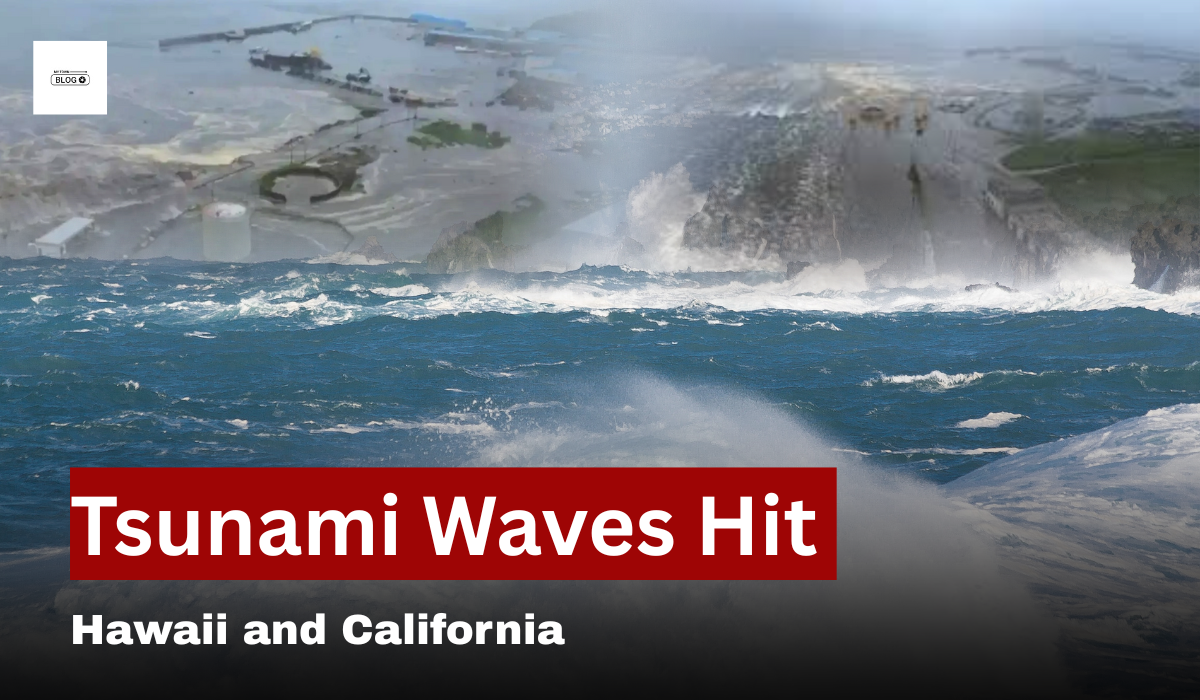
In a dramatic chain of events that sent shockwaves across the Pacific, a massive magnitude 8.8 earthquake struck off the Kamchatka Peninsula in Russia on July 29, 2025. The undersea quake triggered tsunami warnings and advisories across various parts of the Pacific, including Hawaii, Alaska, California, and even parts of Japan and Canada. While the initial threat sparked large-scale evacuations and widespread anxiety, the damage reported so far has been minimal — a relief for many coastal communities.
A Record-Breaking Quake Near Russia
The epicenter of the earthquake was located off the east coast of Russia’s Kamchatka Peninsula — a seismically active region known as part of the “Ring of Fire.” The quake, one of the strongest recorded globally in recent years, had a shallow depth of approximately 18 kilometers, which significantly amplified its tsunami-generating potential.
Seismic activity of this magnitude can displace vast amounts of water, causing tsunami waves capable of crossing ocean basins. Within minutes of the quake, the Pacific Tsunami Warning Center (PTWC) and US National Weather Service (NWS) issued alerts for areas along the Pacific Rim.
Hawaii Feels the First Impact
The first region to experience the effects was Hawaii. By around 7:17 p.m. local time, tsunami waves began reaching coastal areas such as Kahului (Maui) and Hilo (Big Island). Wave heights of up to 4.9 feet were recorded in some places, prompting emergency sirens and immediate evacuations from low-lying zones.
Hawaii’s Governor reassured the public during a late-night press conference, stating that “no wave of major consequence” had been observed and that the situation was well managed. Though the tsunami warning was later downgraded to an advisory, residents were urged to stay alert and avoid beaches and marinas due to the risk of continued dangerous currents.
Flight operations at major airports were temporarily halted or delayed, and businesses near the coast remained closed as a precaution during the high alert period.
California’s Northern Coast on High Alert
Further east, California’s north coast was identified as particularly vulnerable. The city of Crescent City, which has a tragic history with tsunamis — including the devastating 1964 event — was placed under a tsunami warning. Wave heights of 1.6 feet were recorded early Wednesday morning, with the potential for surges as high as 5 feet due to tidal effects and wave cycles.
Authorities in Del Norte, Humboldt, and Mendocino counties activated emergency plans, ordering evacuations in vulnerable areas. Local residents were instructed to move inland and stay away from harbors, beaches, and river mouths. Emergency shelters were opened for evacuees, and schools in certain districts remained closed.
For the rest of coastal California, including the San Francisco Bay Area, Los Angeles, and San Diego, a tsunami advisory remained in place. Though the expected wave heights were lower — generally under 1 foot — the advisory cautioned against hazardous surf and strong, unpredictable currents.
Impacts Beyond the United States
The quake’s effects weren’t limited to the U.S. In eastern Russia, waves exceeding 5 meters (16 feet) were observed along the Kamchatka coastline and in parts of the Kuril Islands. Local media reported minor infrastructure damage and several injuries, but no fatalities as of the latest updates.
In Japan, particularly in northern regions such as Hokkaido and Fukushima, tsunami advisories were also issued. Waves of up to 1 meter reached some coastal towns. Authorities temporarily suspended operations at nuclear facilities as a precaution, although no abnormalities were reported.
Coastal towns in British Columbia, Canada, and parts of Alaska were also under tsunami advisories, with officials urging residents to stay off beaches and avoid boating activity.
Alert Levels and Public Response
The various alert levels created confusion among the public in some areas. To clarify:
- A Tsunami Warning indicates that dangerous waves are imminent or already occurring and demands immediate evacuation.
- A Tsunami Advisory means strong currents or waves are expected, and the public should stay away from the coast.
- A Tsunami Watch, issued earlier in the event, is more precautionary and was later upgraded or canceled depending on regional threat levels.
Despite the initial panic in many communities, public response and coordination among emergency services were largely effective. In places like Hawaii and northern California, people complied with evacuation orders, and authorities credited public education and preparedness campaigns for avoiding casualties.
What’s Next?
Experts warn that the situation may not be over. Aftershocks following such a major seismic event are highly likely and could continue for weeks. Some of these could be strong enough to trigger additional tsunami alerts.
The Pacific Tsunami Warning Center continues to monitor wave activity across the region, as tsunami wave patterns often come in cycles that can last up to 24 to 36 hours. Even in areas where the advisory has been lifted, officials stress the need for caution near the water.
Authorities are also urging residents in coastal zones to keep emergency kits ready, sign up for local emergency alert systems, and follow instructions from local government agencies.
Final Thoughts
The earthquake near Russia’s Kamchatka Peninsula has once again reminded the world of the immense power of nature. While the Pacific Rim was spared a large-scale disaster this time, the event highlighted the critical importance of early warning systems, public readiness, and international coordination in minimizing harm.
As the Pacific calms, communities from Hawaii to California are breathing a sigh of relief—but the need for preparedness remains stronger than ever.