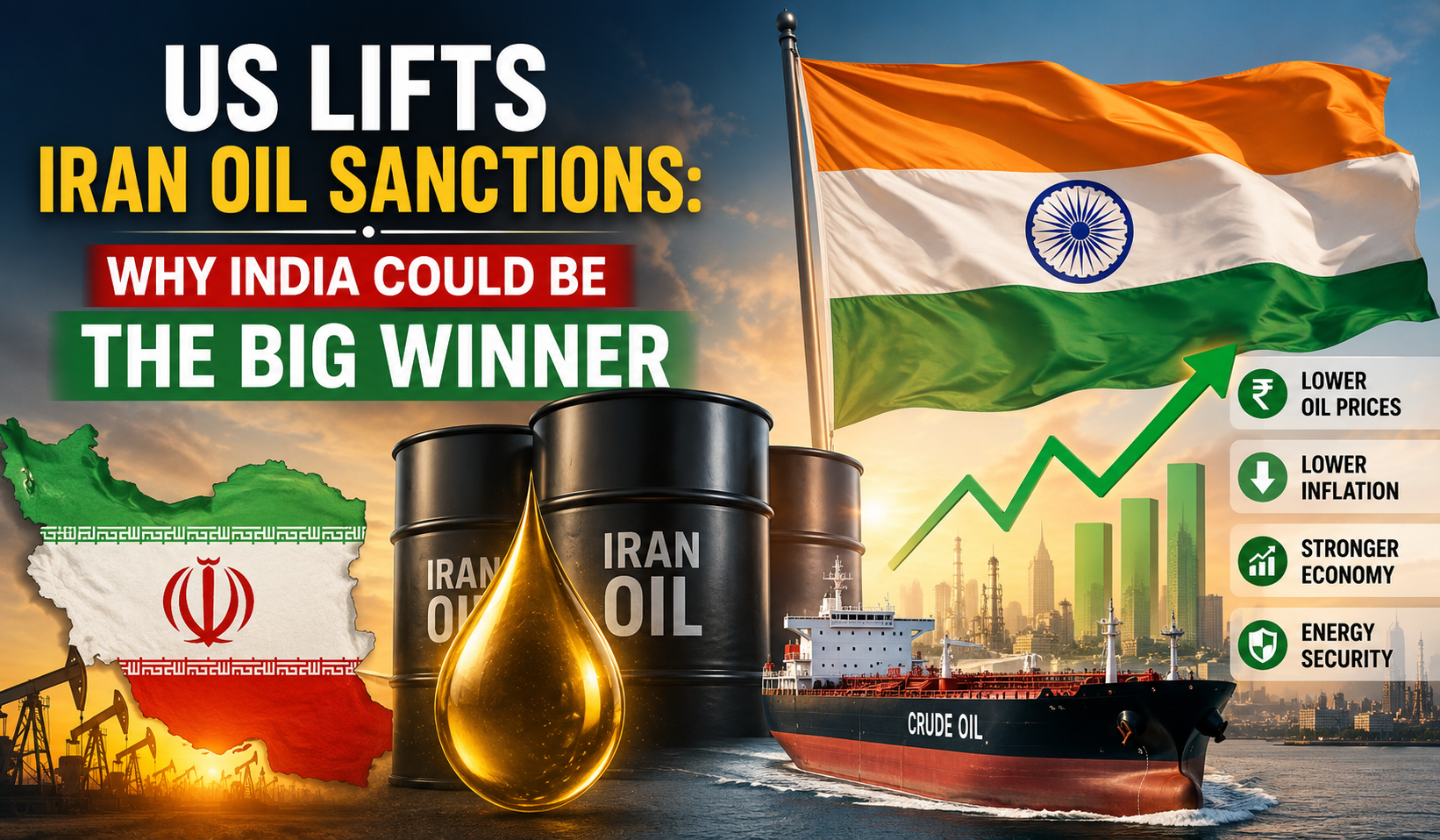
A major shift in global energy politics has captured international attention after the United States announced a temporary easing of sanctions on Iranian oil exports. The decision, introduced as part of ongoing diplomatic efforts with Iran, could reshape global crude markets and create new opportunities for oil-importing nations — especially India.
For India, which depends heavily on imported crude oil to fuel its economy, this development could bring economic relief, stronger energy security, and greater flexibility in global trade negotiations.
What Has Changed?
The United States has provided a temporary relaxation of restrictions related to Iranian oil exports for a limited period while diplomatic discussions continue.
For years, sanctions had sharply reduced Iran’s ability to sell oil internationally. These restrictions affected shipping, financial transactions, insurance, and access to global markets.
With the easing of these controls, Iran may once again increase crude exports, adding more supply to international markets.
The announcement immediately drew global attention because oil prices influence everything from transport costs to inflation and industrial growth.
Why Does This Matter to India?
India is among the world’s largest consumers and importers of crude oil. Since domestic production covers only a portion of national demand, India relies heavily on international suppliers.
Whenever global oil prices rise, India faces:
- Higher import bills
- Increased fuel prices
- Pressure on inflation
- Additional strain on government finances
A larger supply of crude in global markets generally helps stabilize prices, which directly benefits countries like India.
India and Iran: A Long Oil Relationship
India and Iran have maintained energy ties for decades.
Before stricter sanctions were imposed in previous years, Iran was one of India’s important crude suppliers. Indian refiners had experience processing Iranian oil, and commercial arrangements between both countries often included favorable payment and shipping terms.
However, sanctions significantly reduced Indian purchases and pushed refiners toward alternative suppliers.
Now, with restrictions easing, discussions around potential future trade opportunities have returned.
Lower Oil Prices Could Benefit Every Indian Household
If additional Iranian crude enters global markets and keeps prices under control, Indian consumers could indirectly benefit.
Possible advantages include:
1. Reduced Fuel Cost Pressure
Lower crude prices may reduce pressure on petrol and diesel pricing.
2. Lower Inflation
Transportation costs affect food, manufacturing, and consumer goods. Stable energy prices can help control inflation.
3. Stronger Economic Growth
Businesses operating in manufacturing, aviation, logistics, and infrastructure often perform better when energy costs remain manageable.
4. Support for the Rupee
A lower oil import bill may reduce pressure on India’s foreign exchange spending.
India Gains More Negotiating Power
Even if India does not immediately restart large-scale purchases from Iran, the presence of another available supplier changes market dynamics.
Countries that import large quantities of crude often negotiate prices and contracts with multiple exporters. Greater supply options may strengthen India’s position in future energy discussions.
This strategic flexibility could become increasingly important as global energy markets remain uncertain.
But There Is One Important Catch
Experts caution that the current relaxation is temporary and tied to diplomatic developments.
The policy does not automatically mean unrestricted long-term trade.
Future decisions will depend on:
- Progress in US–Iran negotiations
- International compliance conditions
- Global political stability
- Energy market reactions
Because of this uncertainty, Indian refiners and policymakers are expected to monitor developments carefully rather than make immediate large-scale changes.
What Happens Next?
The coming weeks could determine whether this becomes a short-term market adjustment or the beginning of a broader shift in global oil trade.
For India, the possibility of lower energy costs and improved supply flexibility presents a potentially positive economic opportunity.
While immediate changes may not be visible at petrol pumps overnight, developments in global oil policy often create ripple effects that influence economies around the world — and India could emerge as one of the key beneficiaries.
As global markets react and diplomatic talks continue, energy security remains one of the biggest stories to watch in 2026.