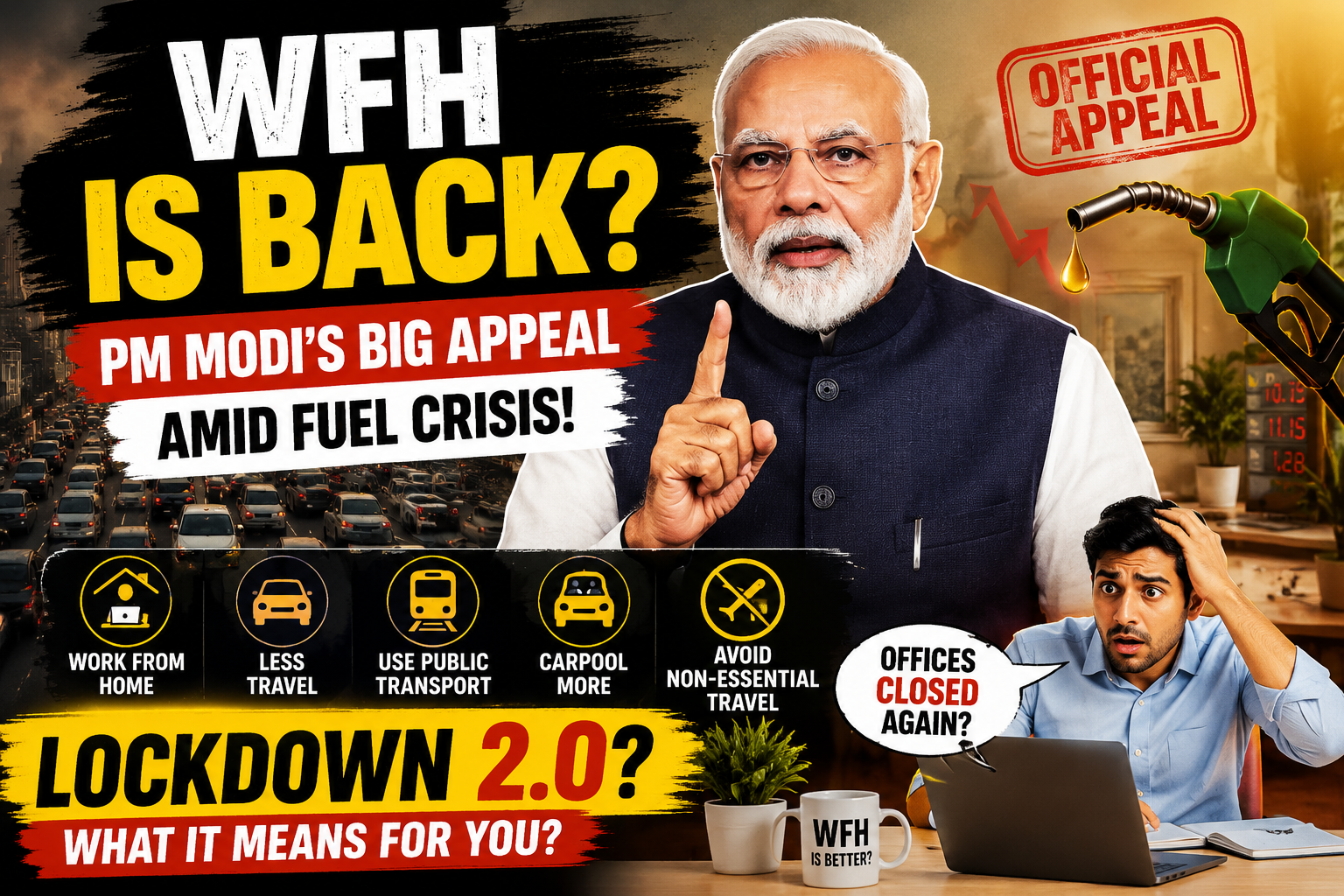
India woke up to an unexpected trend this week — “WFH Narendra Modi.” Social media platforms exploded with memes, debates, office jokes, and serious discussions after Prime Minister Narendra Modi urged citizens and companies to reduce unnecessary fuel consumption and consider practices like work from home (WFH) wherever possible.
For millions of Indians, especially IT employees, the statement immediately reminded them of the Covid-era lockdown days when remote work became the new normal. But this time, the reason is completely different.
The discussion is linked to:
- Rising global crude oil prices
- The ongoing Iran–West Asia conflict
- Pressure on India’s fuel imports
- Economic caution measures
- Foreign exchange reserve concerns
While no lockdown or mandatory work-from-home order has been announced, PM Modi’s comments have sparked a nationwide conversation about fuel saving, hybrid offices, and whether India could temporarily shift back toward remote work culture.
What Exactly Did PM Modi Say?
During a recent public address, PM Modi appealed to citizens and industries to use petroleum products carefully and reduce unnecessary fuel consumption. He encouraged:
- More virtual meetings
- Reduced non-essential travel
- Public transport usage
- Carpooling
- Work from home wherever possible
The appeal came as India closely monitors the impact of global geopolitical tensions on fuel prices and the economy.
The statement was not a strict government order. Instead, it was presented as a preventive and responsible national approach during uncertain international conditions.
Why Is India Concerned About Fuel Consumption Right Now?
India imports a massive percentage of its crude oil from foreign countries. Whenever global tensions rise in oil-producing regions, fuel prices can increase sharply.
The ongoing tensions in West Asia, especially involving Iran-related geopolitical instability, have created fears of:
- Higher crude oil prices
- Increased transportation costs
- Inflation pressure
- Economic slowdown risks
If crude oil prices continue rising:
- Petrol and diesel prices may increase
- Flight tickets could become more expensive
- Daily transportation costs may rise
- Businesses may face higher operational expenses
That’s one reason why the government is encouraging fuel-saving practices early rather than reacting later.
Why “Work From Home” Became the Biggest Talking Point
Among all the suggestions, the phrase “work from home” immediately grabbed public attention.
For office workers, especially in cities like:
- Bengaluru
- Hyderabad
- Pune
- Gurugram
- Noida
WFH means:
- Less commuting
- Lower fuel usage
- Reduced traffic
- More flexibility
- Lower transportation expenses
As soon as the statement surfaced online, hashtags like:
- #WFH
- #NarendraModi
- #WorkFromHome
- #FuelSaving
- started trending rapidly across social media.
Also Read: Why PM Modi Asked Indians to Avoid Buying Gold for a Year
Social Media Reactions: Memes, Jokes & Serious Debate
Indian internet users reacted instantly.
Some users joked:
“Covid memories unlocked.”
Others posted:
“Employees are happier than companies right now.”
Many IT professionals supported the idea because they spend hours daily in traffic and fuel expenses.
At the same time, some companies and office managers disagreed, arguing that:
- Office productivity improves with in-person work
- Collaboration becomes easier physically
- Company culture weakens in long-term remote setups
The internet quickly split into two groups:
- People wanting permanent hybrid/WFH culture
- Companies preferring employees back in office
Is India Going Into Another Lockdown?
No.
This is the biggest misconception spreading online.
There is:
- No lockdown announcement
- No emergency order
- No Covid-related restriction
- No nationwide WFH mandate
The government’s message is currently advisory in nature and mainly focused on:
- Fuel conservation
- Economic preparedness
- Responsible energy usage
Experts say comparing the current situation to the Covid lockdown is inaccurate.
Why IT Employees Are Supporting WFH Again
Many tech employees across India have openly supported the idea of temporary or hybrid remote work.
Reasons include:
- High fuel prices
- Long commute times
- Traffic stress
- Better work-life balance
- Saving money on travel and food
Employees in metro cities often spend:
- 2 to 4 hours daily commuting
- Thousands monthly on petrol or cab services
For them, WFH is not just convenience — it’s economic relief.
Some employee groups have reportedly requested the government to issue broader advisory recommendations for the IT sector.
How Companies May Respond
Different industries are likely to react differently.
Industries That Can Easily Shift to WFH
- IT companies
- Digital marketing firms
- Customer support
- Content agencies
- Software development
- Remote consulting businesses
Industries That Cannot Fully Operate Remotely
- Manufacturing
- Construction
- Retail stores
- Logistics
- Hospitality
- Healthcare
Most experts believe India may see:
- Hybrid office models
- Flexible work schedules
- Reduced travel policies
- instead of a full nationwide WFH return.
Economic Impact of WFH
If large companies adopt partial work-from-home systems again, India could see several effects.
Positive Effects
Reduced Fuel Consumption
Fewer vehicles on roads means lower petrol and diesel usage.
Less Traffic Congestion
Cities like Delhi and Mumbai may experience smoother traffic conditions.
Lower Pollution
Reduced commuting can help lower air pollution levels.
Savings for Employees
Workers may save money on:
- Fuel
- Public transport
- Food
- Parking
Negative Effects
Impact on Local Businesses
Shops near offices may lose customers.
Commercial Real Estate Pressure
Office spaces may see lower occupancy.
Work-Life Balance Challenges
Some employees struggle with:
- Isolation
- Longer working hours at home
- Mental burnout
Could Hybrid Work Become India’s Permanent Future?
Many experts believe the future of Indian work culture may become hybrid.
This means:
- Some days from office
- Some days from home
The pandemic already changed workplace expectations permanently. Companies now know that many jobs can function remotely with:
- Video calls
- Cloud systems
- Online collaboration tools
PM Modi’s recent comments may further accelerate discussions around flexible work culture.
Why Fuel Saving Matters for India
India is one of the world’s largest energy consumers. Even small reductions in fuel usage can make a major difference nationally.
Fuel conservation helps:
- Reduce import pressure
- Control inflation
- Protect foreign exchange reserves
- Stabilize transportation costs
That’s why governments often encourage public participation during global economic uncertainty.
Public Transport & Carpooling Also Part of the Plan
The discussion is not only about WFH.
The government also emphasized:
- Metro usage
- Shared rides
- Public buses
- Smart fuel usage habits
Many urban planners say this could help India reduce congestion in major metro cities over time.
Internet Trends Around “WFH Narendra Modi”
Searches rapidly increased for:
- “WFH Narendra Modi”
- “Is WFH back in India?”
- “Modi work from home statement”
- “Will IT companies start WFH again?”
The trend became especially popular because Indians still strongly remember:
- Covid lockdowns
- Empty offices
- Zoom meetings
- Remote working lifestyles
The phrase instantly triggered nostalgia, fear, excitement, and humor all at once.
Final Thoughts
The “WFH Narendra Modi” trend is more than just a meme. It reflects:
- India’s economic concerns
- Rising fuel pressure
- Changing workplace culture
- Public interest in flexible work
At the moment, there is no official nationwide work-from-home order. However, PM Modi’s appeal has restarted an important national conversation about how India can save fuel, reduce unnecessary travel, and adapt to modern working systems during uncertain global conditions.
Whether companies fully embrace WFH again or move toward hybrid work models, one thing is clear:
India’s work culture continues to evolve — and this latest debate may shape the future of offices for years to come.