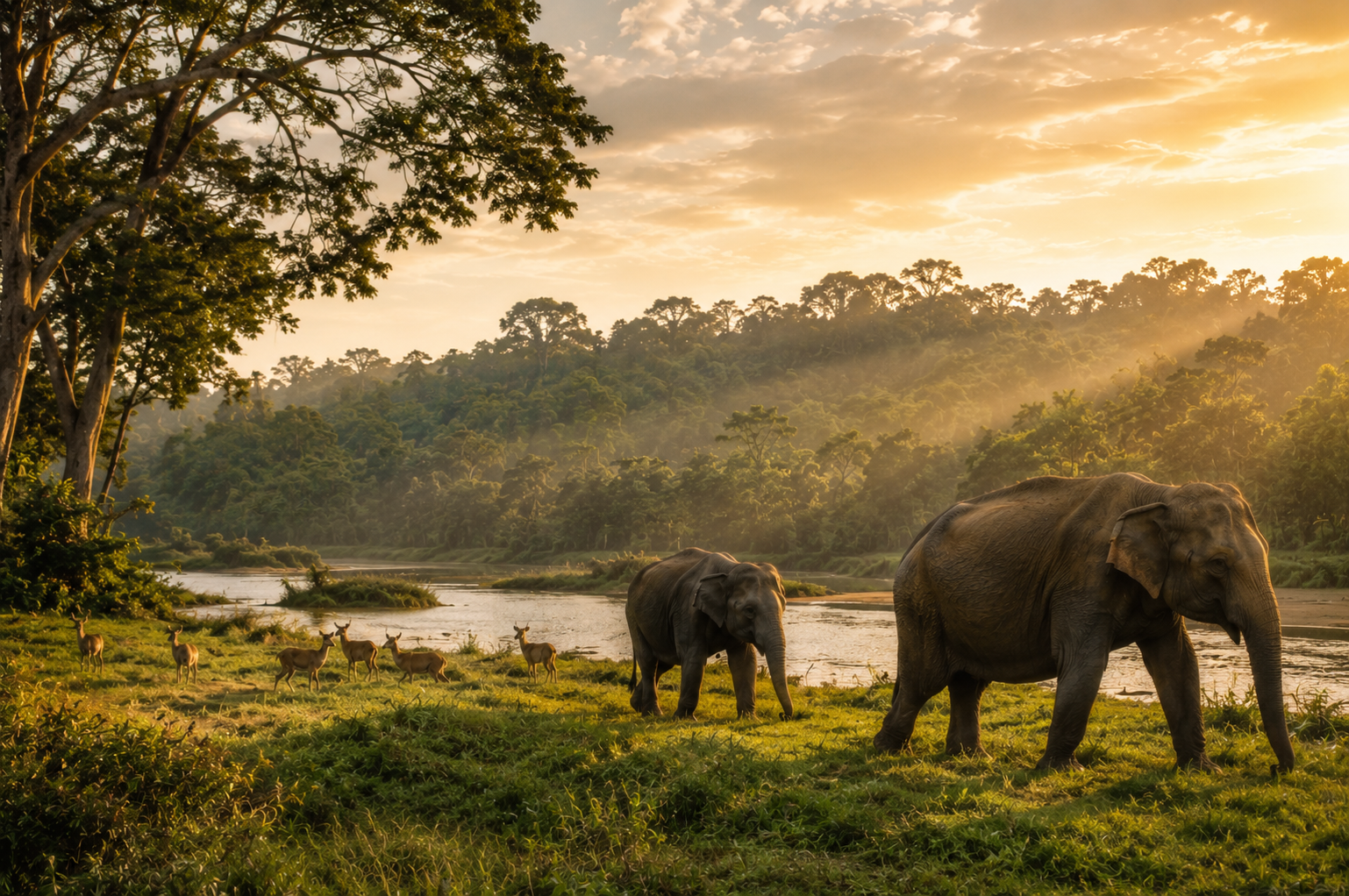
India is home to some of the most biodiverse landscapes on Earth, and a huge part of that natural wealth survives today because of its network of protected areas. A wildlife sanctuary is a designated zone where animals and their habitats are shielded from hunting, poaching, and destructive human activity, allowing ecosystems to thrive with minimal interference. Unlike national parks, which usually have stricter regulations and limited human activity, a sanctuary allows certain regulated activities like grazing and forestry, making it a slightly more flexible model of conservation.
With over 550 such protected zones spread across the country, a wildlife sanctuary in India offers everything from misty rainforests to arid grasslands, each sheltering unique species found nowhere else. In this article, we’ll explore what makes these sanctuaries so important and take a closer look at three remarkable examples: Pobitora, Bhadra, and Bondla.
What Exactly Is a Wildlife Sanctuary?
A wildlife sanctuary is a legally protected area established primarily to conserve wild animals and their natural habitat. These areas are governed under wildlife protection laws that restrict hunting, logging, and large-scale human settlement, while still permitting some traditional and low-impact activities.
The core purpose of any sanctuary is threefold:
- Habitat protection – preserving forests, wetlands, and grasslands from encroachment
- Species conservation – safeguarding endangered and vulnerable animals from poaching and habitat loss
- Ecological balance – maintaining the natural food chain and biodiversity of a region
Sanctuaries often act as buffer zones around national parks or as standalone reserves for a specific species, such as a bird sanctuary for migratory flocks or a dedicated reserve for a single mammal population.
Why a Wildlife Sanctuary in India Matters
India’s geographical diversity, from the Himalayan foothills to coastal mangroves, means its sanctuaries protect an extraordinary range of ecosystems. The country hosts several globally significant species, including the Bengal tiger, Asiatic lion, one-horned rhinoceros, and countless bird species that migrate thousands of kilometers each year.
Beyond conservation, these protected areas play a major role in:
- Eco-tourism: generating revenue for local communities through responsible travel
- Climate regulation: forests within sanctuaries act as carbon sinks
- Research and education: providing scientists and students with living laboratories to study ecology
- Cultural heritage: many sanctuaries are tied to indigenous communities and traditional livelihoods
Visiting a wildlife sanctuary isn’t just a leisure activity anymore; it’s increasingly seen as a way to support conservation funding and raise awareness about endangered species.
Pobitora Wildlife Sanctuary: The Rhino Capital
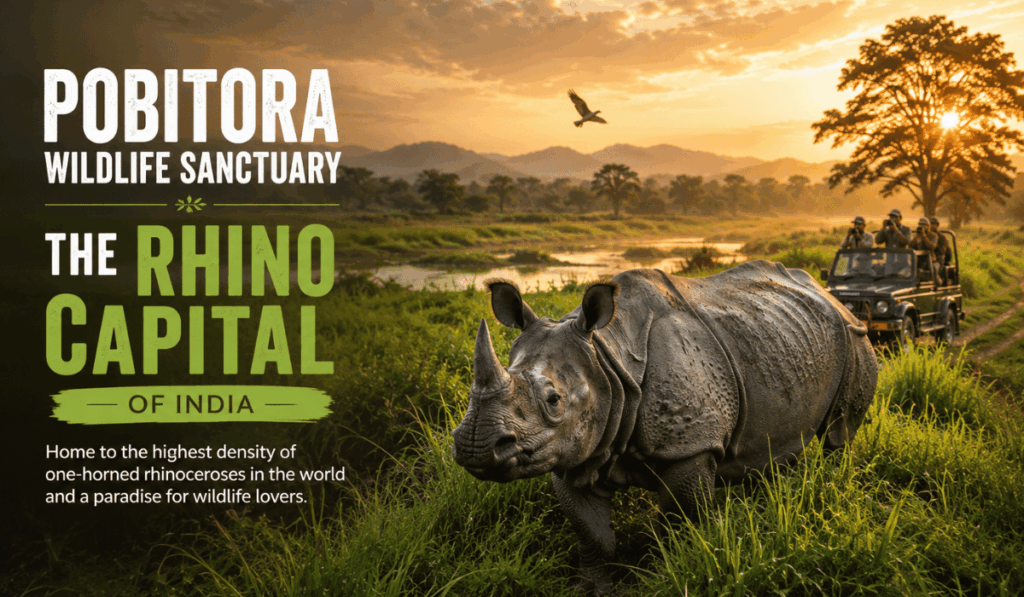
Tucked away in Assam, roughly 30 kilometers from Guwahati, Pobitora Wildlife Sanctuary is often called India’s “Mini Kaziranga” because of its extraordinarily high density of the greater one-horned rhinoceros. In fact, per square kilometer, Pobitora has one of the highest rhino populations in the world, making it one of the best places globally to spot this magnificent species up close.
Spanning a relatively compact 38.85 square kilometers of wetlands and grasslands along the Brahmaputra floodplains, the sanctuary is a haven not just for rhinos but also for wild boars, leopards, and a spectacular variety of migratory birds during the winter months. Elephant safaris are the most popular way to explore the terrain, offering visitors a thrilling, eye-level encounter with grazing rhinos in their natural habitat.
The best time to visit Pobitora is between November and April, when the marshy grounds dry up slightly and wildlife sightings become more frequent. Its proximity to Guwahati also makes it an easy day-trip destination for travelers exploring Northeast India.
Bhadra Wildlife Sanctuary: Karnataka’s Tiger Haven
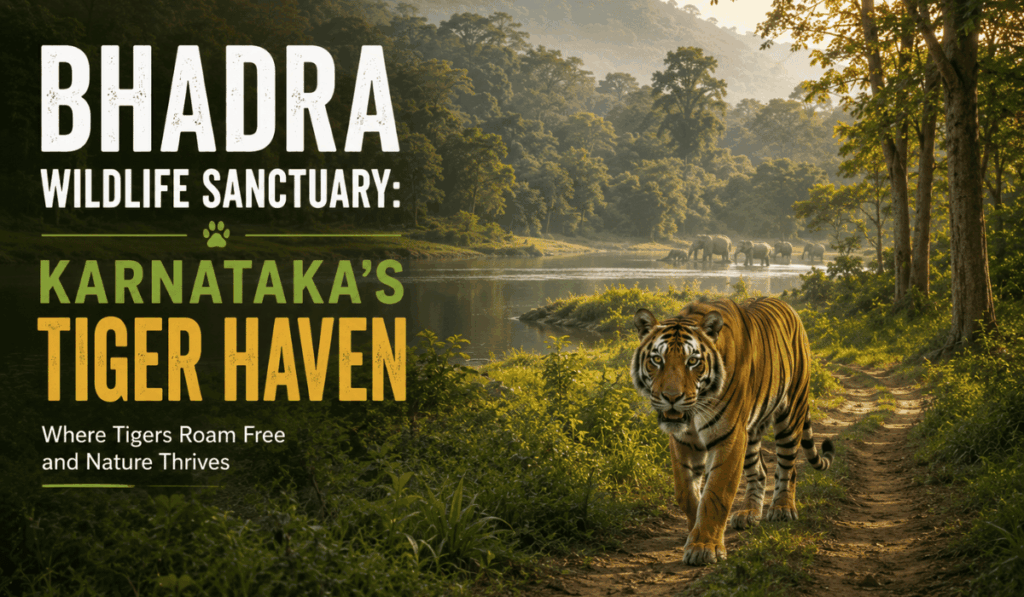
Located in the Chikmagalur and Shimoga districts of Karnataka, Bhadra Wildlife Sanctuary is part of the larger Bhadra Tiger Reserve and forms a crucial link in the Western Ghats, one of the world’s biodiversity hotspots. The sanctuary derives its name from the Bhadra River, which flows through the reserve and sustains the lush deciduous and semi-evergreen forests within it.
Bhadra is particularly known for its healthy tiger population, along with leopards, elephants, sloth bears, and the elusive Malabar giant squirrel. Because the sanctuary is home to over 250 different kinds of birds, including the Malabar trogon and great hornbill, birdwatchers also congregate here.
What sets Bhadra apart is its river-based safari experience. Unlike typical jeep safaris, visitors here can take boat rides along the Bhadra reservoir, offering a completely different perspective of the wilderness: watching elephants bathe by the water’s edge or spotting a tiger’s pug marks along the muddy banks. The sanctuary also runs a well-regarded eco-tourism program, with jungle lodges managed in coordination with the forest department to ensure minimal ecological disruption.
Bondla Wildlife Sanctuary: Goa’s Compact Green Escape
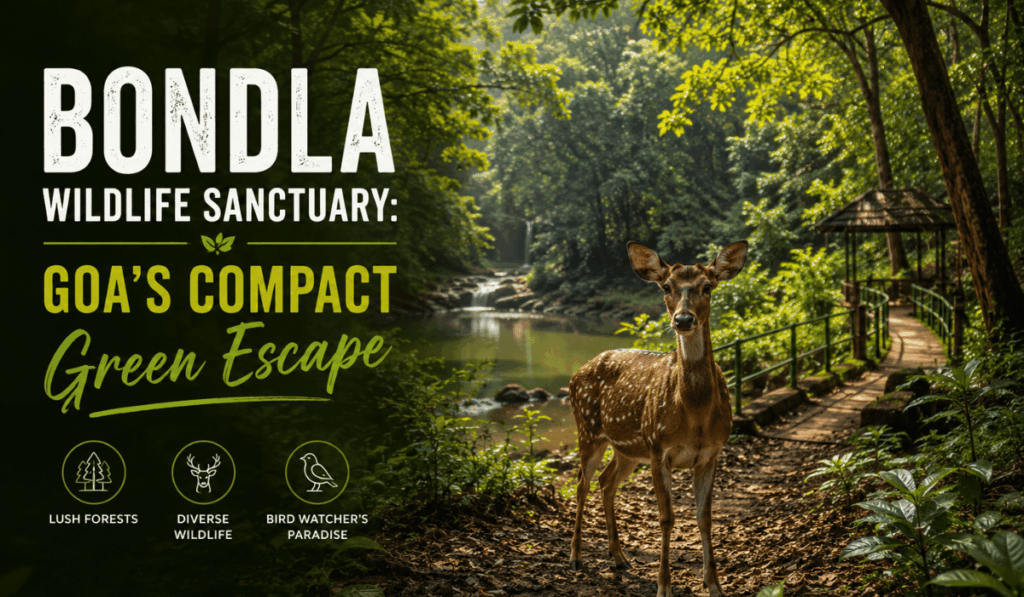
While Goa is best known for its beaches, Bondla Wildlife Sanctuary proves there’s much more to the state’s natural side. Located in the Ponda taluka, Bondla is the smallest of Goa’s wildlife sanctuaries, covering just about 8 square kilometers, yet it packs in a surprising amount of biodiversity for its size.
The sanctuary is particularly well-liked by families and school groups since it has a deer park, a botanical garden, and a miniature zoo. Its forest trails wind through dense tropical vegetation, home to species like the Indian gaur (bison), sambar deer, wild boar, and a variety of reptiles and butterflies. Bondla also has a small nature interpretation center that helps visitors understand the region’s ecology before heading out on the trails.
Because of its manageable size, Bondla is ideal for travelers who want a quick, accessible nature experience without the long drives or extensive planning required for larger reserves. It’s especially popular during the monsoon and post-monsoon months when the forest is at its greenest.
Tips for Visiting Any Wildlife Sanctuary
Whether you’re planning a trip to Pobitora, Bhadra, Bondla, or any other reserve, a few general guidelines will make your visit more rewarding:
- Book safaris in advance: Popular sanctuaries often have limited permits per day
- Dress in neutral colors: Bright clothing can startle animals and reduce sighting chances
- Maintain distance and silence: Respecting wildlife boundaries keeps both visitors and animals safe
- Travel with certified guides: Local guides know animal patterns and can significantly improve your experience
- Check seasonal timings: Many sanctuaries close during monsoon for breeding season or safety reasons
Final Thoughts
From the rhino-dense wetlands of Pobitora to the river safaris of Bhadra and the compact charm of Bondla, every wildlife sanctuary in India tells a different story of conservation and coexistence. These protected spaces are far more than tourist attractions: they are lifelines for endangered species and living reminders of what our forests once looked like before large-scale human expansion.
As eco-tourism grows, visiting a wildlife sanctuary responsibly can directly contribute to the funding and awareness needed to keep these ecosystems alive for future generations. So whether you’re a dedicated wildlife photographer, a curious traveler, or simply someone looking to reconnect with nature, India’s sanctuaries offer an experience unlike any other: raw, wild, and unforgettable.