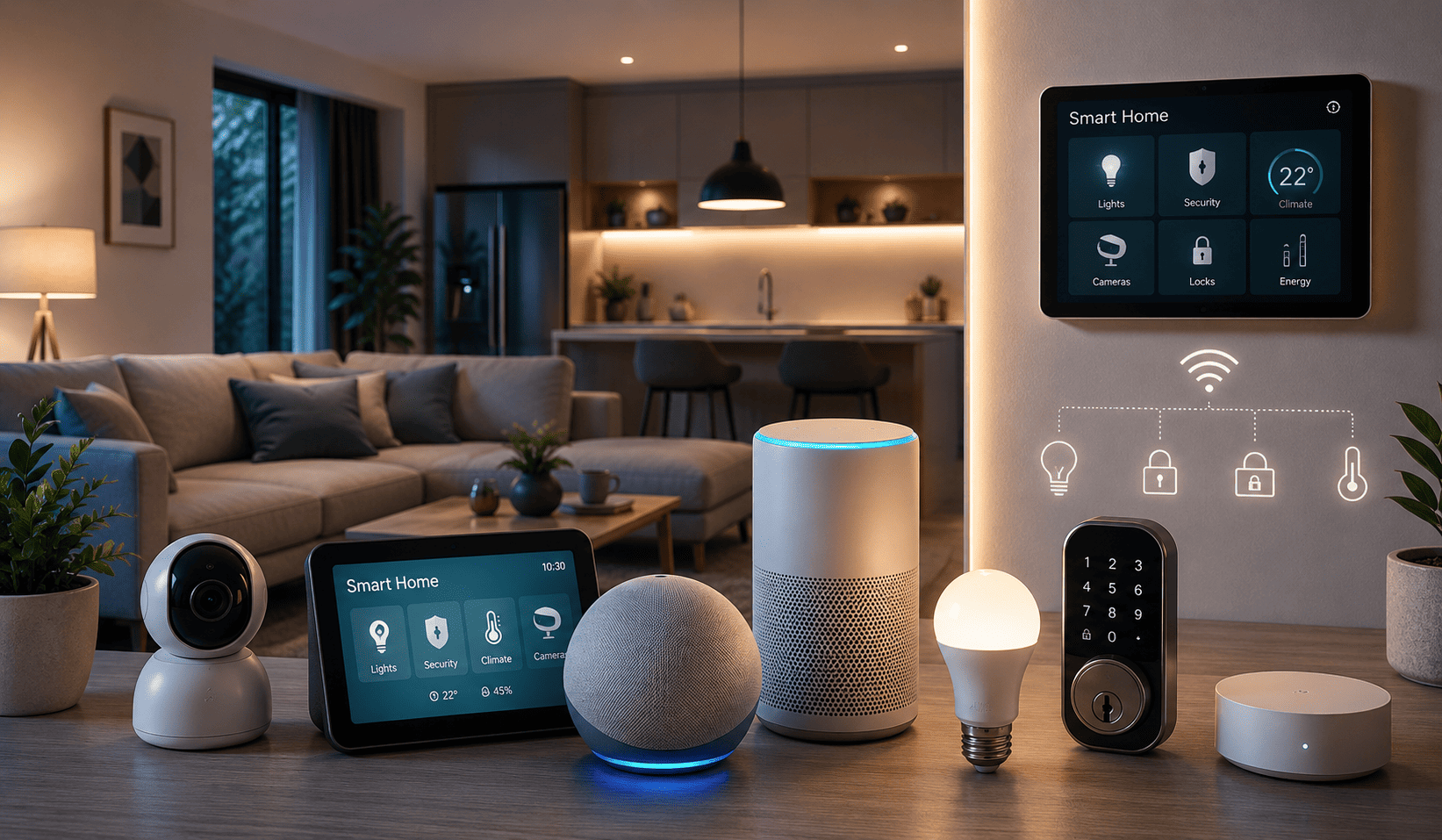
Home automation has moved far past a novelty. Today’s smart home gadgets save time, cut energy costs, and add real convenience to daily routines. You can dim your lights with a voice command, watch your front door from your phone, or let a robot vacuum handle the floors while you focus on other things. This guide breaks down the best smart home gadgets across every major category, so you can build a connected home that actually fits your needs.
Why Smart Home Gadgets Are Worth the Investment
Smart home gadgets do more than impress house guests. They genuinely simplify everyday life. A smart thermostat learns your schedule and adjusts the temperature automatically, which lowers your energy bill over time. A video doorbell lets you see who’s at your door before you answer it, wherever you are. Smart lights turn off on their own when you leave a room, so you stop paying for rooms nobody’s using.
Beyond convenience, many smart home gadgets add a real layer of security. Motion-activated cameras, smart locks, and connected smoke detectors all give you visibility into your home even when you’re miles away. For growing families, older parents living alone, or anyone who travels often, that peace of mind matters just as much as the convenience.
Start With a Smart Home Hub
Before you buy individual gadgets, think about how they’ll all talk to each other. Most smart home ecosystems run through a central hub, typically built around Amazon Alexa, Google Home, or Apple HomeKit. Your choice here shapes which gadgets will work smoothly with your setup.
A growing number of smart home gadgets now also support Matter, a newer industry standard designed to make devices from different brands work together without compatibility headaches. If you’re building a smart home from scratch in 2026, look for the Matter logo on new purchases. It future-proofs your setup and keeps you from getting locked into a single ecosystem.
LG has taken this hub-first approach seriously with its ThinQ platform. The ThinQ ON hub uses generative AI to understand natural, everyday language, so you can ask it to check the weather, manage laundry cycles, or adjust the temperature without memorizing rigid voice commands. LG ThinQ also connects with Alexa and Google Assistant, which makes it a flexible option if you already use LG appliances and want them working alongside gadgets from other brands.
The Best Smart Home Gadgets by Category:
Smart Speakers
Smart speakers remain the easiest entry point into home automation. They let you control other smart home gadgets through voice commands, play music, set reminders, and answer everyday questions. Compact options fit neatly on a kitchen counter or nightstand, while larger models deliver richer sound for media rooms. If you’re already using an ecosystem like Google Home or Apple HomeKit, pick a speaker that matches it for the smoothest experience.
Smart Displays
Smart displays work like smart speakers with an added screen, useful for video calls, recipe walkthroughs, or checking camera feeds at a glance. They typically sit in kitchens or living rooms, where a quick visual check beats pulling out your phone.
Smart Lighting
Smart lights let you control brightness and color from an app, a voice command, or a simple schedule. You can dim the lights automatically at bedtime, sync them to your favorite playlist, or set them to turn on gradually in the morning like a sunrise alarm. Because lighting touches every room in your home, it’s often the first category people upgrade when getting into smart home gadgets.
Security Cameras and Video Doorbells
Security-focused smart home gadgets have improved dramatically in recent years. Modern cameras offer sharp 4K video, night vision, and instant phone alerts when they detect motion. Some newer outdoor models even run on solar power, cutting down on wiring and battery swaps. Video doorbells add an extra layer of convenience, letting you see and speak with visitors without opening the door.
Smart Locks
A smart lock replaces your traditional deadbolt with app-based control, keypad codes, or even fingerprint access. You can grant temporary access to guests, check whether you locked up after leaving home, and skip the hassle of hiding a spare key under the mat.
Smart Thermostats
Smart thermostats learn your daily patterns and adjust heating or cooling automatically, often cutting energy use significantly compared to a manual setup. Instead of operating the system all day, the majority of models allow you to remotely manage the temperature so you may warm the house before you get home.
Robot Vacuums and Mops
Robot vacuums have become one of the most popular smart home gadgets for busy households. Many current models map your home layout, avoid obstacles, and empty their own dustbins automatically. Combination vacuum-and-mop models handle both hard floors and carpets in a single cleaning cycle, which saves even more time.
Smart Plugs and Switches
The easiest and least expensive approach to include current gadgets in your smart home setup is via smart plugs and switches. Plug in a lamp, fan, or coffee maker, and you can schedule or remotely control it without replacing the appliance itself. This category works especially well for renters, since it requires no rewiring or permanent changes.
How to Choose the Right Smart Home Gadgets for Your Home
Not every household needs every category. Start with the issue you wish to resolve. If energy bills bother you most, prioritize a smart thermostat and smart plugs. If security is your main concern, start with a video doorbell and a couple of well-placed cameras. Smart lighting and a voice assistant make the biggest, fastest difference if you just want increased convenience on a daily basis.
Budget matters too. You don’t need to automate your entire home at once. Most people build their smart home gradually, adding one or two gadgets at a time as they get comfortable with the technology and confirm it fits their routine.
Final Thoughts
The best smart home gadgets for 2026 blend genuine usefulness with easy setup, whether that means a voice-controlled hub like LG ThinQ, a solar-powered security camera, or a simple smart plug that turns your coffee maker into a scheduled appliance. Start with a clear goal, choose an ecosystem that fits your existing devices, and build your smart home one gadget at a time. Done right, a connected home doesn’t just look impressive; it makes everyday life noticeably easier.