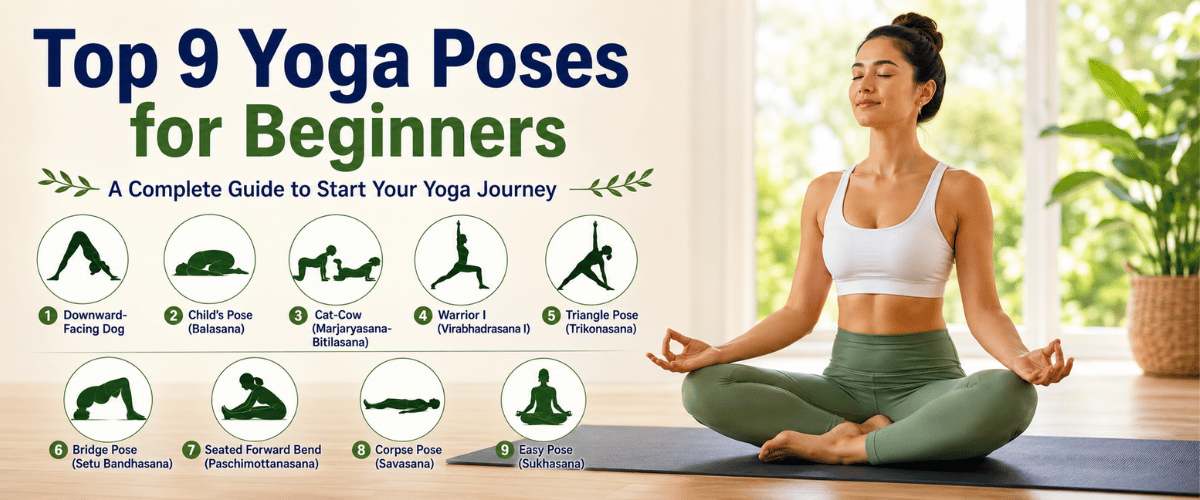
Starting a yoga practice can feel intimidating at first. You see photos of impossible-looking poses and wonder if yoga is even for you. Here’s the truth: yoga for beginners doesn’t require flexibility, special gear, or years of practice. It just requires a mat, a bit of space, and a willingness to try. This guide walks you through the basics, some beginner-friendly poses, and how to build a simple yoga for beginners at home routine you can stick with.
Why Try Yoga as a Beginner?
Yoga offers something for almost everyone. Strength builds gradually through this practice, without straining your joints. Flexibility also improves over time, even if you can’t touch your toes on day one. And since most yoga practices pair movement with breath, your mind gets calmer too. Many beginners notice better sleep, less stress, and improved posture within just a few weeks of regular practice.
You don’t need to be flexible to start. In fact, that’s exactly why yoga helps: it builds the flexibility you don’t have yet.
What You Need Before You Begin
Getting started takes very little. Grab a yoga mat for grip and comfort. Put on clothing that is easy to move into. Find a quiet spot with enough room to stretch your arms and legs in every direction. That’s it. You don’t need blocks, straps, or fancy gear to begin. Add those later if you want extra support.
Simple Yoga Poses for Beginners
Let’s cover several yoga poses for beginners that build a strong foundation. Practice each one slowly, and focus on your breath rather than perfection. Hold each pose for five to eight slow breaths, and come out of it gently if anything feels sharp or painful.
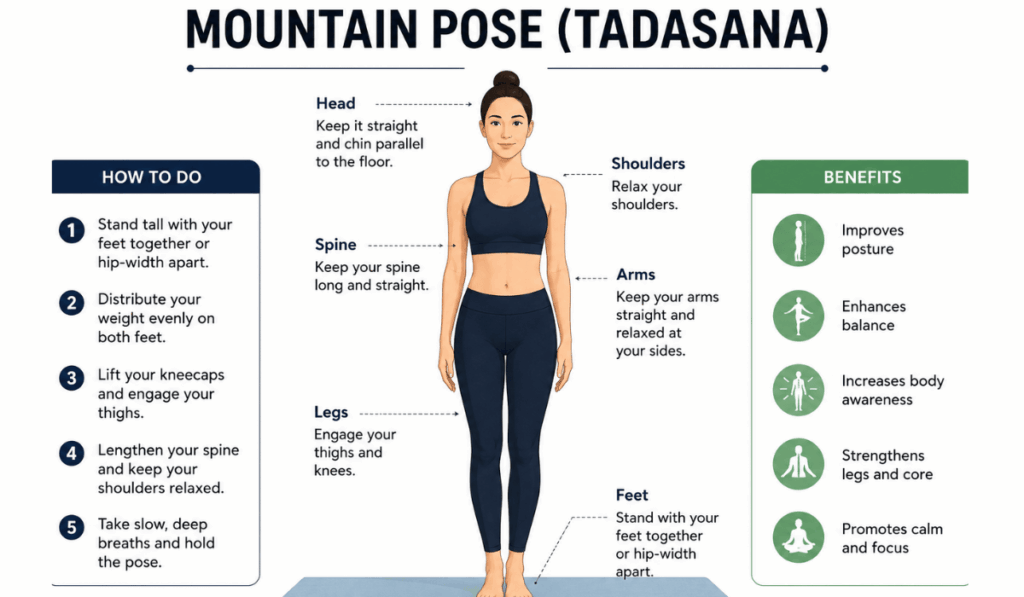
Mountain Pose (Tadasana): Stand tall with your feet together or hip-width apart, arms relaxed at your sides. Distribute your weight evenly across both feet, roll your shoulders back, and lengthen your spine as if a string is pulling the top of your head toward the ceiling. This pose looks simple, but it teaches proper alignment for almost every other pose. Use it as a reset between poses whenever you need to catch your breath.
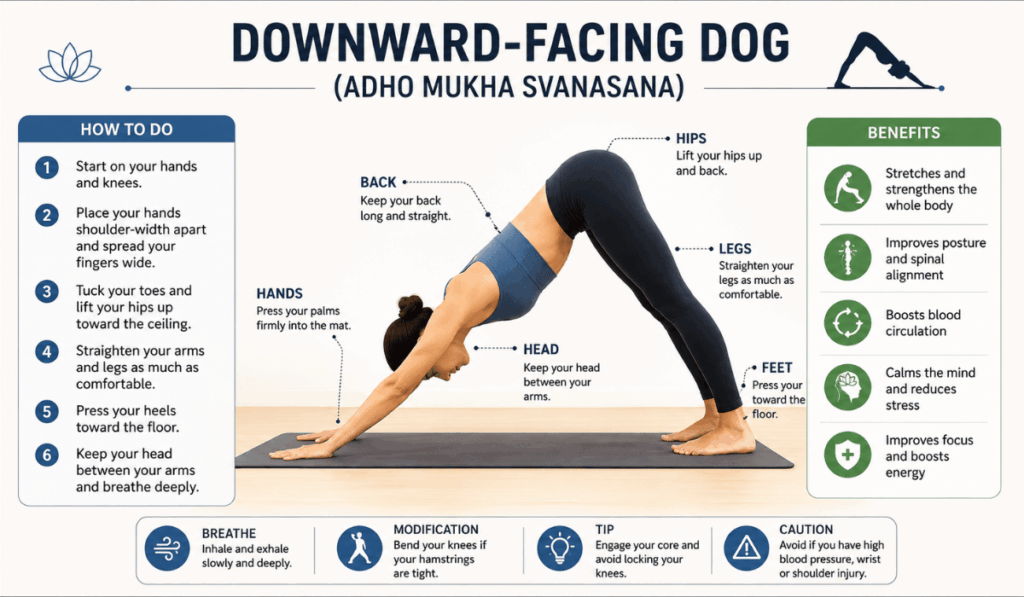
Downward-Facing Dog (Adho Mukha Svanasana): Start on your hands and knees, spread your fingers wide, then lift your hips up and back to form an inverted V-shape. Push your heels toward the floor, but don’t worry if they don’t touch; keep a slight bend in your knees if your hamstrings feel tight. This pose stretches your back, shoulders, calves, and hamstrings all at once, and it also gently builds arm and shoulder strength.
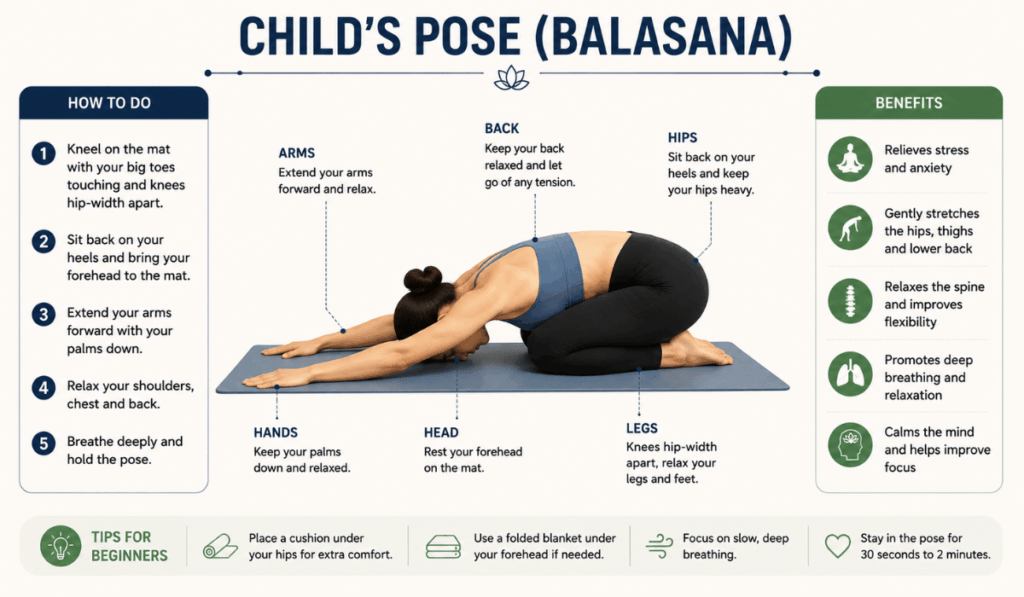
Child’s Pose (Balasana): Kneel on the mat with your big toes touching, sit back on your heels, and stretch your arms forward as you lower your chest toward the ground. Rest your forehead on the mat and let your breath slow down. This pose gently stretches your lower back and hips, and it works as a resting pose whenever you need a break during your practice.
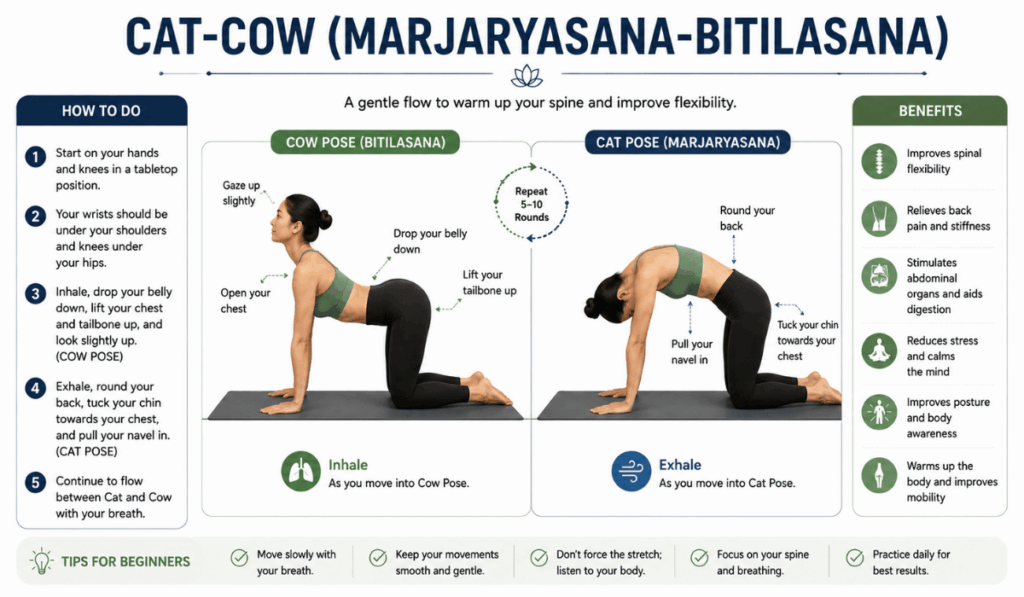
Cat-Cow (Marjaryasana-Bitilasana): Get on your hands and knees, with your wrists under your shoulders and knees under your hips. As you inhale, drop your belly and lift your chest and tailbone (Cow Pose). As you exhale, round your spine toward the ceiling and tuck your chin (Cat Pose). Move slowly between the two, syncing each movement with your breath. This gentle flow warms up your spine, eases tension, and helps you connect movement with breathing early in your practice.
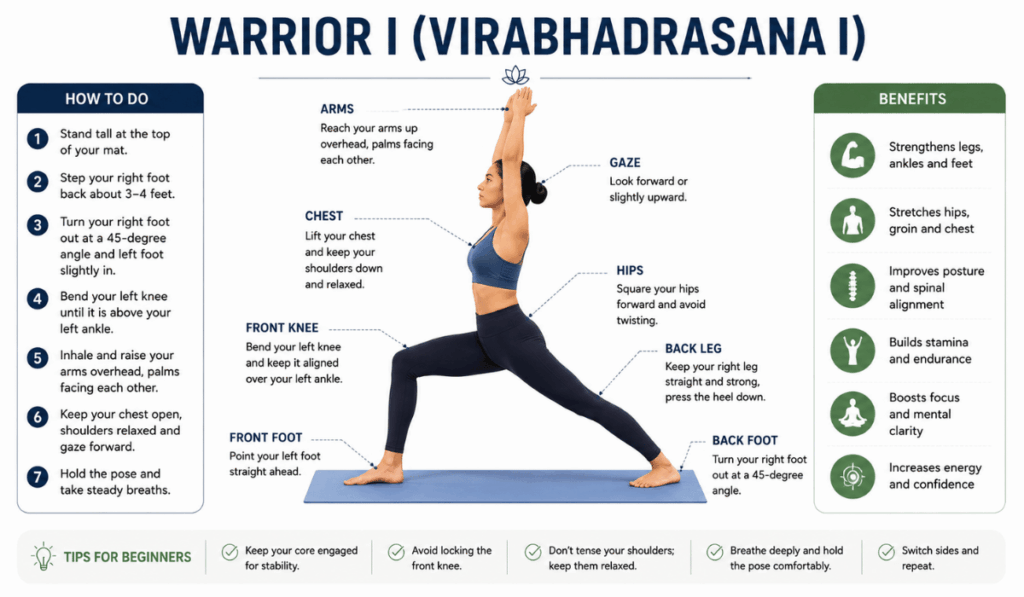
Warrior I (Virabhadrasana I): Step one foot forward into a lunge, bend your front knee to about 90 degrees, and keep your back leg straight with your back foot angled slightly outward. Raise your arms overhead, palms facing each other, and square your hips toward the front of your mat. This pose builds strength in your legs and glutes while opening your chest and shoulders, and it also helps improve balance and focus.
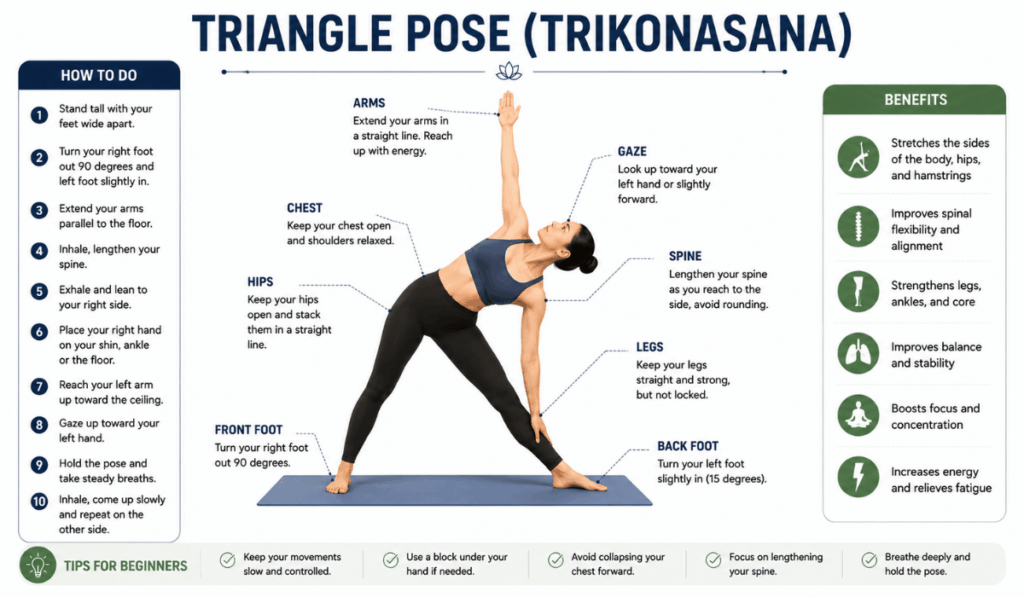
Triangle Pose (Trikonasana): Stand with your feet wide apart, turn your front foot forward and your back foot slightly in. Extend your arms out to shoulder height, then hinge at your hip to reach your front hand toward your shin, ankle, or the floor, whichever feels comfortable. Stretch your other arm straight up toward the ceiling. This pose stretches your legs, hips, and sides of your torso, and it’s a gentle way to build flexibility without any strain.
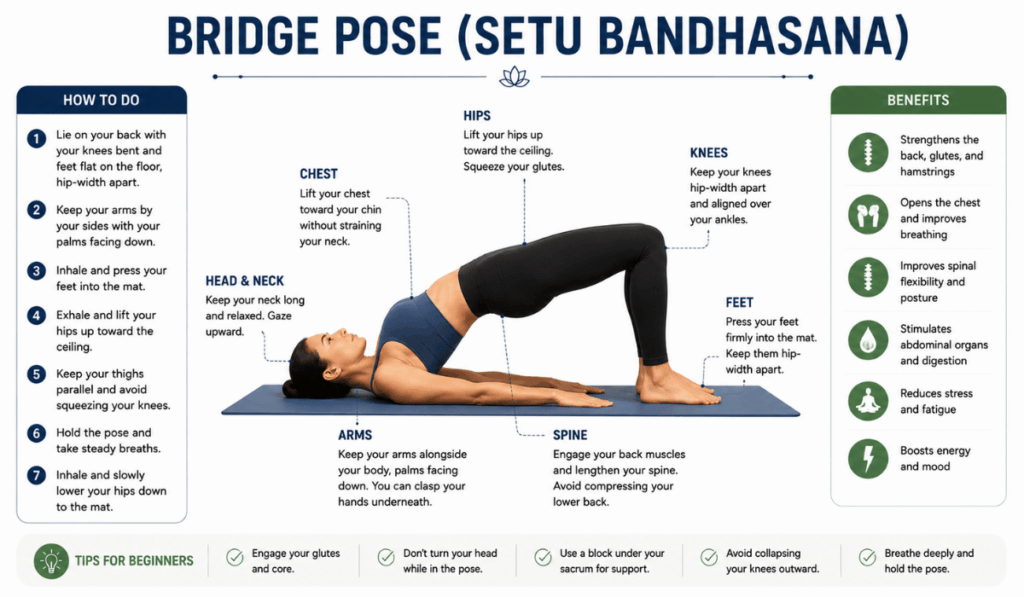
Bridge Pose (Setu Bandhasana): Lie on your back with your feet flat on the floor, hip-width apart, and your knees bent. Press your feet into the mat and lift your hips toward the ceiling, keeping your arms flat on the ground beside you. This pose strengthens your back, glutes, and hamstrings, and it also gently opens your chest, which makes it a nice counter-pose after poses that round your spine forward.
Seated Forward Bend (Paschimottanasana): Stretch your legs out in front of you while you sit. Inhale to lengthen your spine, then exhale as you hinge forward from your hips, reaching toward your feet. Keep a slight bend in your knees if your hamstrings feel tight, and let your head and neck relax rather than forcing your reach. This pose stretches your hamstrings and lower back, and it also has a calming effect, making it a good pose to practice near the end of a session.
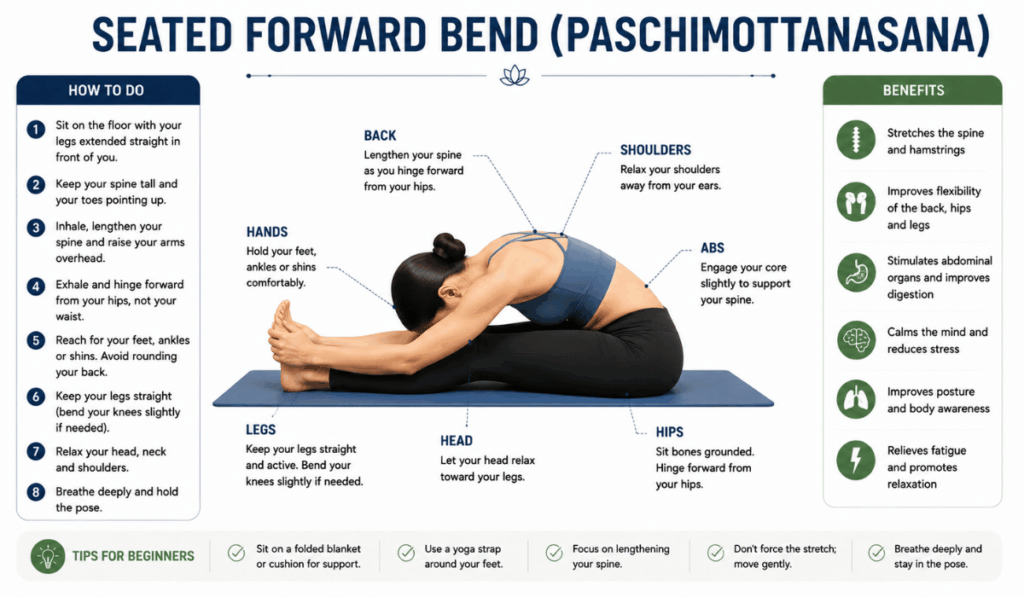
Corpse Pose (Savasana): Lie flat on your back with your legs relaxed and slightly apart, arms resting by your sides with palms facing up. Close your eyes and let your whole body go heavy and still. This pose looks like simple rest, but it gives your body time to absorb the benefits of your practice, and most sessions end here for at least a few minutes.
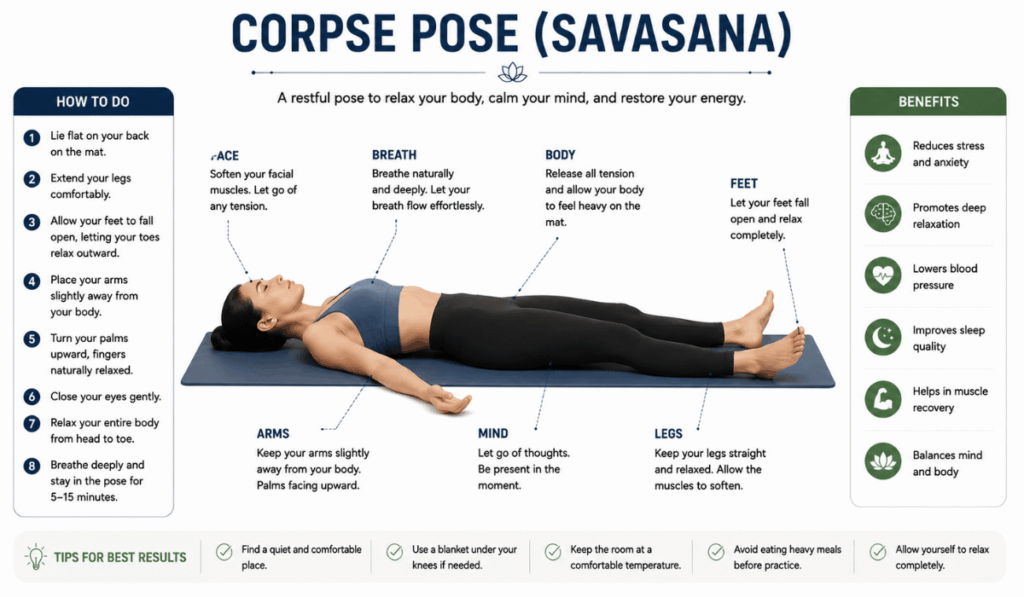
Practice these poses slowly at first. Speed and depth will come naturally with time.
Building a Yoga for Beginners at Home Routine
You don’t need a studio to start practicing. A short yoga for beginners at home routine works just as well, especially when you’re building a new habit. Start with just 10 to 15 minutes a day. Pick three or four poses from the list above and move through them slowly, holding each for five to ten breaths.
Morning sessions work well since they wake up your body and set a calm tone for the day. Evening sessions help you unwind after a long one. Either way, consistency matters more than duration. A short daily practice beats one long session per week.
Free apps and YouTube videos also offer guided beginner routines if you’d like extra structure. Follow along at your own pace, and don’t worry about keeping up perfectly.
Common Mistakes to Avoid
Many beginners push too hard, too fast. Don’t force a pose past your comfort zone; yoga rewards patience, not intensity. Others hold their breath during difficult poses. Try to breathe steadily throughout, even when a pose feels challenging. Some beginners also skip rest poses like Child’s Pose. Use them freely whenever you need a moment to reset.
Final Thoughts
Yoga for beginners isn’t about perfect poses or impressive flexibility. It’s about showing up on your mat, breathing steadily, and moving your body with intention. Start small, stay consistent, and let your practice grow naturally over time. Within a few weeks, you’ll likely notice more strength, better balance, and a calmer mind, proof that even a few minutes a day can make a real difference.