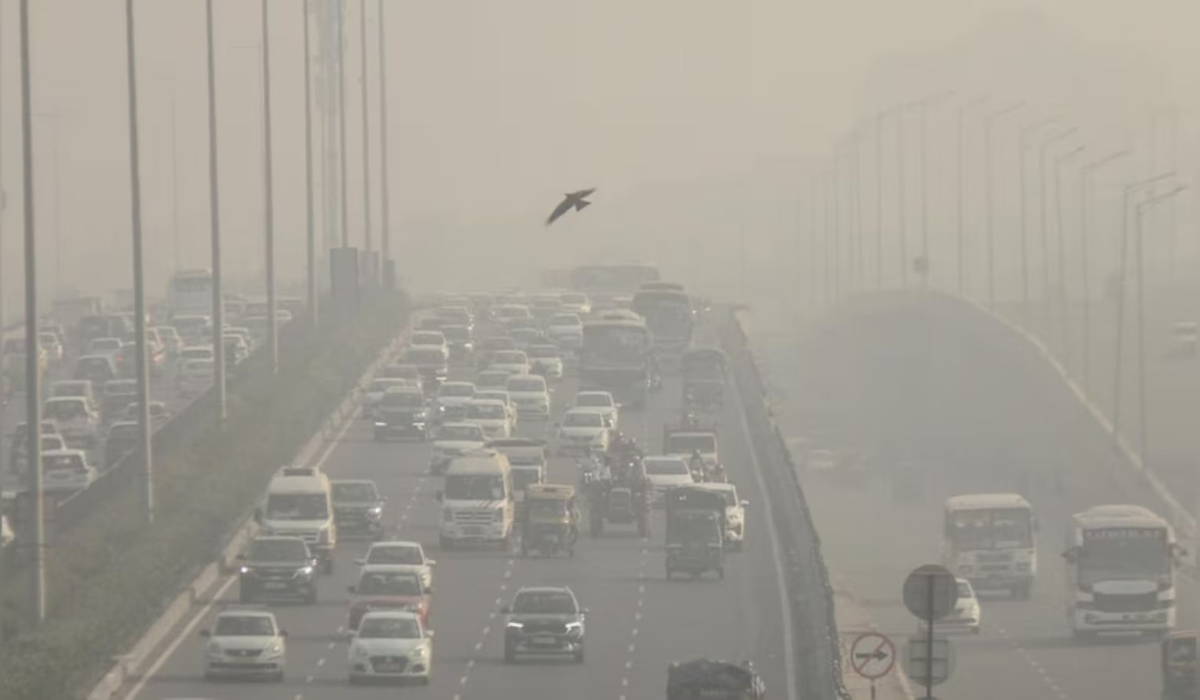
Delhi woke up to another grey, smoky morning as a thick layer of smog covered the city and surrounding NCR areas. The air quality dropped to the ‘severe’ category, forcing authorities to implement Stage III of the Graded Response Action Plan (GRAP) — a set of emergency rules designed to fight dangerous levels of pollution.
According to the Central Pollution Control Board (CPCB), Delhi’s Air Quality Index (AQI) reached 425 early on Tuesday, marking one of the worst readings of the season. Health experts say breathing Delhi’s air right now is equivalent to smoking nearly 15 cigarettes a day, posing serious risks for everyone, especially children and the elderly.
Delhi-NCR’s Most Polluted Areas
As of 7 a.m., several parts of the city recorded extremely poor air quality.
The most polluted locations included:
- Wazirpur (458)
- Bawana (451)
- Chandni Chowk (449
- Jahangirpuri (446)
- Mundka (444)
- Rohini (442)
- Nehru Nagar (440)
- Ashok Vihar (439)
- Burari Crossing (439)
- Anand Vihar (438)
These numbers show that pollution levels have crossed the safe limits by a huge margin. Residents in many areas reported breathing problems, eye irritation, and a constant smell of smoke in the air.
Why Was GRAP Stage III Imposed?
The Commission for Air Quality Management (CAQM) decided to activate Stage III of the GRAP plan after Delhi’s average AQI shot up from 362 (‘very poor’) on Monday to 425 (‘severe’) on Tuesday morning.
Officials said that weather conditions such as calm winds, low temperatures, and no rain are preventing pollutants from dispersing. These pollutants — from vehicles, construction, and crop residue burning — are now staying close to the ground, forming a thick layer of smog across the city.
What Restrictions Are Now in Place?
Under GRAP Stage III, the following strict rules have been implemented across Delhi and NCR districts to control pollution:
- All non-essential construction and demolition work is banned.
- Stone crushers and mining operations are suspended.
- BS-III petrol and BS-IV diesel vehicles are not allowed on the roads.
- Schools up to Class 5 remain closed, and classes are being conducted online or in hybrid mode.
- Industries using unapproved fuels must remain shut down until further notice.
These measures add to earlier restrictions under Stage I and II, which were already in effect due to rising pollution levels.
Delhi CM’s Response
Reacting to the situation, Chief Minister Rekha Gupta said that reports about AQI data being unavailable were due to a technical issue at the national level, not specific to Delhi.
“The city’s air monitoring systems were working fine,” she said. “All the data was accurate and visible online. Our focus right now is to protect public health and ensure everyone follows the pollution control guidelines.”
The CM also urged residents to stay indoors as much as possible, avoid morning walks, and wear N95 masks when stepping outside.
What’s Making the Air So Toxic?
Experts believe the sudden rise in pollution is due to multiple factors — stubble burning in neighbouring states like Punjab and Haryana, vehicle emissions, and dust from construction sites. The weather is also not helping, as low wind speed and cool temperatures are trapping the pollutants close to the surface.
Because of these conditions, pollution levels are expected to remain in the ‘severe’ range for the next few days, unless strong winds or rain help clear the air.
Also Read: How Air Pollution Impacts Our Health
Public Health Warning
Doctors and health experts have issued urgent warnings about the current air quality. Prolonged exposure to this toxic air can cause breathing difficulties, throat infections, coughing, eye irritation, and long-term lung damage.
Citizens are advised to:
- Use air purifiers indoors.
- Avoid outdoor exercise or jogging in the morning and evening.
- Keep windows and doors closed to stop smoke from entering homes.
- Drink plenty of water and wear masks when outside.
Children, senior citizens, and people with asthma or heart problems should take extra precautions.
Delhi Still Gasping for Relief
Despite repeated action plans and restrictions, Delhi continues to struggle with dangerous air pollution every winter. Experts say only long-term steps — such as cleaner public transport, controlling stubble burning, and stricter vehicle emission standards — can bring real improvement.For now, Delhiites must brace themselves for more days of toxic air as the city remains trapped under a “gas chamber” of smog, with no immediate relief in sight.