For years, talking to an AI assistant has felt a lot like using a walkie-talkie: you speak, you let go of the button, and only then does the other side respond. OpenAI appears to be working on changing that fundamentally. A new voice model, internally referred to as GPT-Bidi-1, has surfaced in code and interface elements inside the ChatGPT app, hinting at what could be the biggest overhaul to ChatGPT’s voice mode in months, if not the biggest since Advanced Voice Mode first launched.
Unlike previous updates that mostly polished tone, latency, or accent recognition, GPT-Bidi-1 is aimed squarely at the core mechanics of conversation itself: how an AI listens, waits, interrupts, and responds. If OpenAI delivers on what’s been spotted so far, it could mark a genuine step toward AI conversations that feel less like a transaction and more like talking to a person.
What Does “Bidi” Actually Mean?
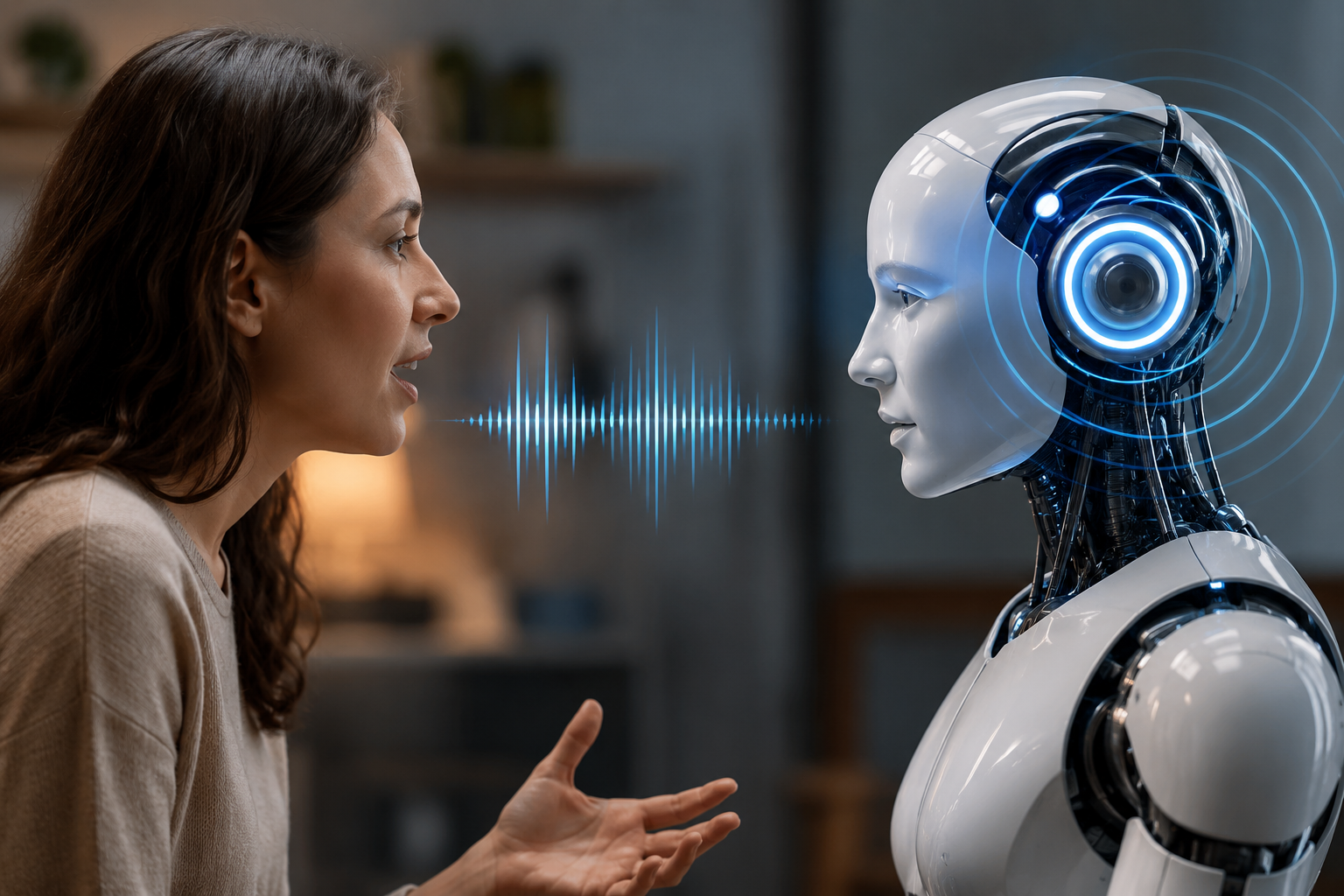
The name is short for “bidirectional,” and that’s the heart of the upgrade. Current voice assistants, including ChatGPT’s existing voice mode, operate in what’s essentially a turn-based or “simplex” pattern: one party talks, then stops, then the other party talks. It’s functional, but it’s also why AI conversations can feel stilted, especially when a user wants to interrupt, correct course mid-sentence, or simply think out loud.
GPT-Bidi-1 is reportedly built for full-duplex interaction, meaning the model can listen and generate speech simultaneously. In practice, that would allow it to register an interruption the moment it happens and adjust its response accordingly, rather than freezing, restarting, or plowing through what it was already saying. It’s a subtle-sounding change with a potentially large real-world effect: it’s the difference between an assistant that “waits its turn” and one that reacts the way a person on a phone call does when you cut in with “wait, actually—”.
Where the Leak Came From
None of this has been confirmed through an official OpenAI announcement. Instead, the picture has been pieced together from code and UI elements discovered inside the ChatGPT app, first flagged in mid-June 2026. Independent AI-news trackers on social media, including accounts that regularly surface unreleased OpenAI features, reported early hands-on tests showing the model handling overlapping speech, mid-sentence topic switches, and extended counting exercises without losing its place.
By late June 2026, reports suggested preparations were underway for a web release, though OpenAI had not confirmed a timeline or committed to the “GPT-Bidi-1” name becoming final. Names attached to unreleased models frequently change before launch, so it’s worth treating that label as a working title rather than a locked-in product name.
Three Speeds: High, Medium, and Instant
Beyond the bidirectional architecture, GPT-Bidi-1 is expected to come with selectable intelligence tiers: High, Medium, and Instant. That structure mirrors the choice OpenAI already offers in its text-based models, where users can trade off response depth for speed. Applied to voice, it would let people choose between a more deliberate, reasoning-heavy voice assistant for complex questions and a near-instant, lightweight version for quick back-and-forth chat.
This tiered approach also signals something about OpenAI’s broader strategy. Today’s ChatGPT voice mode reportedly still leans on GPT-4o, with a smaller GPT-4o mini model as a fallback. Introducing a dedicated, purpose-built voice architecture rather than continuing to adapt text-first models suggests OpenAI now sees voice as a distinct product surface, not an add-on feature bolted onto its chat models.
A Visual Tell: The Yellow Bubble
One of the more concrete details to emerge is cosmetic but telling: reports describe the voice mode’s interface bubble switching from its current blue to yellow when GPT-Bidi-1 is active. Small as it sounds, a distinct visual identity for the new mode suggests OpenAI plans to let users toggle between the existing voice experience and the new bidirectional one, at least initially, rather than replacing the old system outright.
Why This Matters Beyond ChatGPT
The consequences of GPT-Bidi-1 go beyond a single feature upgrade if it ships as planned. Many people believe that one of the gaps between today’s voice assistants and anything more akin to natural human conversation is full-duplex, low-latency speech interaction. Overlapping speech, interruption handling, and real-time tone adjustment are exactly the behaviors that make phone calls with another person feel fluid, and their absence is often what makes talking to an AI feel noticeably artificial, even when the underlying answers are good.
There are also reports that this voice architecture could extend beyond ChatGPT itself, potentially reaching OpenAI’s Codex coding tool and other agentic products. That would fit into a broader pattern of OpenAI reportedly pushing ChatGPT toward becoming a more all-purpose “superapp,” combining chat, coding, and voice-driven task execution in one place.
What’s Still Unclear
A few important questions remain open:
- Timeline: No confirmed release date exists yet, only that preparations for a web rollout were reportedly underway as of late June 2026.
- Final name: “GPT-Bidi-1” may be an internal codename rather than the eventual consumer-facing product name.
- Availability: It’s not yet clear whether the feature will roll out to all ChatGPT users at once, start with paid tiers, or be limited to specific platforms first.
- Performance limits: Early testing reportedly showed some constraints, such as a cap on how long the model can speak continuously without pausing, suggesting the technology, while promising, isn’t fully polished yet.
The Bottom Line
GPT-Bidi-1 represents a shift in how OpenAI is approaching voice: not as a feature wrapped around a text model, but as its own architecture built specifically for natural, overlapping, human-like conversation. Whether it launches under that name, on that timeline, or with every feature currently rumored, the direction is clear. OpenAI is betting that the next leap in AI usability won’t come from smarter answers alone, but from an assistant that finally knows how to have a conversation rather than just take turns in one.
As with any pre-launch leak, details could shift before an official announcement. Anyone particularly interested in the feature should watch for confirmation directly from OpenAI rather than treating current reports as final.