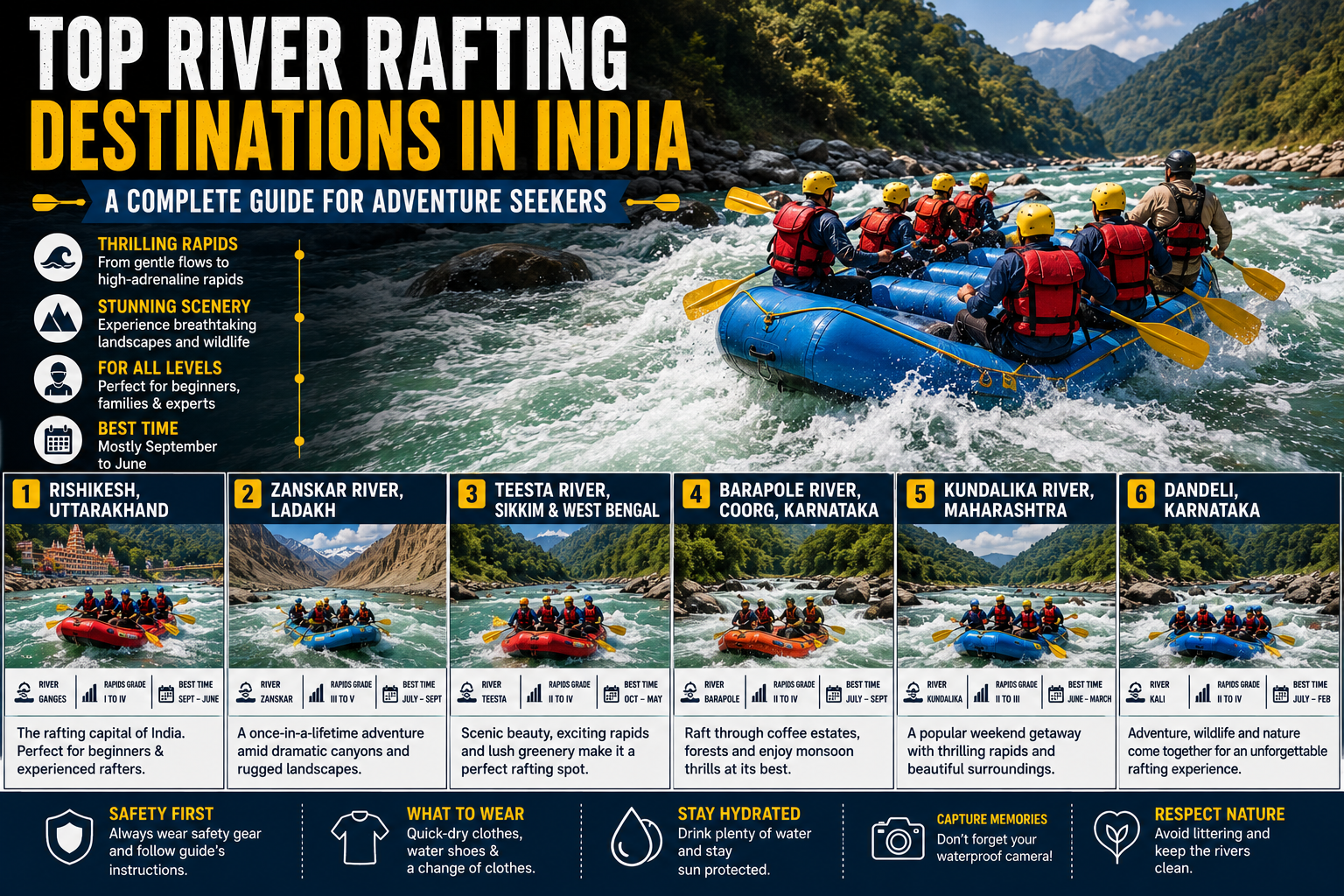
India is home to some of the most exciting river rafting destinations in India, shaped by glacier-fed Himalayan rivers and the monsoon torrents of the Western Ghats. From the icy, adrenaline-charged rapids of Ladakh to the forested rivers of Karnataka’s coffee country, the country’s geography gives rafters an extraordinary range of terrain to choose from. Whether you’re a first-timer looking for gentle rapids and a scenic float or an adrenaline junkie chasing Grade IV+ white water through remote gorges, India has a river suited to every skill level and every kind of trip.
Here’s a roundup of the country’s best rafting destinations, along with what makes each one worth the journey.
1. Rishikesh, Uttarakhand: The Rafting Capital of India
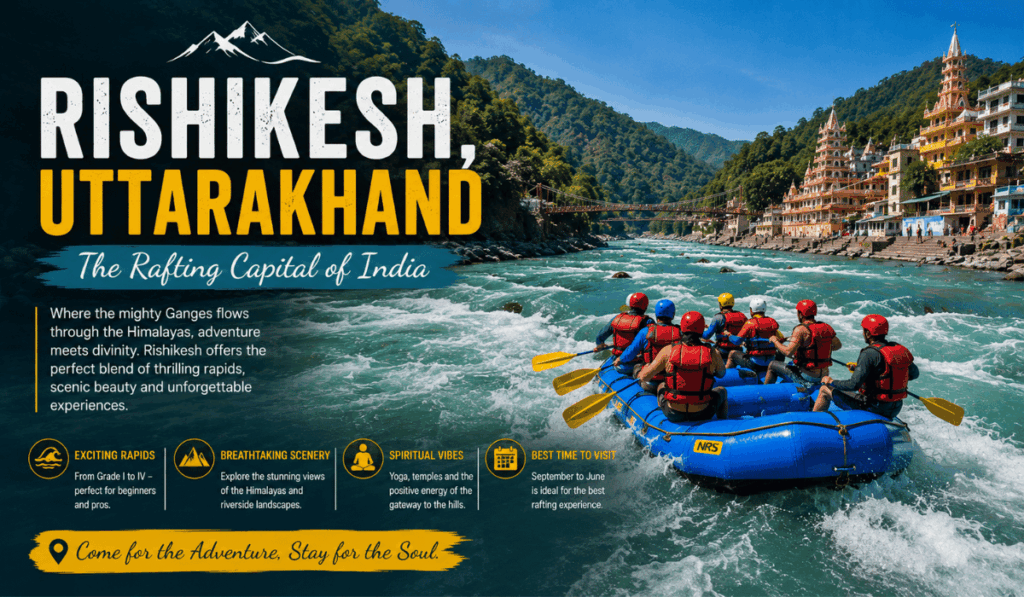
No list of Indian rafting destinations is complete without Rishikesh. Nestled at the foothills of the Himalayas on the banks of the Ganga, it’s the most popular and accessible rafting spot in the country, drawing everyone from weekend travelers to serious adventure sports enthusiasts.
Quick Facts
- Best time to visit: September to June (avoid the monsoon months of July–August, when water levels can be unpredictable)
- Rapids: Grade I to IV, depending on the stretch. The Shivpuri to Rishikesh route is the most popular for its mix of calm patches and exciting rapids
- Getting there: Well-connected by road and rail from Delhi (approximately 230 km, roughly a 6-hour drive)
What Makes It Special
Rishikesh combines rafting with cliff jumping, bungee jumping, and riverside camping, making it perfect for a full adventure weekend rather than just a single activity.
2. Zanskar River, Ladakh
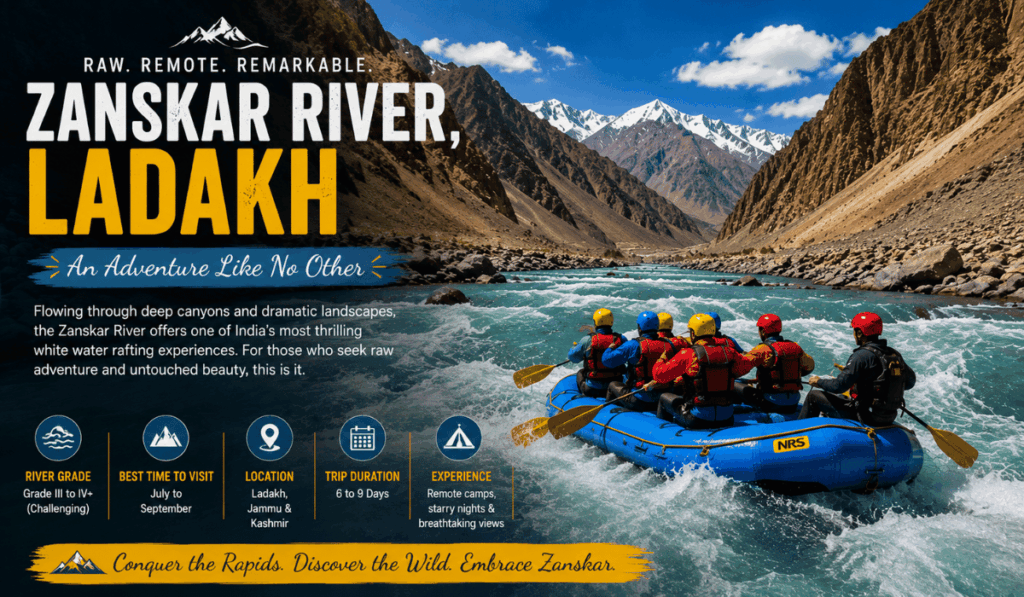
For seasoned rafters looking for a serious challenge, the Zanskar offers one of the most dramatic rafting experiences in the world, a multi-day expedition through deep gorges flanked by towering cliffs and some of the most remote landscapes in India.
Quick Facts
- Best time to visit: July to September, when the river is navigable and weather conditions are more stable
- Rapids: Grade III to IV+
- Note: Requires prior rafting experience and good physical fitness; expeditions typically run 3–7 days and require advance planning and permits
What Makes It Special
This is remote, raw, and visually stunning: less a rafting trip and more a full Himalayan expedition, often combined with camping under some of the clearest night skies in the country.
3. Teesta River, Sikkim and West Bengal
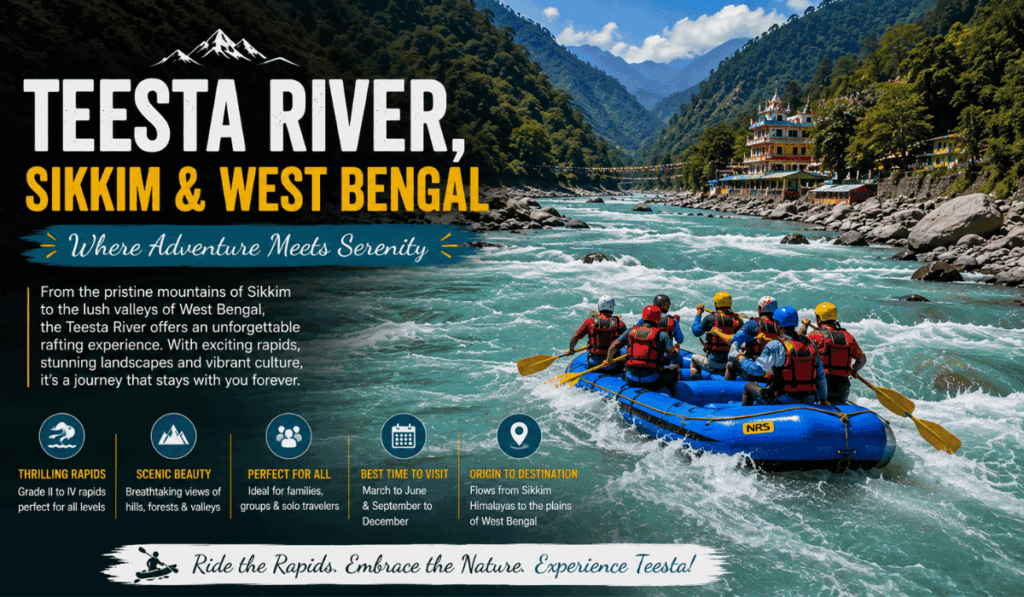
Flowing through the lush, forested hills of Sikkim, the Teesta is known for its fast currents and consistently exciting rapids, making it a favorite among intermediate and advanced rafters looking for a mountain adventure outside the usual Himalayan circuit.
Quick Facts
- Best time to visit: October to May
- Rapids: Grade II to IV
What Makes It Special
The Teesta offers a dramatic mountain backdrop, fewer crowds than Rishikesh, and a convenient base for combining rafting with a broader Sikkim or Darjeeling itinerary.
4. Barapole River, Coorg, Karnataka
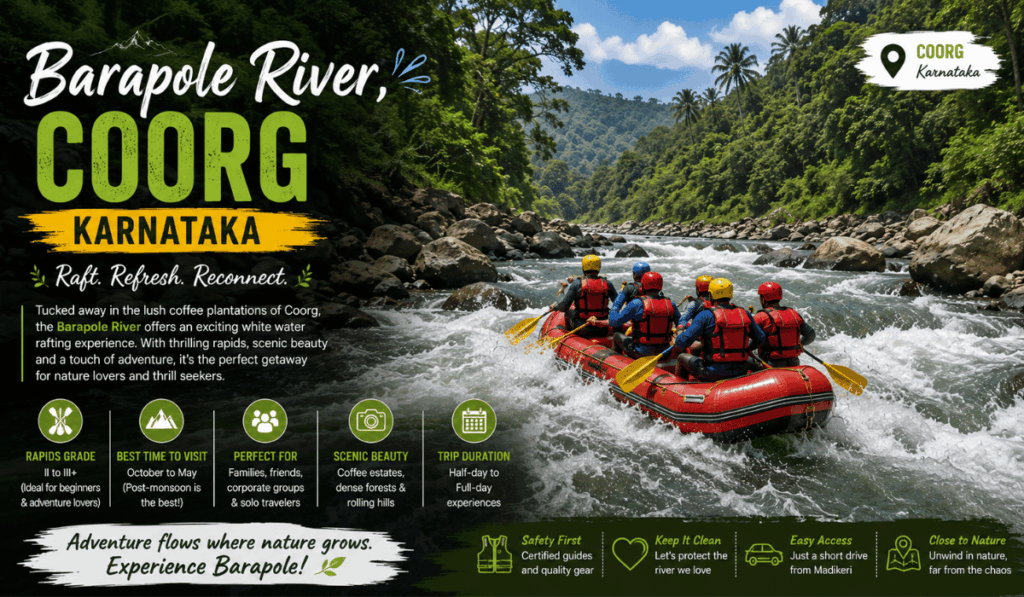
Tucked away in the coffee estates of Coorg, the Barapole offers a shorter but intense rafting experience through the dense forests of South India’s Western Ghats, a great option for travelers who want serious rapids without heading to the Himalayas.
Quick Facts
- Best time to visit: July to September, during the monsoon, when water levels and rapid intensity peak
- Rapids: Grade III to IV
What Makes It Special
It’s a great South India alternative to the Himalayan rivers, with a backdrop of misty forests and sprawling coffee plantations, plus easy pairing with a Coorg homestay trip.
5. Kundalika River, Maharashtra
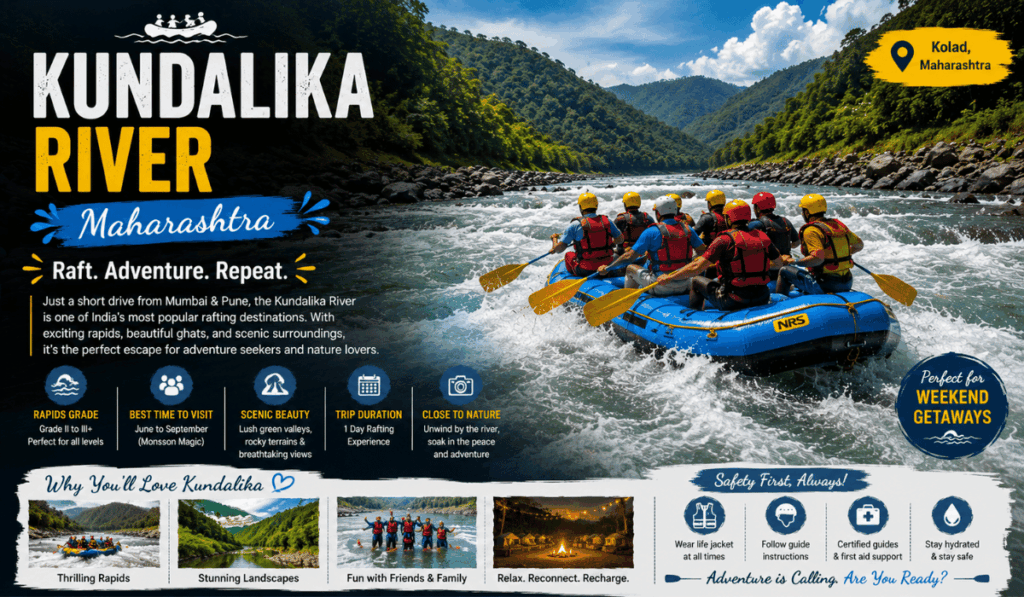
Just a few hours from Mumbai and Pune, the Kundalika is a dam-released river, meaning the rapids stay consistently strong throughout the day regardless of natural rainfall. This makes it ideal for a reliable, quick adventure getaway from the city.
Quick Facts
- Best time to visit: June to September
- Rapids: Grade III to IV
What Makes It Special
Easy weekend accessibility for Mumbai and Pune residents, combined with the option to explore nearby Kolad and the scenic Tamhini Ghat en route.
6. Dandeli, Karnataka
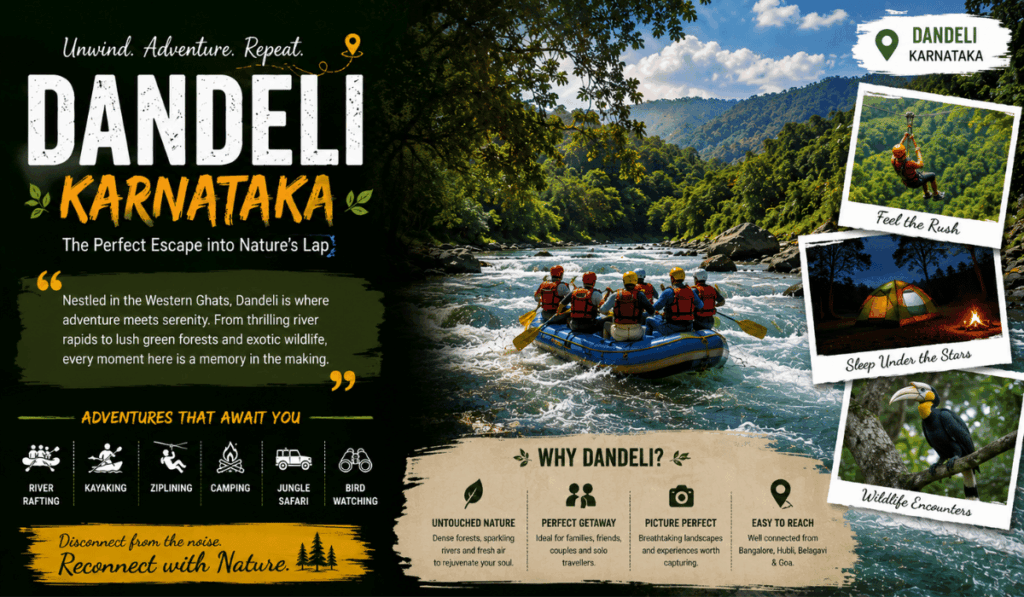
Home to the Kali River, Dandeli is one of South India’s most popular adventure hubs, offering rafting alongside wildlife spotting in the surrounding forest reserve, making it a well-rounded destination beyond just the rapids.
Quick Facts
- Best time to visit: June to September
- Rapids: Grade I to III (beginner-friendly)
What Makes It Special
Great for families and first-timers, with the added bonus of a wildlife sanctuary nearby offering safaris, zip-lining, and river camping.
7. Beas River, Kullu-Manali, Himachal Pradesh
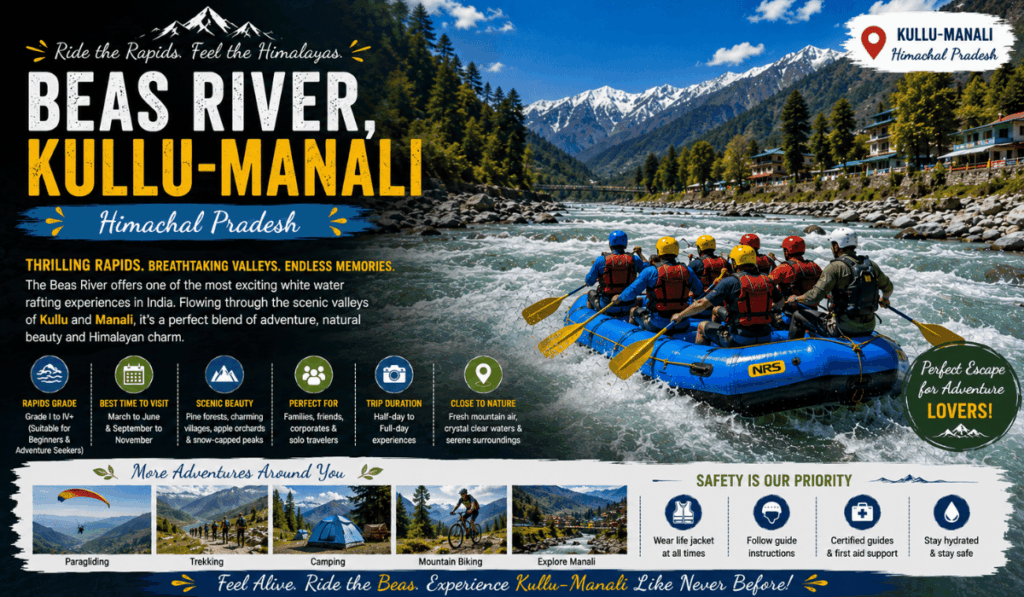
Flowing through the picturesque Kullu Valley, the Beas offers a scenic and moderately thrilling rafting experience against a backdrop of snow-capped peaks, pine forests, and apple orchards.
Quick Facts
- Best time to visit: March to June, and again from September to October
- Rapids: Grade II to III
What Makes It Special
Easily paired with a trip to Manali; ideal for novices, families, and those seeking adventure without going overboard.
8. Alaknanda River, Uttarakhand
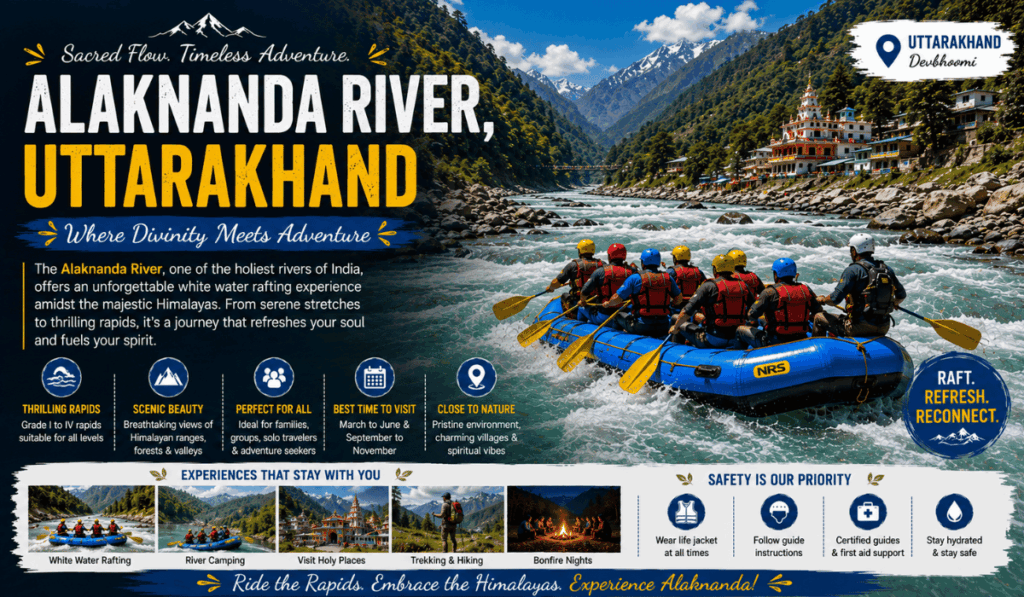
A lesser-known alternative to Rishikesh, the Alaknanda offers a more remote and less commercialized rafting experience through the Garhwal Himalayas, appealing to travelers who want the thrill of Himalayan rafting minus the crowds.
Quick Facts
- Best time to visit: September to June
- Rapids: Grade II to IV
What Makes It Special
Quieter than Rishikesh, with dramatic Himalayan scenery and easy access to nearby pilgrimage towns like Rudraprayag and Karnaprayag.
9. Sharavathi River, Karnataka
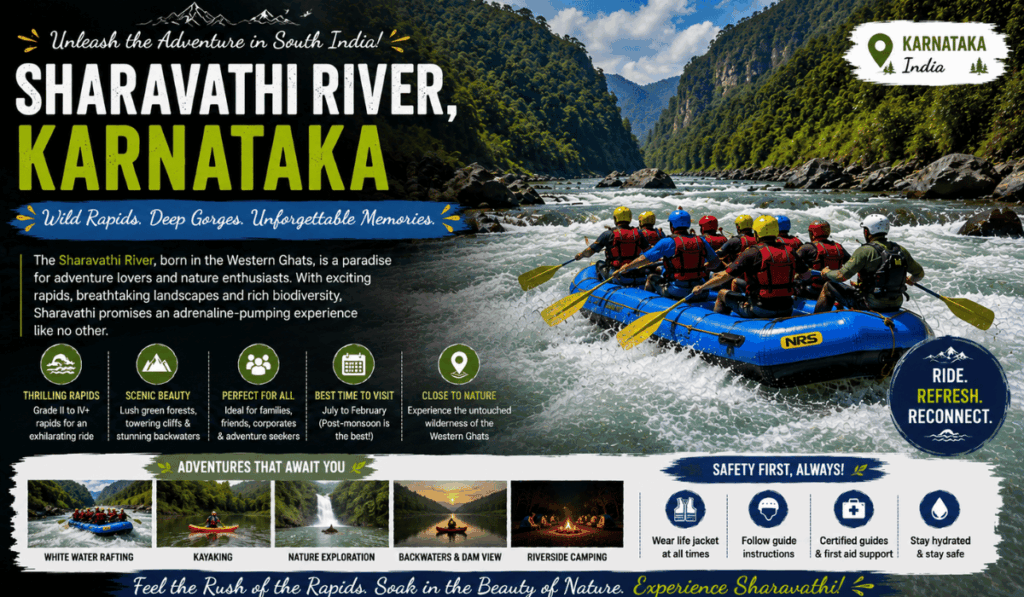
The Sharavathi, which flows close to the well-known Jog Falls, provides a more relaxed, picturesque rafting experience through the thick Western Ghats forest. It’s perfect for anyone who wishes to float peacefully while taking in vistas of waterfalls.
Quick Facts
- Best time to visit: June to September
- Rapids: Grade I to II
What Makes It Special
A calmer, nature-focused rafting experience for beginners and families, often paired with a visit to Jog Falls and Sharavathi Wildlife Sanctuary.
Tips for First-Time River Rafters
Choose the Right Grade
Rapids are graded I (easy) to VI (extremely dangerous, not commercially run). Beginners should stick to Grade I–III stretches until they’ve gained some experience.
Book with Certified Operators
Prior to making a reservation, always verify reviews and raft with operators who are registered with state tourism agencies or recognized adventure sports groups.
Check the season.
Water levels and rapid intensity change dramatically with the season. Monsoon rafting is thrilling but riskier, while post-monsoon months usually offer clearer, calmer water and better visibility.
Wear Proper Gear
A well-fitted life jacket and helmet are non-negotiable, regardless of your swimming ability or rafting experience.
Avoid Rafting Alone
Stick with certified guides and groups, follow the safety briefing carefully, and never ignore instructions from your rafting guide mid-river.
Travel Insurance Matters
Given the adventure element, it’s worth checking whether your travel insurance covers water sports activities before you go.
Final Thoughts
From the Himalayan highs of Ladakh and Uttarakhand to the monsoon-fed rivers of the Western Ghats, India’s rafting destinations offer something for every kind of traveler, whether you want a relaxed float down gentle rapids with a scenic backdrop or a multi-day expedition through some of the most remote and dramatic terrain in the country. Pick your grade, pick your season, book with a certified operator, and get ready to hit the water on one of India’s many spectacular rivers.