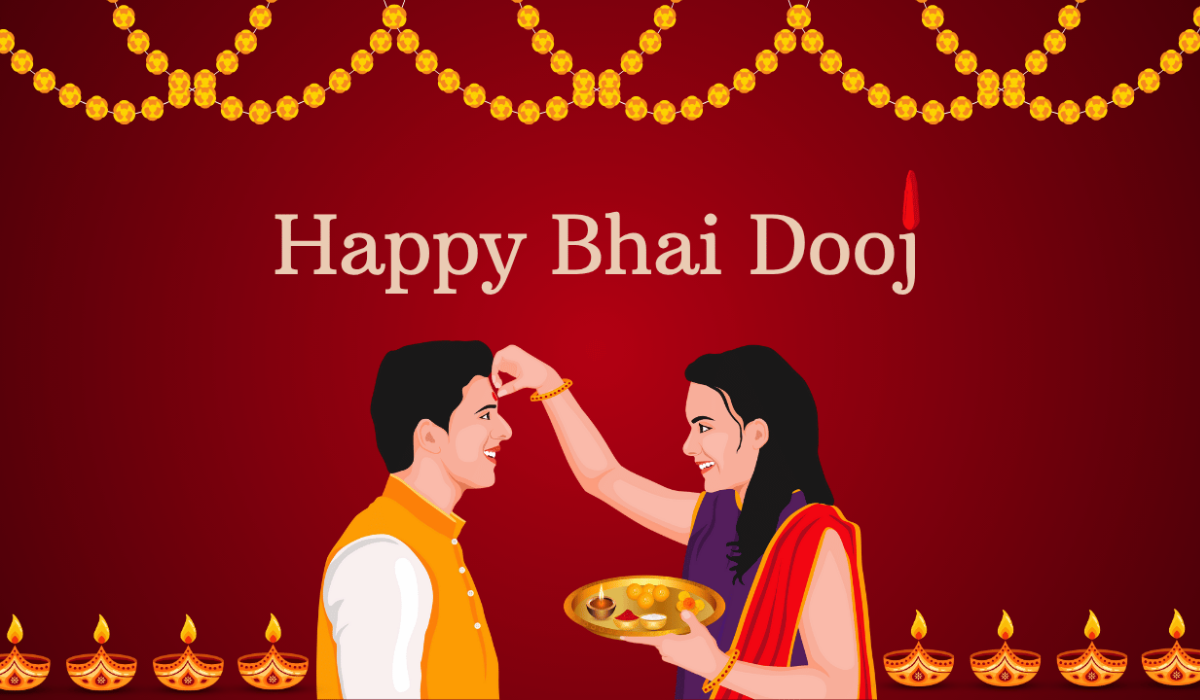
Among India’s vibrant festivals, Bhai Dooj 2025 holds a special place as a celebration of the unbreakable bond between brothers and sisters. Observed on the Dwitiya Tithi (second lunar day) of Shukla Paksha in the Hindu month of Kartik, Bhai Dooj marks the final day of the Diwali festival.
In 2025, Bhai Dooj will be celebrated on Thursday, October 23, bringing together families to honor love, protection, and sibling affection. This festival, also known as Bhaiya Dooj, Bhau Beej, Bhai Tika, or Bhratri Dwitiya, goes beyond rituals — it is an emotional reminder of the selfless bond siblings share.
Bhai Dooj 2025: Date, Tithi, and Shubh Muhurat
According to the Hindu Panchang, Bhai Dooj 2025 falls on October 23, which is a Thursday. The Dwitiya Tithi will begin in the morning and the most auspicious time to perform the tilak and aarti ceremony will be during the Aparahna (afternoon) period.
- Festival: Bhai Dooj / Bhaiya Dooj / Bhau Beej / Bhratri Dwitiya
- Date: Thursday, October 23, 2025
- Aparahna Tilak Muhurat: 1:13 PM to 3:28 PM
- Tithi Duration: Will be observed during Kartik Shukla Dwitiya
People consider this Aparahna Muhurat ideal for performing the Bhai Dooj tilak ceremony because it represents the time when Goddess Yamuna applied tilak to her brother, Lord Yama.
The Mythological Story Behind Bhai Dooj
The origin of Bhai Dooj can be traced back to ancient Hindu scriptures and legends. The most popular story is that of Lord Yama (the God of Death) and his sister Goddess Yamuna.
It is believed that after a long separation, Lord Yama visited his sister Yamuna on this day. Overjoyed by his visit, Yamuna performed his aarti, applied tilak on his forehead, and offered him sweets and food. Deeply touched by her love, Lord Yama blessed her with immortality and declared that he would never take any brother who receives a tilak from his sister on this day to his realm prematurely.
From that day onwards, Bhai Dooj became a festival that celebrates the sacred relationship between brothers and sisters. People also believe that on this day, all living beings gained freedom from the sufferings of hell, making Bhai Dooj a day of liberation and blessings.
Regional Names and Cultural Variations
Though the essence of Bhai Dooj remains the same across India, the festival is known by different names in various regions, each adding its own cultural flavor:
- North India: Commonly celebrated as Bhaiya Dooj, where sisters apply roli and rice tilak on their brothers’ foreheads.
- Maharashtra and Goa: Known as Bhau Beej, where sisters perform aarti and feed sweets to their brothers.
- West Bengal: Called Bhai Phonta, where sisters fast before performing rituals for their brothers’ long life.
- Nepal: Celebrated as Bhai Tika, which is part of the grand Tihar festival, similar to Diwali.
- South India: Sometimes referred to as Yamadwitiya, observed with prayers for the well-being of siblings.
Regardless of the name, the emotions behind this day — love, gratitude, and protection — remain the same.
Rituals and Traditions of Bhai Dooj 2025
Bhai Dooj celebrations begin early in the morning. Families clean and decorate their homes, light diyas, and prepare festive delicacies. Sisters prepare their puja thali, which usually includes roli (vermilion), rice grains, diya, sweets, coconut, and betel leaves.
Here’s how Bhai Dooj is traditionally celebrated:
Sister’s Rituals
Sisters invite their brothers home and perform aarti to pray for their well-being. They apply tilak made of roli and rice on their brothers’ foreheads, symbolizing blessings, purity, and protection. They then offer sweets and perform aarti with a lit diya.
Brother’s Promise
After the ritual, brothers present gifts or money to their sisters as a token of love and appreciation. They also vow to protect their sisters throughout life, maintaining the promise of care and support.
Festive Meal
After the ceremony, families host a festive feast where siblings share traditional dishes like puri, halwa, kheer, laddoo, and barfi. The day overflows with laughter, storytelling, and togetherness.
The ceremony is followed by a family feast, where siblings share traditional dishes like puri, halwa, kheer, laddoo, and barfi. It’s a day filled with laughter, storytelling, and togetherness.
Modern Celebrations
In today’s digital era, siblings separated by distance celebrate Bhai Dooj virtually through video calls, e-greetings, and online gifts. Even a virtual tilak or heartfelt message carries the same warmth as a traditional ritual, proving that love needs no boundaries.
Spiritual and Emotional Significance of Bhai Dooj
Bhai Dooj is not just a festive occasion; it’s a day that highlights some of the most cherished Indian values — love, respect, and family unity. The tilak applied by sisters symbolizes protection against evil forces, while the brother’s blessings and gifts express gratitude and care.
The festival also represents balance and harmony — where male and female energies (symbolized by the brother and sister) bless each other for mutual growth and happiness. It teaches us the importance of relationships, selfless love, and the strength of emotional bonds in today’s fast-paced world.
Bhai Dooj and the Diwali Connection
Bhai Dooj marks the final day of the Diwali festival, which begins with Dhanteras, followed by Naraka Chaturdashi, Diwali, Govardhan Puja, and finally, Bhai Dooj. Each day of Diwali holds spiritual importance, and Bhai Dooj completes the festive cycle by celebrating familial love.
Just as Diwali is about light overcoming darkness, Bhai Dooj symbolizes love overcoming distance and indifference. Together, they represent joy, purity, and gratitude — the core essence of Indian festivals.
Also Read: 10 Powerful Lakshmi Temples to Visit This Diwali for Prosperity and Blessings
Bhai Dooj 2025: A Celebration of Eternal Bonds
In every Indian household, Bhai Dooj reminds us of the beauty of relationships — the care of a sister, the protection of a brother, and the unspoken promises that bind them together.
Whether celebrated in small towns or big cities, in traditional homes or digital spaces, the spirit of Bhai Dooj remains timeless. It teaches us that love doesn’t fade with distance, and family bonds only grow stronger with time.
As you celebrate Bhai Dooj 2025, take a moment to express your gratitude to your siblings — for being your first friend, your confidant, and your forever support system.
Conclusion
Bhai Dooj 2025 is more than a ritual; it’s a celebration of love that transcends boundaries and time. The tilak, the aarti, and the prayers symbolize not just tradition but the emotional depth of human connections.So this October 23, 2025, celebrate Bhai Dooj with joy, affection, and gratitude. Whether near or far, remind your sibling that your bond is eternal — as sacred as the blessings of the divine.