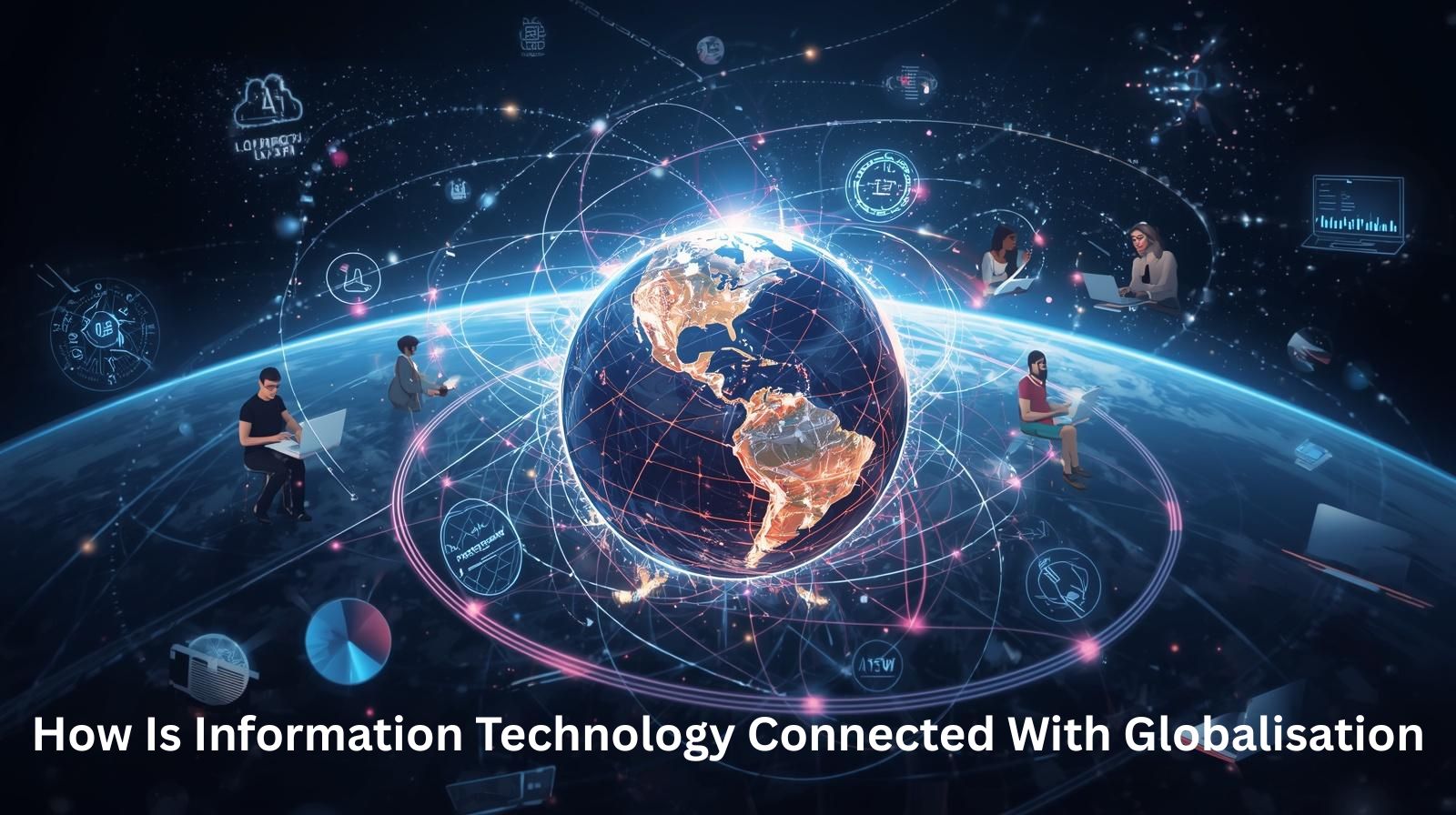
Globalisation refers to the increasing interconnectedness of countries through trade, communication, culture, and technology. In recent decades, Information Technology (IT) has become one of the most powerful forces driving this process. IT has not only accelerated globalisation but also reshaped how economies, businesses, and individuals interact across borders.
1. What is Information Technology in this context?
Information Technology includes computer systems, the internet, telecommunications, software, cloud computing, and digital platforms used to create, store, process, and exchange information. It forms the backbone of modern communication and global connectivity.
2. How IT Drives Globalisation
a) Instant Communication Across the World
IT has removed geographical barriers in communication. Emails, video calls, messaging apps, and social media allow people and businesses to interact in real time, regardless of location. This has made international collaboration faster and more efficient.
b) Expansion of Global Trade and E-Commerce
Digital platforms have transformed trade. Businesses can now sell products and services globally through e-commerce websites and online marketplaces. Small businesses can reach international customers without physical presence in foreign markets.
c) Outsourcing and Global Workforce
IT has enabled companies to outsource work to different countries. Tasks like customer support, software development, and data processing are often handled in countries where labor is more cost-effective. This has created a global job market.
d) Access to Global Information and Knowledge
The internet allows instant access to global knowledge. People can learn from international universities, research papers, online courses, and digital libraries. This has increased education and skill development worldwide.
e) Financial Globalisation
IT has revolutionized banking and finance through online banking, mobile payments, and digital transactions. Global financial systems now operate 24/7, enabling fast international investments and money transfers.
3. Role of Major Technologies in Globalisation
Internet
The internet is the foundation of globalisation, connecting billions of users worldwide and enabling communication, trade, and entertainment.
Cloud Computing
Cloud technology allows businesses to store and access data from anywhere in the world, supporting international collaboration.
Artificial Intelligence and Automation
AI improves global business efficiency by analyzing large amounts of data, optimizing supply chains, and enhancing customer experience across countries.
Social Media Platforms
Social media connects people globally, influencing culture, politics, and business trends across nations.
4. Positive Impacts of IT on Globalisation
Faster global communication
- Growth of international trade
- Increased cultural exchange
- Better access to education and healthcare information
- Economic growth and job creation in IT sectors
5. Challenges and Concerns
Despite its benefits, IT-driven globalisation also brings challenges:
- Digital divide between developed and developing countries
- Cybersecurity threats and data privacy issues
- Job displacement due to automation
- Over-dependence on technology
- Cultural homogenisation
6. Conclusion
Information Technology is the backbone of modern globalisation. It has transformed the world into a highly connected global network where information, goods, services, and ideas move rapidly across borders. While it brings tremendous opportunities for economic and social development, it also requires careful management to address challenges like inequality and cybersecurity. Overall, IT continues to be the strongest driving force shaping the future of globalisation.
FAQs
How does Information Technology support globalisation?
Information Technology supports globalisation by enabling fast communication, digital trade, and instant sharing of information across countries. Tools like the internet, video conferencing, and cloud computing allow businesses and individuals to connect globally in real time.
Why is IT important for global businesses?
IT is important for global businesses because it helps them manage operations across different countries efficiently. It supports online marketing, remote collaboration, data management, and customer service, making international business faster and more cost-effective.
What role does the internet play in globalisation?
The internet is the backbone of globalisation. It connects people worldwide, enables e-commerce, supports digital communication, and provides access to global information and services, breaking geographical barriers.
What are the benefits of IT in globalisation?
Some key benefits include faster communication, global job opportunities, access to international markets, cultural exchange, and improved education through online learning platforms.
What are the challenges of IT-driven globalisation?
Challenges include cyber security threats, loss of privacy, digital inequality between countries, job displacement due to automation, and over-dependence on technology.