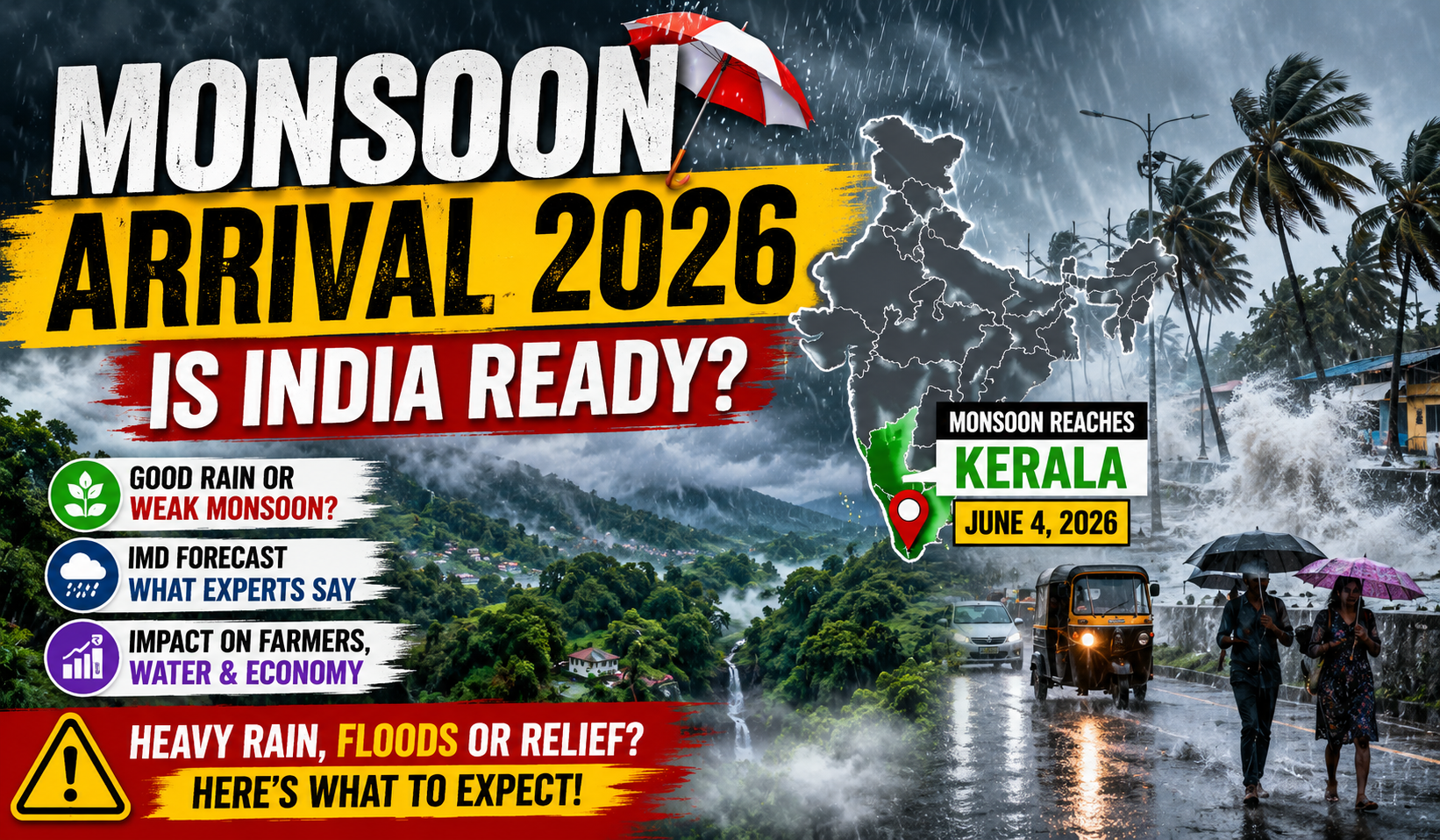
The arrival of the Southwest Monsoon is one of the most anticipated annual weather events in India. More than just a seasonal phenomenon, the monsoon is the lifeline of the country’s agriculture, water resources, and economic stability. In 2026, the monsoon officially made landfall in Kerala on June 4, marking the beginning of a critical four-month rainy season that millions of Indians depend upon.
While the onset was slightly delayed compared to the normal date of June 1, meteorologists believe the monsoon’s progress across the country will play a crucial role in determining crop yields, food prices, water availability, and overall economic growth in the coming months.
This year’s monsoon has generated significant interest due to concerns surrounding global weather patterns, including the possible influence of El Niño conditions, which could impact rainfall distribution across various regions of India.
What Is the Southwest Monsoon?
The Southwest Monsoon is a seasonal wind system that brings moisture-laden winds from the Arabian Sea and the Bay of Bengal into the Indian subcontinent. These winds carry massive amounts of rainfall that sustain agriculture, replenish reservoirs, and support millions of livelihoods.
Typically, the monsoon reaches Kerala around June 1 and gradually advances northward, covering the entire country by mid-July. It remains active until September before retreating in October.
India receives nearly 70 percent of its annual rainfall during the monsoon season, making it one of the most important climatic events of the year.
Monsoon Arrival in Kerala: A Slight Delay
The India Meteorological Department (IMD) confirmed that the Southwest Monsoon reached Kerala on June 4, 2026. Although this was three days later than the normal onset date, weather experts have indicated that such minor delays are not uncommon and do not necessarily signal a weak monsoon season.
The onset was accompanied by widespread rainfall across Kerala, coastal Karnataka, and adjoining regions. Weather stations recorded substantial precipitation, signaling the beginning of the monsoon’s northward journey.
Historically, monsoon onset dates have varied significantly. Some years have witnessed early arrivals, while others experienced delays of over a week. The overall seasonal rainfall is often determined by broader atmospheric and oceanic conditions rather than the exact onset date.
Why the Monsoon Matters to India
Agriculture Depends on Monsoon Rainfall
India remains one of the world’s largest agricultural economies, and a significant portion of farming activity depends directly on monsoon rains.
Major Kharif crops such as:
- Rice
- Cotton
- Soybean
- Sugarcane
- Maize
- Pulses
require adequate rainfall during the monsoon season.
A good monsoon generally leads to:
- Higher agricultural productivity
- Better crop yields
- Increased rural income
- Stable food prices
Conversely, deficient rainfall can result in crop failures, reduced farm income, and inflationary pressures on food commodities.
Water Reservoirs and Drinking Water Supply
Monsoon rainfall replenishes rivers, lakes, dams, and groundwater reserves across the country. Many cities rely heavily on water stored during the rainy season to meet year-round demand.
Strong monsoon performance helps:
- Improve drinking water availability
- Support irrigation systems
- Increase hydroelectric power generation
- Reduce drought risks
Economic Impact
The monsoon has a direct influence on India’s economy. Good rainfall supports rural consumption, agricultural output, and industrial demand.
Economists often monitor monsoon forecasts closely because agricultural performance affects:
- GDP growth
- Inflation
- Employment
- Consumer spending
A healthy monsoon can boost economic confidence, while poor rainfall may create challenges across multiple sectors.
Monsoon Progress Across India
After reaching Kerala, the monsoon advances through several phases.
Early June
The monsoon typically spreads across:
- Kerala
- Coastal Karnataka
- Goa
- Northeastern states
Mid-June
Rain-bearing winds advance into:
- Maharashtra
- Telangana
- Andhra Pradesh
- Odisha
- West Bengal
Late June
The monsoon generally reaches:
- Madhya Pradesh
- Gujarat
- Chhattisgarh
- Bihar
- Uttar Pradesh
- Punjab
- Haryana
- Delhi
Mid-July
By mid-July, most parts of India are usually under monsoon coverage.
Meteorologists continue monitoring wind patterns, sea surface temperatures, and atmospheric pressure systems to track the monsoon’s progression.
El Niño Concerns in 2026
One of the major topics surrounding the 2026 monsoon season is the potential development of El Niño conditions.
What Is El Niño?
El Niño is a climate phenomenon characterized by warmer-than-normal sea surface temperatures in the central and eastern Pacific Ocean.
It can influence weather patterns across the globe, including India.
Historically, El Niño years have often been associated with:
- Below-normal rainfall
- Delayed monsoon activity
- Increased drought risk
However, not every El Niño event results in a weak Indian monsoon. Other climatic factors also influence rainfall outcomes.
What Experts Are Watching
Meteorologists are closely monitoring:
- Pacific Ocean temperatures
- Atmospheric circulation patterns
- Indian Ocean Dipole conditions
- Regional weather systems
These factors will determine whether the monsoon remains near normal or experiences significant rainfall deficits.
Impact on Major Cities
Delhi-NCR
The national capital region is expected to receive monsoon rains during the final week of June. Residents can expect relief from intense summer heat once rainfall becomes widespread.
Mumbai
Mumbai typically receives some of its heaviest rainfall during June and July. Authorities remain alert for waterlogging, traffic disruptions, and localized flooding.
Bengaluru
The city generally benefits from moderate monsoon rainfall, which helps replenish water reservoirs and improve groundwater levels.
Kolkata
Kolkata often experiences heavy monsoon showers accompanied by thunderstorms and humid conditions.
Chennai
Although Chennai receives some rainfall during the Southwest Monsoon, its primary rainy season occurs during the Northeast Monsoon between October and December.
Challenges Associated with Monsoon Season
While monsoon rainfall is essential, excessive rainfall can create challenges.
Urban Flooding
Major cities frequently experience:
- Waterlogged roads
- Traffic congestion
- Drainage failures
- Infrastructure damage
Landslides
Hilly regions including:
- Himachal Pradesh
- Uttarakhand
- Sikkim
- Arunachal Pradesh
face increased risks of landslides during intense rainfall periods.
Agricultural Losses
Excessive rainfall can damage crops, particularly in low-lying agricultural areas vulnerable to flooding.
Health Concerns
Monsoon conditions often lead to an increase in:
- Waterborne diseases
- Mosquito-borne illnesses
- Contaminated drinking water
- Seasonal infections
Government Preparedness Measures
State and central agencies typically undertake several preparedness initiatives before the monsoon season.
These include:
- Cleaning drainage systems
- Strengthening flood-control infrastructure
- Monitoring dam water levels
- Issuing weather advisories
- Deploying disaster response teams
The India Meteorological Department plays a crucial role in providing timely forecasts and warnings to help authorities and citizens prepare for severe weather events.
What Citizens Should Do During Monsoon Season
To stay safe during the rainy season, experts recommend:
- Avoid traveling during severe weather warnings.
- Keep emergency supplies readily available.
- Ensure proper drainage around homes.
- Avoid walking through flooded streets.
- Follow official weather advisories.
- Store clean drinking water.
- Check vehicle condition before long journeys.
Preparedness can significantly reduce the risks associated with heavy rainfall events.
Conclusion
The arrival of the Southwest Monsoon 2026 marks the beginning of one of the most important seasons for India. From supporting agriculture and replenishing water resources to influencing economic growth, the monsoon remains a vital component of the nation’s well-being.
Although the monsoon reached Kerala slightly later than usual, experts remain optimistic about its overall progress. At the same time, attention remains focused on evolving climatic conditions such as El Niño, which could influence rainfall distribution in the months ahead.
As the monsoon advances across the country, millions of Indians—from farmers and business owners to city residents and policymakers—will closely monitor every phase of this crucial weather system.
The coming weeks will determine whether India experiences a strong, balanced monsoon season or faces challenges from uneven rainfall patterns. Either way, the monsoon will continue to shape the nation’s future in profound ways.