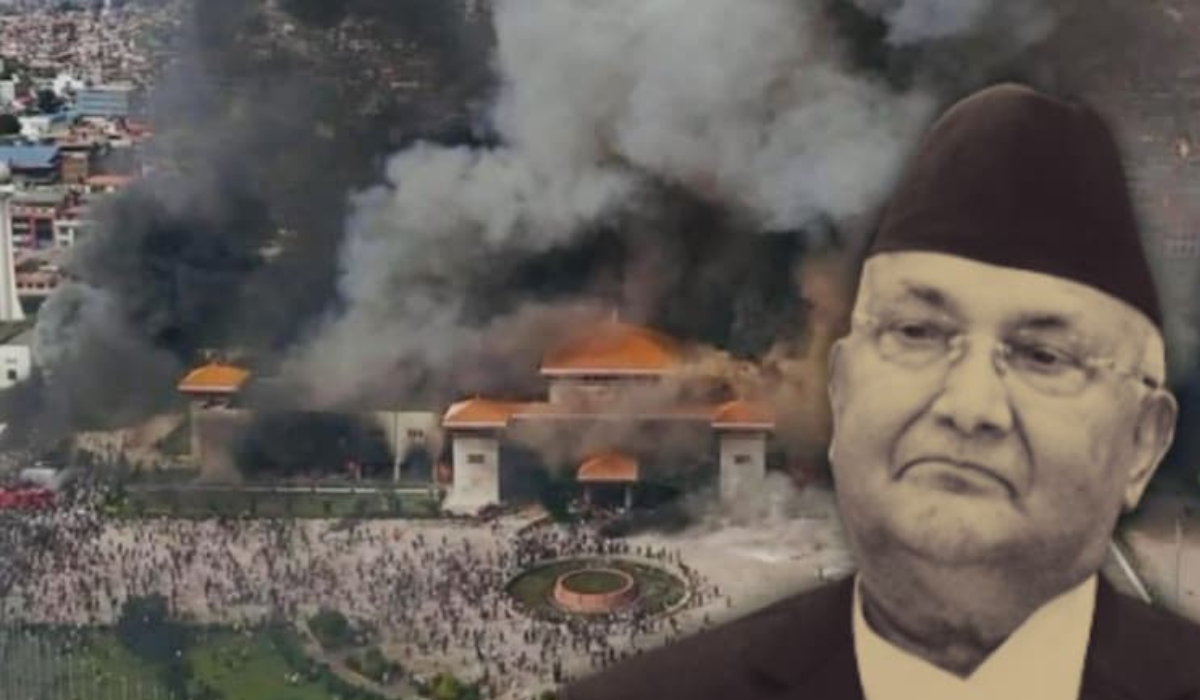
Nepal plunged into political uncertainty on September 9, 2025, after Prime Minister K.P. Sharma Oli resigned following weeks of violent protests led largely by Gen Z citizens demanding accountability and reforms. His decision came just a day after 19 people were killed in police firing during demonstrations in Kathmandu and other cities.
Oli’s Resignation Amid Crisis
In his resignation letter to President Ram Chandra Poudel, Oli said he was stepping down to help find a political solution to the deepening crisis. President Poudel accepted the resignation and urged all sides, including the youth-led protest groups, to engage in peaceful dialogue.
Despite a strict curfew imposed from early morning, thousands of demonstrators defied orders and poured into the streets. The protests, triggered by a controversial social media ban and fueled by anger over corruption and misuse of power, escalated into one of Nepal’s worst unrests in recent years.
Army’s Warning and Deployment
As violence intensified, Army Chief Gen. Ashok Raj Sigdel addressed the nation, calling on protesters to halt their programmes and come forward for dialogue. He stressed that maintaining peace, security, and national unity was the duty of every Nepali.
The Nepal Army issued a stern warning that if arson and attacks on public property continued, it would deploy troops to take control of the situation from 10 PM on September 9. Troops were later sent to secure sensitive areas, including Tribhuvan International Airport (TIA), which was completely shut down. Around 700 Indian travelers were left stranded as flights were suspended.
Political Leaders’ Homes Attacked
The unrest turned more violent when protesters set fire to the homes of top political leaders, including Oli’s private residence in Bhaktapur. The houses of former Prime Ministers Sher Bahadur Deuba and Pushpa Kamal Dahal were also torched.
In a tragic incident, Rajyalaxmi Chitrakar, wife of ex-Prime Minister Jhalanath Khanal, was trapped inside her burning home in Kathmandu’s Dallu area. She suffered severe burns and later died in hospital, further fueling public anger.
Growing Frustration in Nepal
The protests reflect growing frustration among citizens, especially young people, over corruption, poor governance, and widening inequality. Demonstrators clashed with security forces outside the Parliament, torching vehicles and demanding sweeping reforms.
With Oli stepping down, Nepal faces a turbulent political transition. Parties are scrambling to form a new government, raising fears of prolonged instability in the fragile democracy.
Also Read: नेपाल में सोशल मीडिया बैन पर बवाल: काठमांडू में हिंसक प्रदर्शन, संसद भवन तक पहुंची भीड़
India Issues Advisory
India’s Ministry of External Affairs (MEA) has advised Indian nationals in Nepal to remain cautious and follow the safety guidelines issued by local authorities.
The Road Ahead
Oli’s resignation marks a dramatic turn in Nepal’s politics, but it is uncertain if it will calm the unrest. Protesters say they want real accountability, systemic reforms, and stronger democratic institutions.
For now, the country stands at a crossroads, balancing between chaos and the hope of a new political beginning.