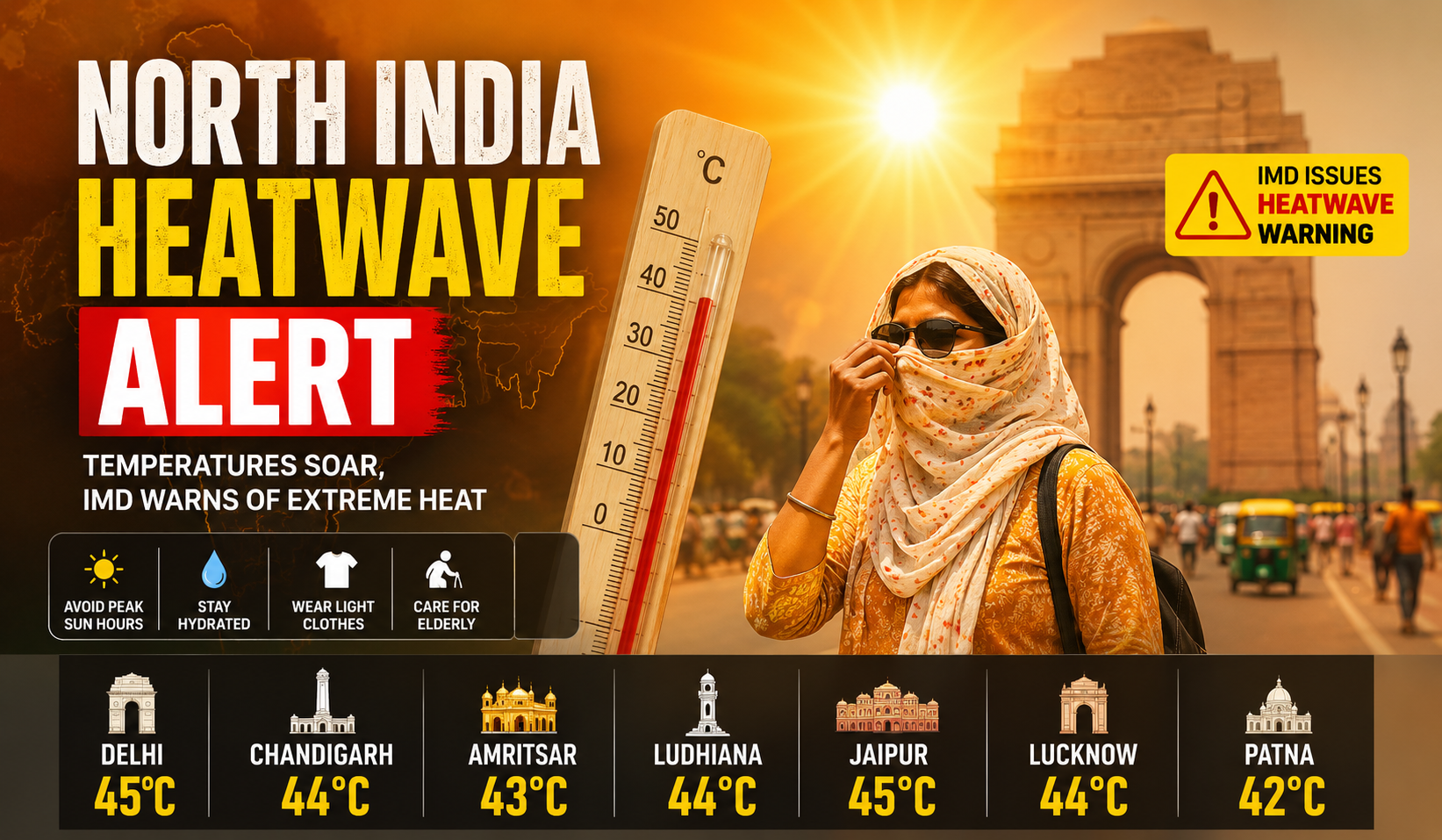
A dangerous heatwave is sweeping across North India, pushing temperatures to alarming levels and forcing weather authorities to issue fresh warnings for multiple states. The India Meteorological Department (IMD) has warned that the intense heat conditions are expected to continue for several days, affecting millions of people across Punjab, Haryana, Chandigarh, Delhi, Uttar Pradesh, Rajasthan, and Madhya Pradesh.
The ongoing weather pattern has already resulted in temperatures crossing: 45°C in several North Indian regions.
According to IMD forecasts, the combination of dry winds, clear skies, and rising daytime temperatures is creating severe heatwave conditions that may become dangerous for elderly people, children, outdoor workers, and people with health problems.
IMD Issues Heatwave Warning Across North India
The India Meteorological Department has issued continuous heatwave alerts for many northern states between May 19 and May 25, 2026. IMD bulletins show that Haryana, Chandigarh, Delhi, Punjab, Rajasthan, Uttar Pradesh, and Madhya Pradesh are likely to remain under intense heatwave conditions for the next several days.
States Under Heatwave Alert
- Punjab
- Haryana
- Chandigarh
- Delhi NCR
- Uttar Pradesh
- Rajasthan
- Madhya Pradesh
- Bihar
In some districts of Uttar Pradesh, IMD has predicted “severe heatwave” conditions, meaning temperatures could remain extremely high throughout the day and even during nighttime hours.
Chandigarh Weather Update: City Records Season’s Hottest Days
Current Chandigarh Weather Situation
The shared capital of Punjab and Haryana, Chandigarh, is currently experiencing one of the hottest weeks of the year.
According to the IMD Chandigarh weather centre, dry weather and heatwave conditions are expected to continue over the next seven days. Temperatures are expected to rise gradually by another 2°C to 3°C.
The city recorded temperatures around: 38°C during morning observations itself, indicating how rapidly daytime temperatures are rising.
Why Chandigarh Is Feeling Hotter This Year
Several reasons are contributing to the intense heat in Chandigarh:
- Low rainfall activity
- Hot dry winds from Rajasthan
- Clear skies increasing solar heating
- Urban heat effect due to concrete infrastructure
Recent reports suggest Chandigarh witnessed its hottest day of the season, while nearby cities including Amritsar, Ludhiana, Patiala, and Hisar also recorded extremely high temperatures.
Delhi Heatwave: Temperature May Reach 45°C
New Delhi is also under a serious heatwave warning.
IMD has issued a yellow alert for the national capital, warning residents about intense heat conditions till at least May 22. Some isolated areas may witness temperatures touching: 45°C Areas such as Safdarjung, Ayanagar, and Ridge are already reporting extremely hot daytime conditions. Health experts have warned that exposure to direct sunlight during afternoon hours may increase the risk of heatstroke and dehydration.
Punjab and Haryana Facing Severe Heat Conditions
Cities across Punjab and Haryana are seeing rapidly increasing temperatures.
IMD has specifically issued a five-day heatwave alert for Punjab, Haryana, and Chandigarh. Temperatures in several districts may remain between:
42°C to 45°C
Cities including:
- Amritsar
- Ludhiana
- Patiala
- Bathinda
- Hisar
- Rohtak
- Gurugram
are expected to remain under heat stress conditions throughout the week.
Uttar Pradesh and Rajasthan Witness “Severe Heatwave”
Uttar Pradesh and Rajasthan are among the worst-hit regions.
IMD has forecast severe heatwave conditions over several districts in western and eastern Uttar Pradesh between May 19 and May 24. Warm nights are also expected, making conditions even more uncomfortable.
Rajasthan continues to experience scorching temperatures due to hot desert winds, with some isolated regions likely to cross:
47°C during peak afternoon hours.
Why North India Is Experiencing Extreme Heat
Meteorologists believe multiple climate and weather factors are responsible for the current heatwave:
1. Absence of Rainfall
Northwest India has seen very little rainfall activity during recent weeks.
2. Dry Desert Winds
Hot winds from Rajasthan and nearby desert regions are moving toward northern plains.
3. Climate Change Impact
Scientists have repeatedly warned that climate change is increasing the frequency and intensity of heatwaves globally.
4. Urban Heat Islands
Cities with heavy concrete infrastructure trap heat for longer periods, causing higher nighttime temperatures.
Health Risks During Heatwave
Doctors and health experts are advising people to remain extremely cautious during this period.
Common heat-related illnesses include:
- Heatstroke
- Dehydration
- Heat exhaustion
- Muscle cramps
- Dizziness
- Fainting
The central government has also issued a public health advisory urging people to avoid unnecessary outdoor exposure.
Safety Tips to Survive the Heatwave
Stay Hydrated
Drink plenty of water even if you are not feeling thirsty.
Avoid Peak Sun Hours
Try not to go outside between:
12 PM to 4 PM
Wear Light Clothing
Loose cotton clothes help maintain body temperature.
Eat Cooling Foods
Include fruits like watermelon, cucumber, and curd in your diet.
Protect Elderly and Children
Children and senior citizens are more vulnerable to heat-related illnesses.
Avoid Heavy Physical Activity
Outdoor labor and exercise should be minimized during extreme afternoon heat.
Will Rain Bring Relief?
While parts of Himachal Pradesh and Northeast India may receive light rain and thunderstorms in the coming days, IMD says most northern plains are likely to remain extremely hot for the rest of the week.
Some hill regions may experience temporary weather changes, but major relief for North India is not expected immediately.
Final Thoughts
The North India heatwave of May 2026 is shaping into one of the season’s most intense weather events. Cities like Chandigarh, Delhi, Lucknow, Jaipur, and Patna are already witnessing dangerous daytime temperatures, while IMD continues to extend heatwave alerts across several states.
With temperatures expected to remain extremely high over the next few days, authorities are urging people to stay indoors during peak afternoon hours, remain hydrated, and follow official weather advisories carefully.
For millions across North India, the coming week could become a serious test of endurance against one of the harshest summer heatwaves of the year.