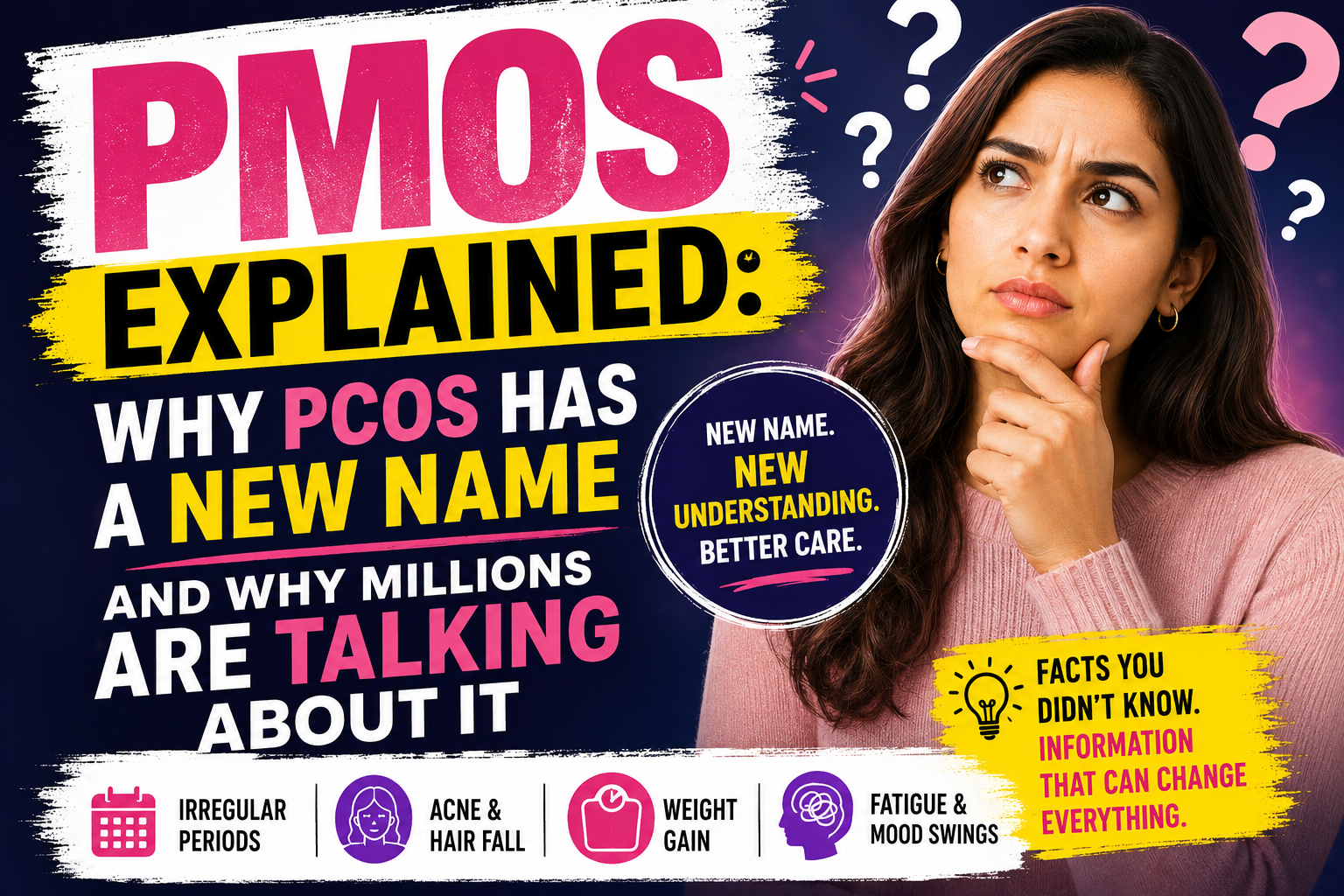
For years, millions of women around the world have known the condition as PCOS — Polycystic Ovary Syndrome. But in 2026, the internet suddenly exploded with a new word: PMOS.
Searches like “What is PMOS?”, “PCOS new name,” “PMOS meaning,” and “Is PCOS renamed?” started trending across the United States and other countries. Social media platforms filled with confusion, curiosity, and emotional reactions from women who have struggled with the condition for years.
So what exactly happened?
The answer is simple but important: PCOS has officially been renamed to PMOS, and doctors say the change could improve awareness, diagnosis, and treatment for millions of people worldwide.
What Does PMOS Mean?
PMOS stands for:
Polyendocrine Metabolic Ovarian Syndrome
It is the new medical name for what was previously called PCOS (Polycystic Ovary Syndrome).
According to global health experts, the old name was scientifically outdated and often misleading. Many women diagnosed with PCOS never actually had ovarian cysts, even though the condition’s name suggested that cysts were the main problem.
Medical researchers believed the old term failed to explain the full impact of the disorder on the body.
Why Was PCOS Renamed?
The name change did not happen overnight.
A global panel of scientists, endocrinologists, gynecologists, and health organizations spent more than a decade discussing whether the name “PCOS” accurately represented the condition.
One of the biggest voices behind the change was Helena Teede, an Australian endocrinologist who led international efforts to modernize the name.
Experts explained that PCOS affects much more than just the ovaries.
The condition is closely linked with:
- Hormonal imbalance
- Insulin resistance
- Metabolic problems
- Fertility challenges
- Weight gain
- Acne and skin issues
- Mental health struggles
- Increased diabetes risk
Because of this, researchers believed the term “Polycystic Ovary Syndrome” focused too heavily on ovarian cysts and ignored the broader health effects.
That is why the updated term — Polyendocrine Metabolic Ovarian Syndrome — was introduced.
Why Is PMOS Trending in the USA?
The keyword suddenly went viral because millions of people were confused by the announcement.
Social media users began asking:
- “Did PCOS change its name?”
- “What is PMOS?”
- “Is PMOS a new disease?”
- “Why are doctors renaming PCOS?”
TikTok creators, health influencers, Reddit communities, and major news outlets quickly picked up the story. Since PCOS affects an estimated 1 in 10 women worldwide, the topic instantly became one of the biggest health discussions online.
For many women, the name change also felt emotional.
Some people welcomed the change because they felt the old name never explained what they were actually experiencing. Others worried the new term might create confusion for patients who already struggled to get diagnosed.
PMOS Symptoms: Are They Different From PCOS?
The symptoms remain mostly the same because PMOS is not a new disease. It is simply a new name for the same condition.
Common symptoms include:
Irregular Periods
Many women experience missed or unpredictable menstrual cycles.
Weight Gain
Especially around the abdomen due to insulin resistance.
Acne and Oily Skin
Hormonal imbalances can trigger persistent skin issues.
Excess Facial or Body Hair
Higher androgen levels may cause unwanted hair growth.
Hair Thinning
Some women experience scalp hair loss similar to male-pattern baldness.
Fertility Problems
Ovulation issues can make pregnancy more difficult.
Fatigue and Mood Changes
Hormonal and metabolic changes may also affect mental health.
Doctors say awareness of these symptoms is still extremely important, regardless of the name change.
Is PMOS a New Disease?
No.
This is one of the biggest misunderstandings currently spreading online.
PMOS is not a new illness, virus, or medical emergency. It is simply the updated name for PCOS.
The condition itself has existed for decades. The rebranding aims to improve understanding and make diagnosis more accurate in the future.
Why the Old Name Created Problems
Many women with PCOS reported feeling ignored or misunderstood after diagnosis.
Doctors and researchers found several issues with the original name:
Not Everyone Had Cysts
Some patients had hormonal symptoms without ovarian cysts.
The Name Focused Only on Ovaries
In reality, the disorder affects the entire endocrine and metabolic system.
Delayed Diagnosis
Patients with “non-classic” symptoms were often overlooked.
Confusion Among Patients
Many people assumed the condition only impacted fertility, which is not true.
Health experts hope the new name will encourage broader screening and earlier treatment.
How the Internet Reacted
The internet response has been mixed.
Some users praised the change, saying it finally reflects the seriousness of the condition. Others joked that “medical rebranding” would make things even more confusing.
Still, one thing is certain — the announcement successfully brought massive attention to women’s health issues that are often under-discussed.
Search interest in:
- PMOS meaning
- PCOS symptoms
- PCOS new name
- Helena Teede PCOS announcement
has skyrocketed in recent days.
What Happens Next?
Medical organizations are expected to slowly transition from the term PCOS to PMOS over the next few years.
Doctors, hospitals, researchers, and health websites may begin updating:
- diagnosis guides
- awareness campaigns
- educational resources
- treatment recommendations
However, many clinics will likely continue using both names together during the transition period to avoid confusion.
Final Thoughts
The shift from PCOS to PMOS is more than just a name change. It represents a growing effort to better understand a condition that affects millions of women worldwide.
Whether people support the new name or not, the discussion has already achieved something important: it has pushed women’s hormonal and metabolic health into global conversation.
And for many patients, that visibility matters more than ever.