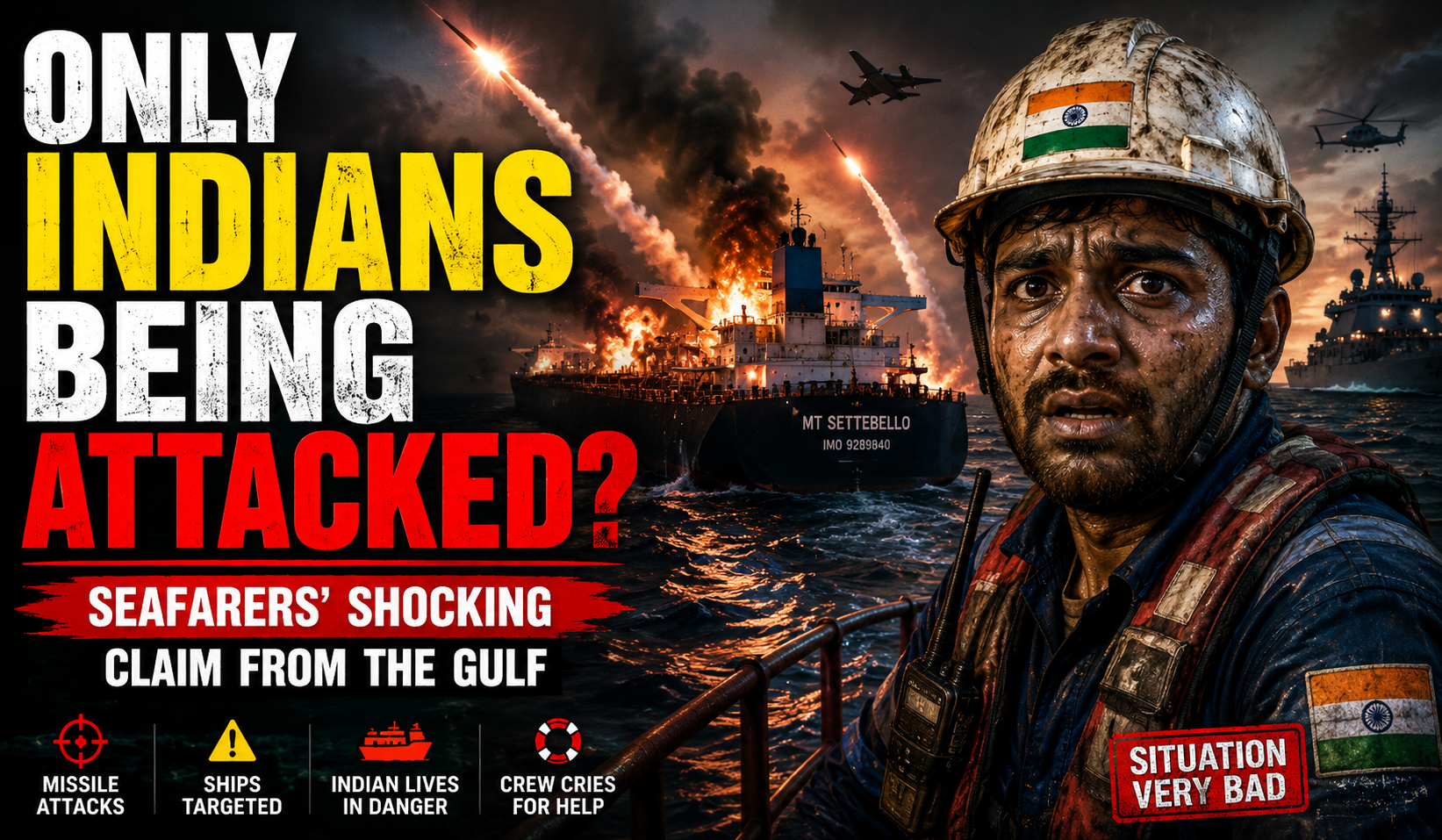
Rising Tensions in the Gulf Spark Fear Among Indian Sailors
A growing maritime crisis in the Gulf region has triggered alarm in India after several Indian seafarers claimed that commercial vessels carrying Indian crew members are facing repeated attacks amid escalating military tensions. Disturbing videos shared by sailors from ships operating near the Gulf of Oman and the Strait of Hormuz have gone viral, with crew members describing the situation as “very bad” and alleging that Indian sailors are becoming unintended victims of the ongoing conflict.
The claims come at a time when tensions between regional powers and international military forces have intensified, turning one of the world’s busiest shipping corridors into a dangerous zone for merchant vessels.
Distress Videos Raise Serious Concerns
Several videos circulating on social media show Indian crew members expressing fear for their safety. In one widely shared clip, a seafarer can be heard saying that merchant ships with Indian crew members are facing increasing risks while operating in Gulf waters.
The sailors claim that attacks on vessels have become more frequent and that the threat level has reached unprecedented levels. While there is currently no independent verification that Indians are being specifically targeted because of their nationality, the emotional appeals have highlighted the growing danger faced by thousands of Indian seafarers working in international shipping.
The videos have drawn attention from both the public and government officials, prompting renewed discussions about maritime safety and the protection of Indian nationals employed overseas.
Recent Attacks Intensify Fears
The concerns gained momentum following reports of attacks on merchant vessels operating near Oman and other strategic maritime routes. Several ships have reportedly suffered damage during military operations linked to the wider regional conflict.
In one of the most serious incidents, Indian sailors lost their lives after a vessel was caught in military action near the Gulf of Oman. The tragedy sparked outrage in India and led to diplomatic engagement between New Delhi and foreign governments involved in the region.
Shipping companies have also expressed concern over the deteriorating security environment, warning that commercial vessels may increasingly find themselves caught in the crossfire.
Why So Many Indians Are Affected
India is one of the world’s largest suppliers of maritime manpower. Thousands of Indian seafarers serve aboard cargo ships, oil tankers, container vessels, and bulk carriers operating across international waters.
Industry estimates suggest that Indian sailors make up a significant portion of the global merchant shipping workforce. As a result, whenever shipping routes become dangerous, Indian nationals are often among the most affected.
Maritime experts note that the high number of Indians involved in Gulf shipping operations may explain why so many recent incidents have involved Indian crew members. However, experts caution against assuming that Indian sailors are being deliberately singled out without conclusive evidence.
Strategic Importance of the Gulf Region
The Strait of Hormuz remains one of the most critical maritime chokepoints in the world. Nearly one-fifth of global oil supplies pass through this narrow waterway every day.
Any disruption in the region has far-reaching consequences for global energy markets, international trade, and shipping operations. Escalating military activity has already forced shipping companies to review routes, increase security measures, and pay higher insurance premiums.
The ongoing instability has also raised fears of potential disruptions to oil supplies, which could affect fuel prices worldwide.
India’s Response
The Indian government has been closely monitoring developments in the Gulf. Officials have reportedly engaged with shipping authorities, maritime agencies, and foreign governments to ensure the safety of Indian nationals working aboard commercial vessels.
Authorities have also issued advisories urging caution for vessels operating in conflict-prone waters. Maritime agencies have been directed to maintain heightened vigilance and provide support to Indian sailors wherever necessary.
India’s diplomatic channels remain active as the government seeks to safeguard its citizens and prevent further casualties.
Shipping Industry on Alert
The international shipping industry is increasingly concerned about the security situation. Several maritime security agencies have warned ship operators to exercise extreme caution while passing through high-risk areas.
Shipping companies are reviewing crew deployment strategies and emergency response plans. Some firms are reportedly considering alternative routes where possible, although avoiding the Gulf entirely remains difficult due to its strategic importance to global trade.
Industry experts warn that prolonged instability could result in higher transportation costs, supply chain disruptions, and increased risks for crews operating in the region.
Families Back Home Worried
For the families of Indian seafarers, the crisis has created significant anxiety. Many sailors spend months at sea, often working in challenging conditions far from home.
The latest reports of attacks and growing tensions have left relatives concerned about the safety of their loved ones. Calls for stronger protection measures and clearer communication from shipping companies have grown louder in recent days.
Looking Ahead
As geopolitical tensions continue to rise, the safety of merchant sailors remains a major concern. While there is currently no confirmed evidence that Indian seafarers are being specifically targeted, the increasing number of incidents involving Indian crew members has drawn national attention.
The coming weeks will be crucial as governments, shipping companies, and international maritime organizations work to reduce risks and protect crews navigating one of the world’s most volatile maritime regions.
For now, the voices emerging from ships in the Gulf serve as a stark reminder of the human cost of conflict and the dangers faced daily by thousands of sailors who keep global trade moving.