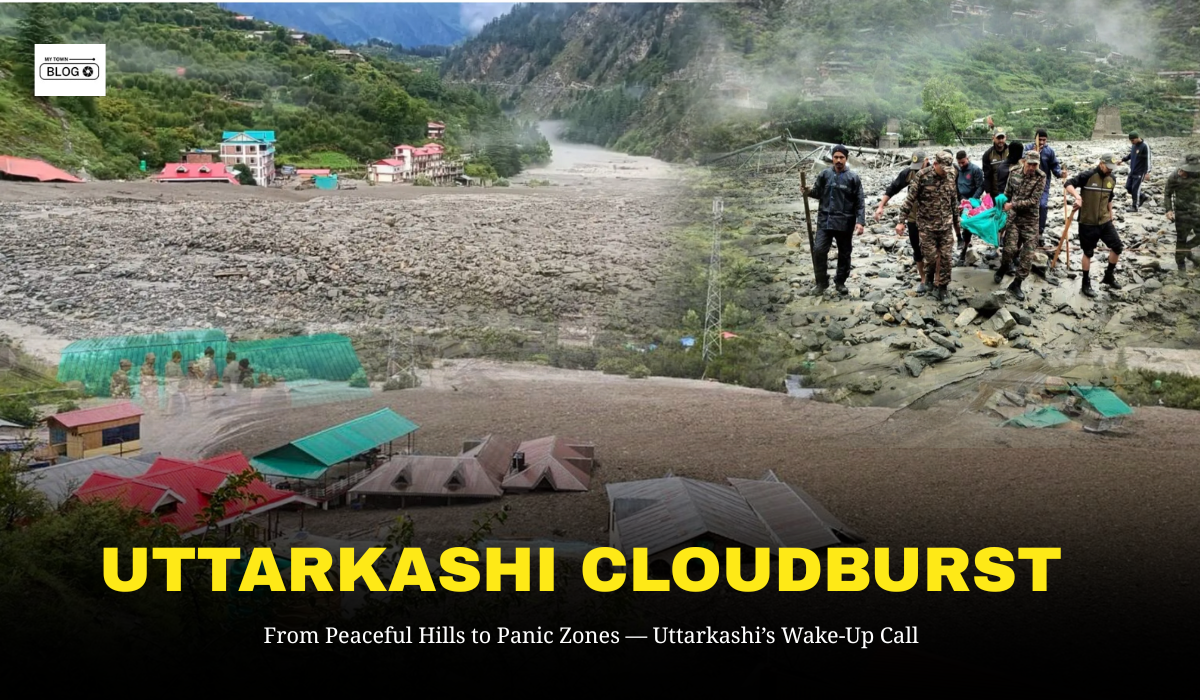
On August 5, 2025, a sudden cloudburst struck Uttarkashi, Uttarakhand, triggering devastating flash floods. Entire villages were swept away, roads submerged, and residents forced to flee. The Uttarkashi Cloudburst highlights the growing climate vulnerability in the Himalayan region and the urgent need for better preparedness.
Devastation Strikes Dharali Village
On August 5, 2025, a sudden and powerful downpour—initially reported as a cloudburst—triggered catastrophic flash floods in the Himalayan district of Uttarkashi. The torrent ravaged Dharali village, sweeping away homes, guesthouses, and infrastructure in its path. Witnesses described scenes of heart-stopping horror as entire neighborhoods were washed away within moments.
Death Toll and Missing Persons
By August 6, authorities confirmed that at least five people were killed, including civilians and soldiers. Dozens remain unaccounted for. Estimates suggest that over 50 to more than 100 individuals may be missing, encompassing local residents, tourists, and 11 Army soldiers who were stationed nearby at the time of the disaster.
Massive Rescue Operation Underway
A massive, coordinated rescue operation was swiftly launched involving the Indian Army, Indo-Tibetan Border Police (ITBP), National Disaster Response Force (NDRF), State Disaster Response Force (SDRF), and local police teams. Given the dangerous terrain and unpredictable weather, helicopters were deployed to evacuate over 400 stranded individuals, especially those along the Gangotri pilgrimage route. As of August 7, more than 70 civilians had been successfully rescued, though over 50 people remain missing.
Infrastructure in Ruins
The flash floods and accompanying mudslides wreaked havoc on the region’s infrastructure. Key roads, including the Uttarkashi–Harsil route, were either washed away or buried under debris, blocking access to remote areas and severely delaying relief efforts. Bridges collapsed, while mobile towers and power lines were damaged, resulting in widespread electricity cuts and communication blackouts across the region.
Eyewitness accounts and viral footage showed horrifying visuals—cars being swept away, homes collapsing, and rivers turning into violent torrents. These scenes have left a deep impact on the national psyche and brought attention to the growing vulnerability of such regions.
Did a Cloudburst Really Trigger It?
While initial reports termed the event a cloudburst, meteorological experts are now reevaluating this classification. The area reportedly received over 210 mm of rainfall in 24 hours, but this may not meet the technical criteria of a cloudburst, which typically involves over 100 mm of rain in one hour in a localized area.
Instead, some geologists believe a glacial debris collapse could have contributed to the sudden flooding. The Kheer Ganga river, which originates from a glacier in the upper Himalayas, may have seen a release of accumulated water and debris, triggering a massive flash flood.
Fragile Terrain and Climate Change: A Dangerous Mix
The Uttarkashi Cloudburst has once again highlighted the vulnerability of the Himalayan region, where steep slopes, fragile geology, and glacial activity make the terrain extremely sensitive to extreme weather events. Uttarkashi receives an annual average rainfall of around 1,289 mm, but changing climate patterns have made such downpours more erratic and intense.
Experts warn that glacial melt, accelerated by rising temperatures, is creating new water bodies that are unstable and prone to sudden outbursts. Coupled with deforestation, unplanned construction, and lack of early warning systems, the risk of similar disasters is only expected to increase.
Government Response and Coordination
The response from both state and central authorities was swift. Chief Minister Pushkar Singh Dhami conducted aerial surveys, visited affected families, and directed disaster management teams to scale up relief work. At the national level, Home Minister Amit Shah assured full support and additional deployment of rescue forces.
The Prime Minister also expressed deep sorrow over the incident, stressing the importance of providing timely aid to victims and their families. Relief camps have been set up in safe zones, while food, medical aid, and shelter are being provided to those displaced by the flooding.
Human Stories: Shock, Loss, and Survival
Beyond statistics, the tragedy of the Uttarkashi Cloudburst is deeply personal for the residents of Dharali and surrounding villages. Survivors spoke of terrifying moments: the sudden roar of water, homes collapsing, and people screaming before being swept away.
One survivor recalled, “There were screams everywhere… then silence.” Another resident, a local homestay operator, lamented, “The entire village of Dharali was wiped out in minutes. We’ve lost everything.”
Renewal, Risks, and What Lies Ahead
The Uttarkashi Cloudburst, or more accurately, the disaster triggered by flash flooding, has exposed the harsh reality of living in fragile mountain zones. Important pilgrimage routes like the Char Dham Yatra have been halted. Local businesses, tourism, and agriculture—key lifelines for the region—now face months of recovery.
Experts urge the government to invest in early warning systems, create climate-resilient infrastructure, and enforce sustainable development plans in ecologically sensitive areas. The lessons from Uttarkashi must not be forgotten, or the cost of future disasters may be even higher.
Summary
This catastrophic event—widely known as the Uttarkashi Cloudburst—has resulted in tragic loss of life, destruction of entire communities, and an urgent reminder of the environmental volatility in the Himalayan region. As rescue operations continue and families search for their missing loved ones, the disaster stands as a stark call for comprehensive climate resilience planning, better forecasting systems, and stronger disaster management protocols.