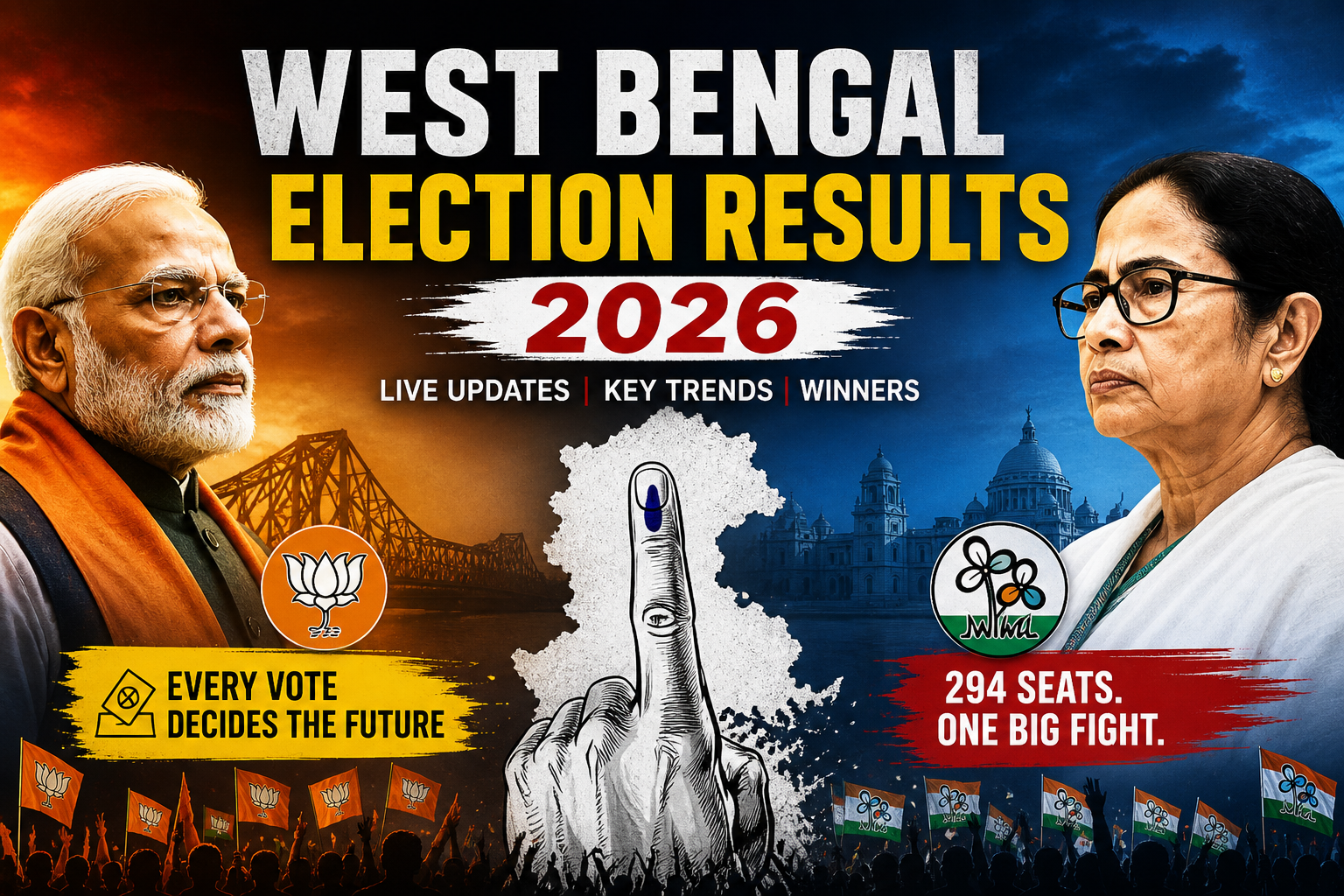
The West Bengal Election Results 2026 have quickly become one of the most talked-about political developments across India. As counting continues and trends emerge, the election results West Bengal story is shaping into a closely fought contest between major political forces.
For readers trying to make sense of the numbers, this article breaks down the latest trends, major players, and what these results could mean for the future of West Bengal.
🗳️ A High-Stakes Political Battle
The election in West Bengal has always been politically significant, but 2026 has taken the intensity to another level. The contest is primarily between:
- Bharatiya Janata Party (BJP)
- All India Trinamool Congress (TMC)
With leaders like Mamata Banerjee and Narendra Modi shaping the narrative, the election has drawn nationwide attention.
Also Read : India Heatwave School Closures 2026: State-Wise List, Revised Timings & Safety Measures
📊 Current Trends (Early Counting Phase)
As per early counting trends:
- BJP is showing strong performance in several regions
- TMC continues to hold ground in key areas, especially urban belts
- Smaller parties, including Congress and Left, have limited presence so far
Since counting is still ongoing, these numbers are not final and may shift as more rounds are completed.
🌍 Regional Voting Patterns
One of the most interesting aspects of this election is how different regions are voting:
- North Bengal & tribal belts: Showing strong inclination toward BJP
- Urban centers (like Kolkata region): TMC still retains influence
- Rural areas: Mixed voting patterns, making the contest unpredictable
These variations highlight how local issues and leadership impact voting behavior.
🧠 What Influenced the Election?
Several factors have played a role in shaping voter decisions:
1. Development vs Welfare Debate
Voters are weighing infrastructure development promises against welfare schemes.
2. Leadership Factor
Both Mamata Banerjee and Narendra Modi have strong voter bases, making leadership a key deciding factor.
3. Youth & First-Time Voters
Young voters are focusing more on employment, education, and future opportunities.
4. Regional Identity
West Bengal’s cultural and political identity continues to influence voting choices, which is also reflected in the election results West Bengal trends.
🔮 Who Will Form the Government?
To form the government, a party needs to cross the majority mark (148 seats) in the 294-member assembly.
- If BJP crosses this number → major political shift in the state
- If TMC retains majority → continuation of current leadership
- If results are close → possibility of alliances or dramatic twists
At this stage, it’s too early to declare a winner, but trends suggest a closely watched finish.
📢 Why This Election Matters
This election is not just about one state—it has national political implications:
- It reflects voter sentiment ahead of future national elections
- It shows how regional parties are competing with national parties
- It highlights changing political dynamics in eastern India
The election results West Bengal will likely influence political strategies across the country.
📝 Final Thoughts
The West Bengal Election Results 2026 are shaping up to be a defining moment in Indian politics. While early trends give us a glimpse of the direction, the final outcome will only be clear after complete counting.
For now, voters, analysts, and political observers across the country are watching closely as the story unfolds.