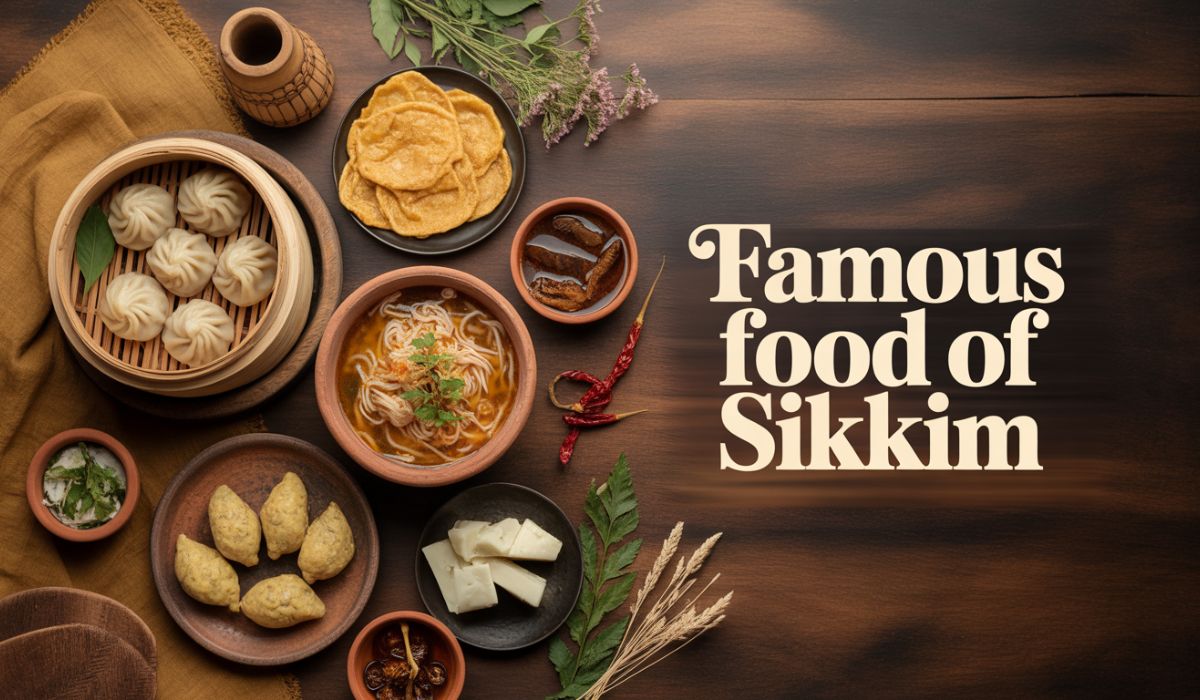
Tucked in the folds of the eastern Himalayas, Sikkim is a land where Tibetan, Nepali, and Lepcha traditions quietly come together and nowhere is that blend more alive than in its food. If you’ve ever sat at a small dhaba near Gangtok’s MG Marg on a cold evening, a bowl of steaming thukpa in your hands and the scent of momos drifting from the next table, you’ll understand why Sikkimese food is so hard to forget.
It’s honest, warm, and deeply rooted food that carries the memory of mountains.
Sikkimese cuisine doesn’t shout for attention. It earns it quietly: through fermented flavours built over generations, through simple ingredients that the high-altitude land generously provides, and through the stories that come with every dish. Let’s take a closer look at the foods that define this beautiful Himalayan state.
1. Momos — The Heartbeat of Sikkimese Street Food
Ask anyone from Sikkim what their comfort food is, and the answer will almost always be momos. These steamed dumplings stuffed with minced meat (usually pork, chicken, or buff) or vegetables, sometimes mixed with ginger, garlic, onion, and local spices are the soul of the state’s street food culture.
What makes Sikkimese momos different is the dipping chutney that comes alongside: a fiery tomato-based sauce with dried red chillies that adds the perfect kick. You’ll find momos at every street corner, every small restaurant, and almost every kitchen in the state. They’re eaten as a snack, a meal, a celebration sometimes all three in the same day.
2. Thukpa — A Bowl of Mountain Warmth
When the mountain winds pick up and the temperature drops, there is nothing quite like a bowl of thukpa. This hearty noodle soup originally from Tibet has become a staple of Sikkimese homes and eateries. It typically features thick wheat noodles slow-cooked in a flavourful broth with vegetables, meat, and aromatic spices.
Every household has its own version. Some prefer it light and clear; others make it rich and deeply spiced. Either way, thukpa is the kind of food that wraps around you like a warm blanket grounding, nourishing, and deeply satisfying.
3. Gundruk — The Taste of Tradition
If there’s one ingredient that defines the authentic Sikkimese kitchen, it is gundruk a fermented, sun-dried leafy vegetable (usually made from mustard, radish, or cauliflower leaves). The leaves are wilted, packed tightly into containers, and allowed to ferment for several days before being dried in the sun.
The result is a slightly sour, intensely flavourful ingredient that is used in soups, stir-fries, and as a side dish called gundruk ko jhol (gundruk soup). It’s earthy, tangy, and unlike anything else. Don’t be put off by the unusual preparation — one spoonful and you’ll understand why people in the hills have treasured it for centuries.
4. Sel Roti — The Festive Ring Bread
Sel roti is one of those foods that immediately brings a smile to the face of anyone who grew up in a Nepali or Sikkimese household. This crispy, ring-shaped deep-fried bread is made from a fermented rice batter sweetened with sugar and flavoured with cardamom and banana.
Traditionally prepared during festivals like Dashain and Tihar, sel roti has a beautifully crispy outer shell and a soft, slightly chewy interior. It is best enjoyed hot, fresh off the pan, paired with a cup of sweet milk tea or local yoghurt. Think of it as the Sikkimese answer to a doughnut — only crispier, more aromatic, and far more special.
5. Phagshapa — Slow-Cooked, Bold, and Unforgettable
Phagshapa is Sikkim’s beloved pork dish strips of fatty pork cooked slowly with dried red chillies and radishes. It’s a simple preparation, yet the depth of flavour it achieves is remarkable. The fat from the pork renders down beautifully, the chillies add a slow-building heat, and the radish soaks up all those wonderful juices.
This dish is found mainly in Tibetan and Bhutia communities of Sikkim and is typically served with steamed rice or buckwheat pancakes. If you enjoy bold, rustic flavours, phagshapa is a must on your culinary journey through the state.
6. Chhurpi — The Hardest Cheese You’ll Ever Love
Chhurpi is a traditional hard cheese made from yak or cow milk, and it is one of the most unique food experiences Sikkim has to offer. There are two types: a soft variety used in cooking (often in soups and stir-fries with vegetables), and a rock-hard dried variety that locals chew on for hours like a slow-release snack.
The hard chhurpi has a smoky, tangy, intensely savoury flavour that grows on you with time. It is high in protein and was historically a practical food for farmers and travellers in the high-altitude regions. Today, it’s also gaining popularity as a healthy, artisanal snack beyond the hills.
7. Sinki and Bamboo Shoot Dishes
Sikkim’s fertile hills are rich in bamboo, and the fermented bamboo shoot (often called mesu locally) is a cornerstone ingredient in the regional kitchen. Used in curries, chutneys, and stir-fries, it has a pungent, sour flavour that pairs beautifully with pork and chicken.
Sinki, similar to gundruk but made from radish taproot, is another fermented preparation used in soups and side dishes. These fermented foods are not just culinary traditions — they are also a testament to the ingenuity of mountain communities who learned to preserve food through harsh winters.
8. Chang — The Local Brew
No culinary tour of Sikkim is complete without mentioning chang, the traditional millet-based beer of the region. It is prepared by fermenting finger millet (marua) and is typically served in a bamboo container called a tongba, with a bamboo straw to sip the warm brew.
Chang is more than a drink it is a cultural experience. It is offered as a gesture of warmth and hospitality, shared at community gatherings, festivals, and family occasions. It has a mildly sour, earthy flavour with low alcohol content, making it a gentle, communal drink rather than an intense one.
A Note on What Makes Sikkimese Food Special
“Sikkimese food is a reflection of its geography and its people resilient, layered, and quietly extraordinary.”
Several things set the food culture of Sikkim apart:
- Fermentation as art: From gundruk to sinki to chhurpi to chang, fermented foods are central to the diet. This isn’t just about flavour it’s a centuries-old tradition of preservation and gut health.
- Minimal spicing, maximum depth: Unlike many Indian cuisines, Sikkimese food relies less on a complex spice blend and more on the natural, earthy flavours of its ingredients.
- Cultural convergence: The food effortlessly blends Tibetan, Nepali, Lepcha, and Bhutia influences into something entirely its own.
- Sustainability: Much of the produce is locally grown organic farming is deeply embedded in Sikkimese culture, and the state was the first in India to become fully organic (2016).
Final Thoughts
Sikkimese food is not just sustenance it is a living archive of the state’s history, ecology, and community spirit. Every bite of a warm momo or a sour spoonful of gundruk soup tells you something about the people who made it and the mountains they call home.
If you’re planning a trip to Sikkim, eat beyond the tourist menus. Sit down with locals, try the fermented things even if they sound unusual, and let the food surprise you. You won’t be disappointed.
FAQs
What is the most famous food of Sikkim?
Momos are undoubtedly the most famous and universally loved food from Sikkim. These steamed dumplings are available across the state and represent the everyday culinary culture of the region. However, thukpa (noodle soup) and sel roti are equally beloved and iconic in their own right.
Is Sikkimese food spicy?
Sikkimese food is moderately spiced compared to many other Indian regional cuisines. Dishes tend to be flavourful and wholesome rather than intensely hot. However, dried red chillies do feature in several preparations particularly in chutneys and meat dishes like phagshapa so there is a pleasant heat if you enjoy it.
What do vegetarians eat in Sikkim?
Vegetarians are well catered for in Sikkim. Vegetable momos, thukpa with vegetable broth, gundruk soup, sel roti, and rice-based meals are all excellent options. The heavy use of fermented vegetables like gundruk and sinki also makes for deeply flavourful vegetarian cooking.
What is the staple food of Sikkim?
Rice is the primary staple of Sikkim, served alongside dals, fermented vegetable dishes, and curries. In higher altitude communities, millet, buckwheat, and barley also play an important role in the diet, both as food and as the base for traditional beverages like chang.
Where can I try authentic Sikkimese food?
The best places to try authentic Sikkimese food are local dhabas and family-run restaurants in Gangtok, Pelling, and Lachung. Markets like Lal Bazaar in Gangtok are great for street food. If you want a more immersive experience, look for homestays where hosts cook traditional meals fresh every day that’s where the real magic happens.