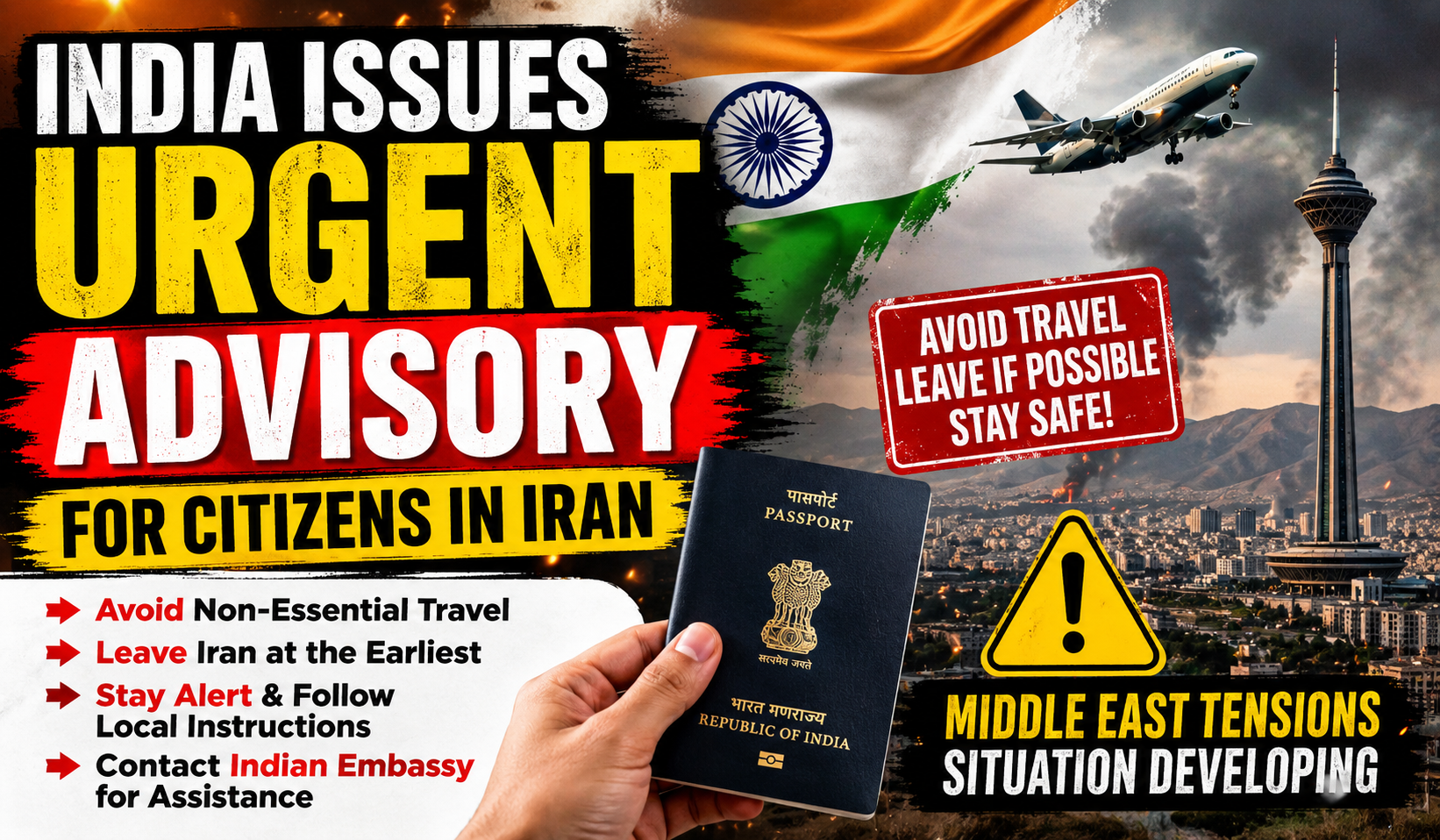
The Government of India has issued a fresh advisory for Indian citizens currently residing in or planning to travel to Iran, urging them to exercise extreme caution amid escalating tensions in the Middle East. The advisory comes at a time when the regional security situation has become increasingly volatile, raising concerns about the safety of foreign nationals, including thousands of Indians living and working in Iran.
The Ministry of External Affairs (MEA) and the Indian Embassy in Tehran have advised Indian nationals to avoid non-essential travel to Iran and urged those already in the country to consider leaving through available commercial routes. The move reflects India’s proactive approach to safeguarding its citizens during a period of heightened uncertainty.
Why Has India Issued the Advisory?
The advisory follows a series of developments that have significantly increased tensions across the Middle East. Ongoing hostilities involving Iran and Israel, coupled with concerns about broader regional instability, have prompted several countries to review their travel guidance and evacuation plans.
Recent military exchanges, security alerts, and fears of further escalation have raised the risk level in several parts of Iran. Governments around the world are closely monitoring the situation, and India is no exception.
Given the unpredictable nature of the crisis, Indian authorities have decided to prioritize the safety of citizens by issuing timely warnings and preparedness measures.
Key Points of the Advisory
According to the latest advisory, Indian citizens have been urged to:
- Avoid all non-essential travel to Iran until the situation stabilizes.
- Remain vigilant and stay updated on local security developments.
- Follow instructions issued by local authorities and security agencies.
- Maintain regular contact with the Indian Embassy in Tehran.
- Keep travel documents, passports, visas, and identification papers readily accessible.
- Consider leaving the country using available commercial flights and transport services if their presence is not essential.
The advisory emphasizes that citizens should remain alert and avoid areas that may witness demonstrations, military activity, or security incidents.
Indian Community in Iran
Iran hosts a sizeable Indian community that includes students, business professionals, traders, pilgrims, and workers. Many Indian students are enrolled in medical universities across Iran, while religious pilgrims frequently travel to important Shia religious sites in the country.
The safety of these individuals remains a top priority for Indian authorities. The embassy has reportedly been maintaining close communication with Indian nationals and community organizations to ensure they receive timely information and assistance if required.
India’s Preparedness Measures
India has a strong record of conducting evacuation operations during international crises. Over the years, the country has successfully evacuated citizens from conflict zones in countries such as:
- Yemen
- Ukraine
- Sudan
- Afghanistan
- Lebanon
The government has consistently demonstrated its capability to coordinate large-scale rescue and repatriation efforts when necessary.
While there has been no announcement of a formal evacuation operation for Iran at this stage, the advisory indicates that authorities are actively monitoring the situation and remain prepared to respond if conditions deteriorate further.
Impact on Travel and Aviation
The advisory could affect travel plans for thousands of people, including students, business travelers, and religious pilgrims. Airlines operating routes through the Middle East are also keeping a close watch on regional developments.
Escalating tensions often lead to:
- Airspace restrictions
- Flight rerouting
- Increased travel costs
- Delays and cancellations
- Enhanced airport security measures
Travelers planning to visit Iran or neighboring countries are advised to verify flight schedules and consult official government advisories before departure.
Regional Tensions and Global Concerns
The Middle East remains one of the world’s most strategically important regions due to its energy resources, trade routes, and geopolitical significance. Any escalation involving Iran can have far-reaching consequences for global markets, energy prices, and international security.
Countries across Asia, Europe, and North America have been reviewing their travel advisories and contingency plans as the situation evolves. Analysts warn that prolonged instability could impact international shipping routes, oil supplies, and diplomatic relations throughout the region.
For India, developments in the Middle East are particularly important because millions of Indian expatriates live and work across the region, and a significant portion of the country’s energy imports originates there.
What Should Indian Citizens Do?
Experts recommend that Indian nationals currently in Iran take the following precautions:
Stay Informed
Monitor updates from the Ministry of External Affairs, the Indian Embassy in Tehran, and trusted news sources.
Register with the Embassy
Ensure that contact details are updated with the embassy or consular authorities to receive emergency notifications.
Avoid High-Risk Areas
Stay away from military installations, government buildings, protest locations, and areas experiencing unrest.
Keep Emergency Supplies Ready
Maintain access to essential medications, cash, communication devices, and travel documents.
Maintain Communication
Stay connected with family members and local authorities and keep emergency contact numbers readily available.
Conclusion
India’s latest advisory for citizens in Iran underscores the seriousness of the current security environment in the Middle East. While no immediate evacuation order has been issued, the government’s recommendation to avoid non-essential travel and consider leaving the country highlights growing concerns about regional stability.
As tensions continue to evolve, Indian authorities are expected to remain in close contact with citizens in Iran and provide additional guidance whenever necessary. For now, vigilance, preparedness, and adherence to official advisories remain the best course of action for Indian nationals in the region.
The situation remains fluid, and travelers are advised to follow official updates closely before making any travel-related decisions.