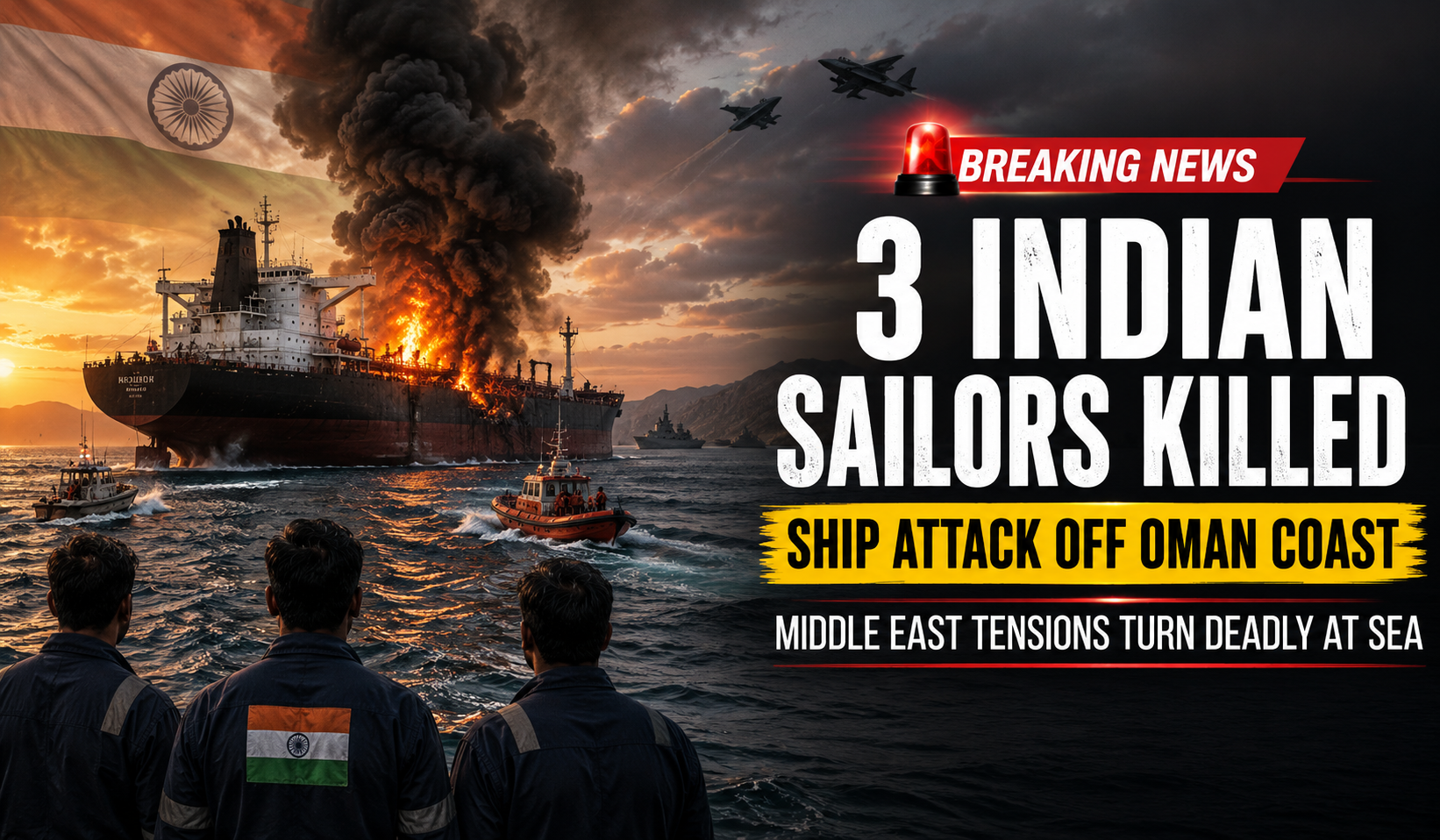
Three Indian Crew Members Lose Lives in Maritime Tragedy Near Strait of Hormuz
A tragic maritime incident in the Arabian Sea has claimed the lives of three Indian sailors after a commercial vessel came under attack near the coast of Oman. The incident, which occurred amid escalating military tensions between the United States and Iran, has sparked international concern and renewed fears over the safety of commercial shipping in one of the world’s most strategically important waterways.
The attack has once again highlighted the growing risks faced by merchant vessels operating in the Gulf region, particularly around the Strait of Hormuz, a narrow maritime passage through which nearly one-fifth of the world’s oil supply is transported.
What Happened?
According to reports, the vessel was navigating waters near the Omani coast when it was struck during a military operation linked to the ongoing conflict in the Middle East. The ship reportedly carried a multinational crew, including several Indian nationals working as merchant seafarers.
Initial rescue operations managed to save most of the crew members on board. However, three Indian sailors were reported missing immediately after the attack. Following extensive search and rescue efforts, authorities later confirmed that the missing crew members had died.
The tragedy has shocked India’s maritime community and raised serious questions about the safety of civilian vessels operating in conflict zones.
India’s Response
The Government of India has expressed deep sorrow over the deaths of the sailors and is actively coordinating with local authorities and international agencies regarding the incident.
Union Minister for Ports, Shipping and Waterways Sarbananda Sonowal conveyed condolences to the families of the deceased sailors and assured that all possible assistance would be provided to the affected families.
India’s Ministry of External Affairs has also sought detailed information regarding the circumstances surrounding the attack. Diplomatic channels are reportedly being used to gather facts and ensure accountability.
The government is simultaneously monitoring the security situation in the Gulf region, where thousands of Indian citizens work in shipping, logistics, and energy-related industries.
Strategic Importance of the Region
The attack occurred near the Strait of Hormuz, one of the most critical maritime chokepoints in the world.
Located between Oman and Iran, the strait serves as a gateway connecting the Persian Gulf to international waters. Every day, millions of barrels of crude oil and petroleum products pass through this narrow route, making it vital for global energy markets.
Any disruption in this region can have far-reaching consequences, including:
- Rising global oil prices
- Increased shipping costs
- Delays in international trade
- Higher insurance premiums for commercial vessels
- Greater geopolitical instability
Security experts warn that continued military confrontations in the area could significantly impact global commerce and energy supplies.
Impact on Indian Seafarers
India is one of the world’s largest suppliers of maritime professionals. Thousands of Indian sailors serve aboard international cargo ships, oil tankers, and commercial vessels operating across the globe.
Many Indian seafarers routinely travel through high-risk regions such as the Gulf of Oman, the Arabian Sea, and the Red Sea. The latest incident has renewed concerns among maritime unions and industry stakeholders regarding the safety measures available to civilian crews.
Maritime organizations have called for stronger international protocols to protect merchant vessels from becoming collateral damage during military operations.
Family members of Indian sailors working abroad have also expressed anxiety as tensions continue to escalate across the Middle East.
Growing US-Iran Tensions
The incident comes against the backdrop of increasing military hostilities between the United States and Iran.
Over the past several months, the region has witnessed a series of military confrontations, drone attacks, missile strikes, and naval deployments involving various actors.
Analysts believe that the deteriorating security environment has increased the likelihood of civilian vessels becoming caught in the crossfire.
The Gulf region remains a sensitive geopolitical hotspot where even isolated incidents can trigger broader international consequences.
Military experts warn that unless diplomatic efforts succeed in reducing tensions, commercial shipping routes may face further threats in the coming weeks and months.
Global Reactions
The international community has expressed concern over the incident.
Shipping organizations, maritime security agencies, and global trade associations have urged all parties involved in regional conflicts to respect international maritime laws and ensure the safety of civilian vessels.
Several countries have also advised merchant ships operating near the Strait of Hormuz to exercise heightened caution and maintain close communication with naval security authorities.
Maritime insurance companies are reportedly reassessing risk levels in the region, a move that could increase transportation costs for global trade.
Human Cost of the Crisis
Beyond the geopolitical implications, the incident serves as a painful reminder of the human cost associated with regional conflicts.
The three Indian sailors were ordinary professionals performing their duties at sea when they became victims of circumstances beyond their control. Their deaths have left families grieving and communities mourning.
Seafarers play a vital role in sustaining global trade, transporting goods, fuel, and essential commodities across international waters. Yet they often face significant risks, including piracy, harsh weather, and increasingly, geopolitical conflicts.
The tragedy underscores the urgent need for stronger protections for civilian maritime workers operating in volatile regions.
Looking Ahead
Investigations into the attack are expected to continue as authorities gather evidence and assess the sequence of events that led to the loss of life.
India is likely to continue engaging diplomatically with relevant governments and international organizations to seek clarity and ensure the safety of its citizens working abroad.
Meanwhile, shipping companies are expected to review operational routes and security measures to reduce risks for crews navigating through sensitive maritime zones.
As tensions in the Middle East remain high, the international community will be watching closely to see whether diplomatic efforts can prevent further tragedies and restore stability to one of the world’s most important shipping corridors.
Conclusion
The deaths of three Indian sailors in the ship attack near Oman have cast a spotlight on the dangers facing civilian vessels in conflict-prone waters. The incident not only represents a personal tragedy for the families involved but also highlights broader concerns regarding maritime security, international trade, and regional stability.
As investigations proceed and diplomatic discussions continue, the focus remains on ensuring justice for the victims and preventing similar incidents in the future. For India, protecting its seafarers and safeguarding its interests in the Gulf region will remain a critical priority in the days ahead.