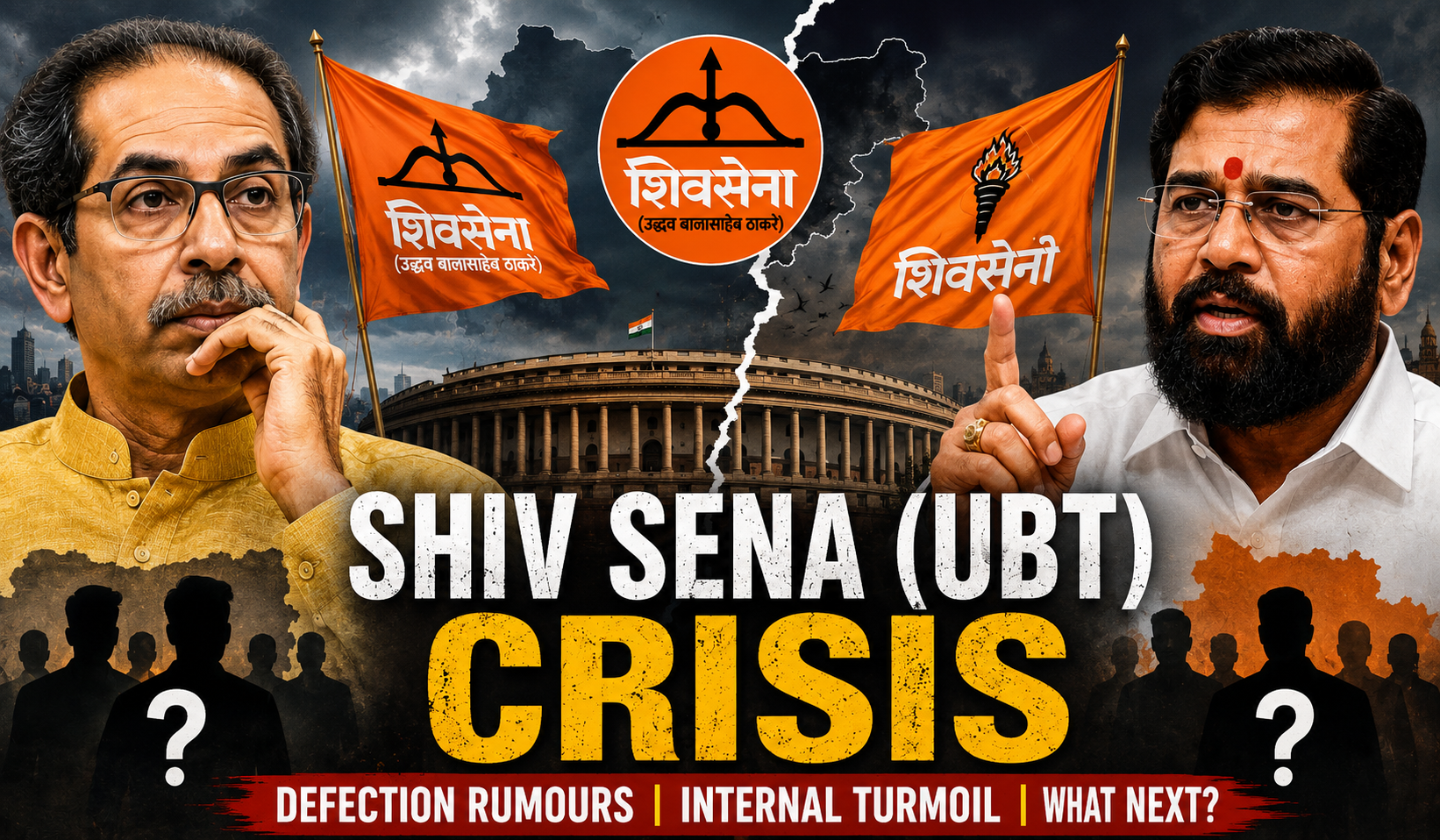
A fresh political storm has emerged around Shiv Sena (Uddhav Balasaheb Thackeray), commonly known as Shiv Sena (UBT), following reports that several Members of Parliament could be considering a break from the party. The developments have reignited discussions about political stability in Maharashtra and the future of opposition alliances in the state.
Although the full picture is still evolving, the speculation has drawn widespread attention from political observers, party workers, and voters alike.
Why Is Shiv Sena (UBT) Facing a Crisis?
The latest controversy centers on reports suggesting that some MPs associated with the party may be exploring the possibility of forming a separate parliamentary group or shifting political allegiance. While no definitive split has been officially confirmed, the rumours have prompted urgent internal meetings and public statements from senior leaders.
The leadership under Uddhav Thackeray has sought to project confidence, emphasizing party unity and dismissing claims that the organisation is on the verge of another breakup.
Background: A Party Already Reshaped by Division
The current uncertainty comes after the dramatic 2022 split in Shiv Sena politics, when a large group led by Eknath Shinde broke away from the original party structure. That split significantly altered Maharashtra’s political landscape and led to prolonged legal and electoral disputes over the party’s identity and symbols.
Since then, Shiv Sena (UBT) has worked to rebuild its organisation and strengthen its position as part of the opposition. Any fresh defections could create new challenges for the party’s leadership and strategy.
Leadership Responds to Speculation
Senior party figures, including Sanjay Raut, have rejected suggestions that the party is collapsing. They have maintained that reports of mass defections are exaggerated and have accused political rivals of attempting to destabilize the organisation.
The party has also reportedly held discussions with its MPs and other leaders to reinforce unity and address concerns arising from the speculation.
Potential Political Impact
If a significant number of MPs were to leave the party, the consequences could extend beyond Shiv Sena (UBT) itself. It could influence parliamentary dynamics, reshape alliances in Maharashtra, and affect preparations for future elections.
Political analysts believe the episode may also test the strength of opposition cooperation in the state, especially as parties position themselves for upcoming electoral contests.
What Happens Next?
At present, much depends on whether the reported dissatisfaction translates into formal action. Observers will be watching closely for:
- Any official announcement of defections or the formation of a new parliamentary group.
- Public statements from MPs whose loyalty has been questioned.
- The response of party leadership to maintain organisational cohesion.
- Broader implications for Maharashtra’s political alliances.
Until concrete developments occur, many of the claims circulating remain matters of political speculation rather than established fact.
Conclusion
The Shiv Sena (UBT) crisis highlights the continuing volatility of Maharashtra politics. Whether the current rumours fade away or develop into another significant split will depend on decisions made by party leaders and elected representatives in the coming days.
For now, the situation remains fluid, with supporters and political observers awaiting official confirmation of any major changes. Regardless of the outcome, the episode underscores how rapidly political equations can shift and how internal party dynamics can have far-reaching consequences for governance and electoral strategy.