US Visa Changes 2026
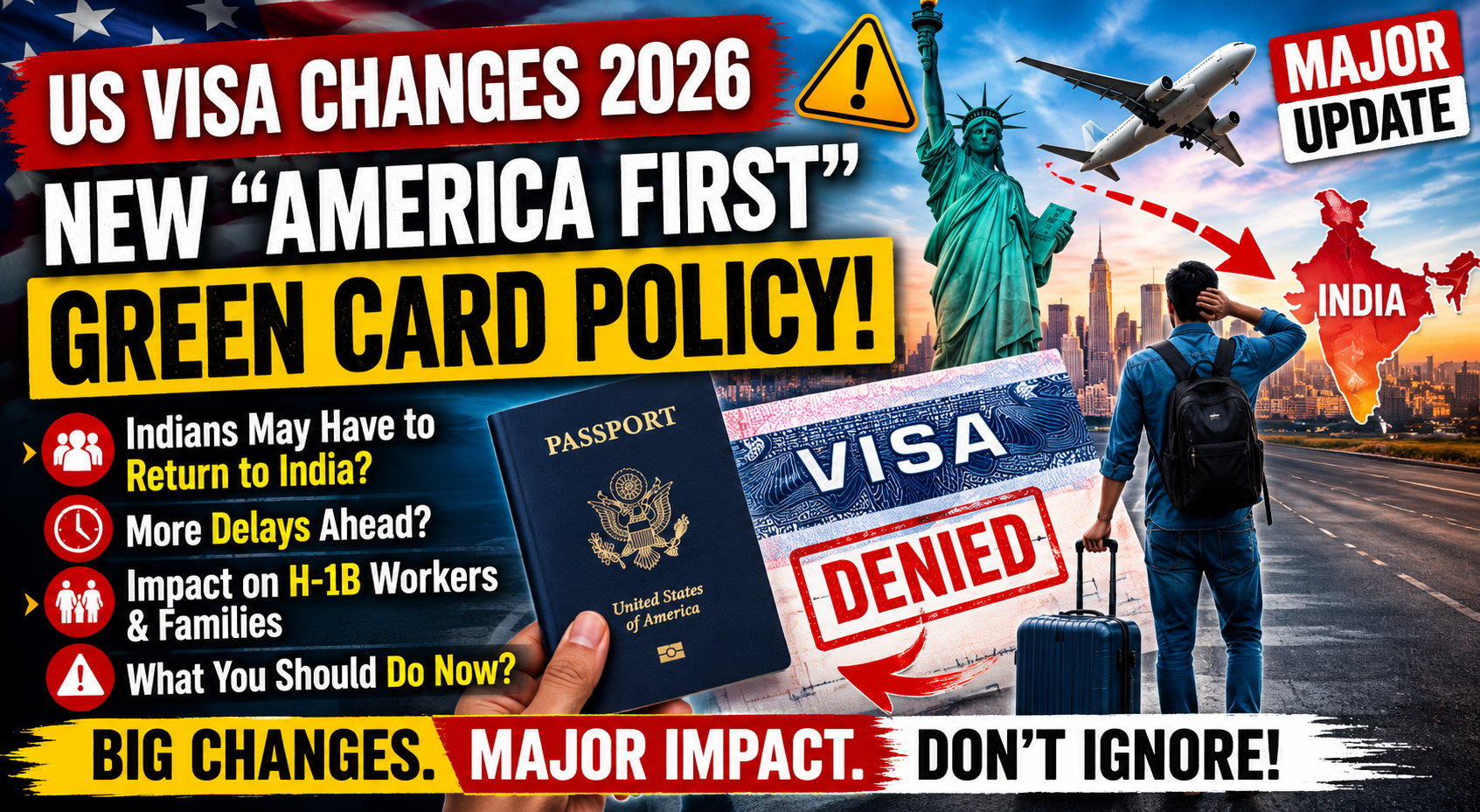
The United States has announced a major immigration policy shift that may require many Green Card applicants to return to their home countries for processing, raising concerns among Indian professionals and H-1B visa holders.
A Major Shift in U.S. Immigration Policy
The United States government has introduced a significant change to its immigration framework under the newly announced “America First” visa policy. The move has quickly become one of the most discussed immigration developments of 2026, especially among Indian professionals waiting for permanent residency.
According to the policy direction, many immigrants seeking Green Cards may no longer be able to complete the process from within the United States. Instead, they could be required to return to their home countries and complete their applications through U.S. embassies and consulates.
What Is the New “America First” Visa Policy?
The policy emphasizes overseas processing of Green Card applications rather than allowing applicants to adjust their status while remaining inside the United States.
For years, eligible immigrants living legally in America could file for permanent residency through a process called Adjustment of Status (AOS). This allowed applicants to stay in the country while their Green Card cases were reviewed.
Under the new approach, many applicants may instead be directed toward Consular Processing, which requires them to attend visa interviews and complete formalities at U.S. embassies or consulates in their home countries.
Why Indian Applicants Are Most Concerned
India has one of the largest populations of employment-based immigrants in the United States. Thousands of Indian professionals currently work in America through H-1B visas in sectors such as:
- Information Technology (IT)
- Artificial Intelligence
- Engineering
- Healthcare
- Research & Development
- Financial Services
Because Indian nationals already face decades-long Green Card backlogs in some employment categories, any additional processing requirements could create further delays and uncertainty.
Adjustment of Status vs. Consular Processing
| Adjustment of Status | Consular Processing |
|---|---|
| Applicant remains in the U.S. | Applicant returns to home country |
| Less travel required | International travel mandatory |
| Reduced employment disruption | Potential work interruptions |
| Family remains together | Possible family separation |
Impact on H-1B Visa Holders
Indian H-1B professionals are among the most affected groups because many are already in the Green Card pipeline.
- Employment uncertainty during overseas processing.
- Travel costs associated with consular appointments.
- Potential delays in visa issuance and re-entry.
- Family disruptions for spouses and children living in the U.S.
Immigration attorneys have advised applicants to remain informed and avoid making major travel decisions until detailed implementation guidance becomes available.
Expert Analysis: What Happens Next?
Immigration experts believe the policy could undergo modifications as implementation details emerge. Business groups, technology companies, and advocacy organizations have already raised concerns about its impact on highly skilled workers.
Legal experts stress that not all applicants are automatically required to leave the United States and that future guidance could include exemptions or special categories for certain workers.
Key Takeaways
- The U.S. has introduced a new “America First” visa policy.
- Many Green Card applicants may be directed toward consular processing.
- Indian H-1B workers are expected to be among the most affected groups.
- Not all applicants will necessarily be required to leave the U.S.
- Further implementation guidance is still expected from immigration authorities.
While the policy has generated significant attention, its full impact will depend on how federal agencies implement and interpret the new rules over the coming months.