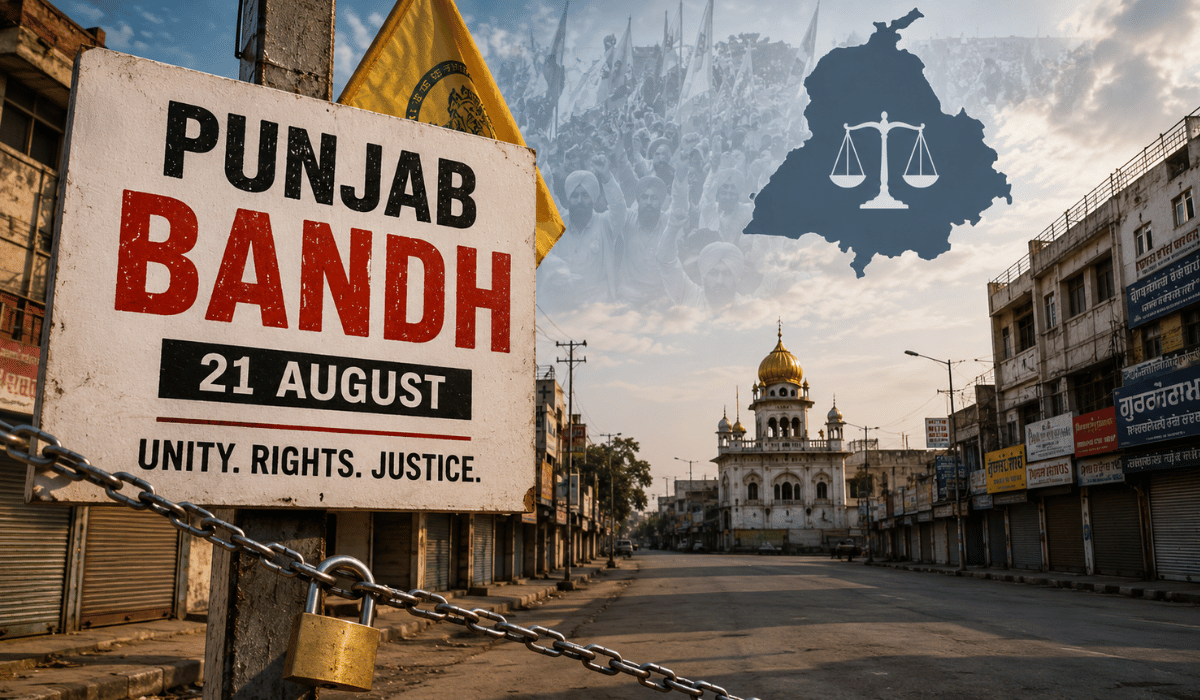
On August 21, 2026, the state of Punjab observed a seven-hour statewide bandh (shutdown) from 7:00 AM to 2:00 PM. Initiated by the Qaumi Insaaf Morcha (QIM), an umbrella organization advocating for Sikh political rights, the shutdown saw participation from multiple farmer unions, regional bodies, and socio-religious groups.
While the state government ensured that public institutions and essential infrastructure remained functional, the protest significantly impacted road transport, commercial centers, and private education across several districts.
Core Demands Behind the Protest
The primary catalyst for the shutdown centers on the prolonged detention of Sikh political prisoners, commonly referred to as “Bandi Singhs”:
- Release of Incarcerated Sikh Prisoners: Protesters contend that several prisoners convicted during the period of political insurgency in the 1980s and 1990s have remained behind bars for 30 to 35 years. Organizers argue that these individuals have completed their legally prescribed prison sentences and qualify for permanent release on legal and humanitarian grounds. Notable names associated with these demands include Devinderpal Singh Bhullar and Gurdeep Singh Khera.
- Parole Demands for Convicts: The movement has persistently raised issues regarding life-term convicts involved in the 1995 assassination of former Punjab Chief Minister Beant Singh. While the Punjab state administration recently supported temporary parole for Jagtar Singh Hawara to visit his ailing mother, the Morcha’s platform shifted toward demanding complete release rather than temporary relief.
- August 15 Border Escalation: The immediate call for the statewide bandh was triggered by confrontations on August 15 near the Chandigarh-Mohali border. Security forces used water cannons and tear gas to halt a march toward official state residences in Chandigarh, leading to injuries and raised tensions between organizers and law enforcement.
Administrative and Commercial Impact
Reports from regional correspondents indicate a varied level of disruption depending on the district:
- Commercial Establishments & Markets: Major trading hubs in the Malwa region, including Muktsar, Bathinda, Barnala, and Mansa, reported high levels of market closures. Towns such as Phagwara, Jandiala Guru, and Mohali experienced near-total shop closures in central commercial districts. Conversely, cities like Ludhiana saw a partial response, with industrial regions and factories operating largely as scheduled.
- Transportation & Highways: Blockades by agricultural unions and demonstrator groups temporarily restricted movement along national highways, including the Barnala-Bathinda route and key junctions in Mohali. Rail services across the state continued to run on normal schedules under heavy police surveillance.
- Education Sector: The Punjab Government clarified that state-run public schools and universities were to remain open. However, many private schools opted to suspend in-person classes or shift to online learning after local bus and minibus operators withheld transport services in solidarity.
- Exemptions for Essential Services: In alignment with guidelines set by event organizers, emergency transit, ambulances, medical facilities, airport commuters, and scheduled wedding proceedings were permitted unhindered access through barricades.
Security and Official Statements
To ensure public order, security was heightened at sensitive border points separating Chandigarh and Mohali, with senior police officials deployed across key transit corridors. Law enforcement confirmed that while traffic disruptions occurred due to localized sit-ins, the seven-hour protest concluded without major violence.
Representative bodies, including the Shiromani Gurdwara Parbandhak Committee (SGPC), closed their administrative offices for the day to endorse peaceful calls for judicial review and release of long-serving prisoners. State officials maintain that legal procedures and executive reviews regarding sentence remissions remain under the jurisdiction of judicial and constitutional frameworks.