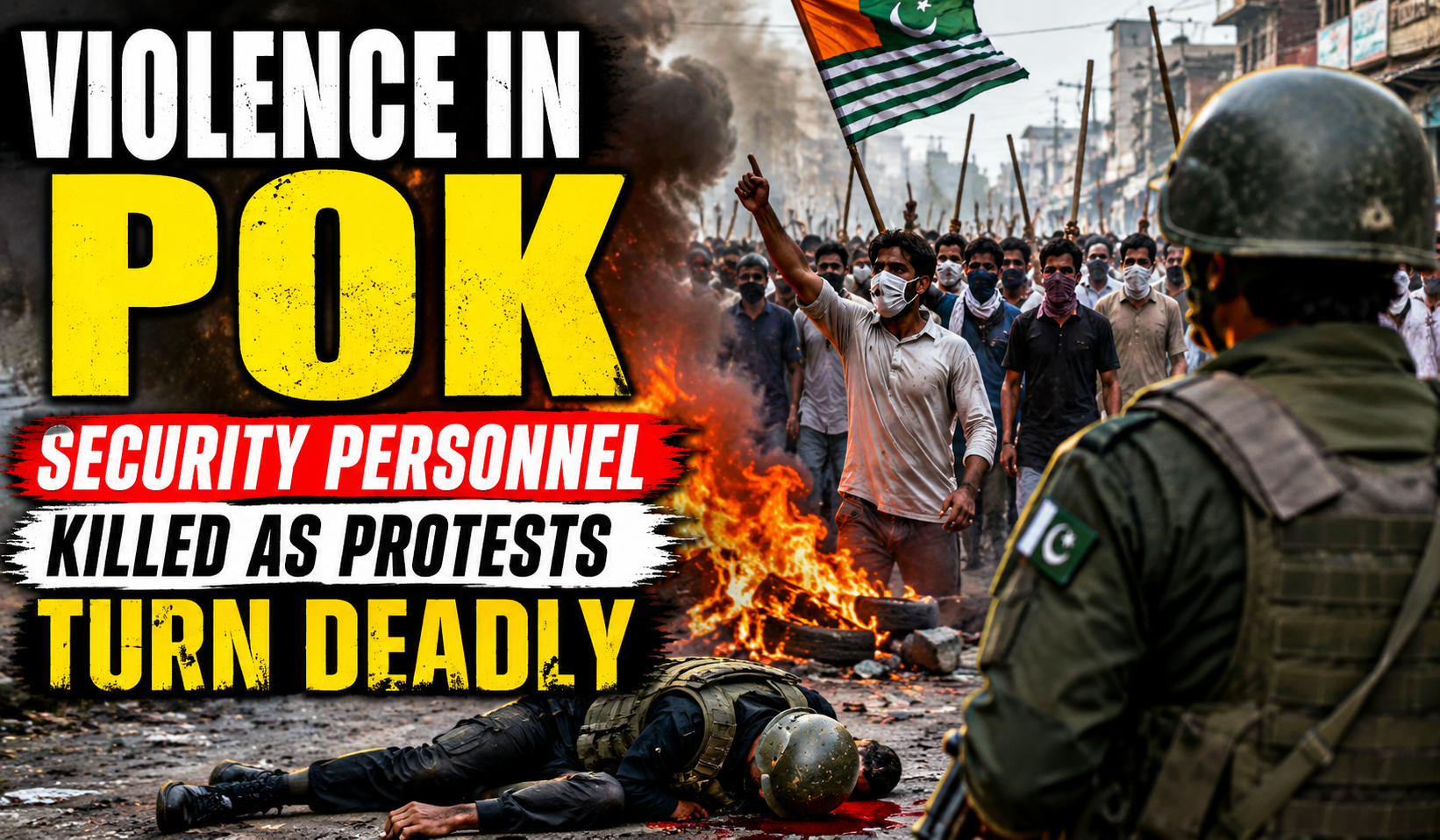
A fresh wave of violence has erupted across PoK, leaving multiple security personnel and civilians dead as anti-government protests spiraled into deadly clashes. The unrest, which began as demonstrations over political and economic issues, quickly escalated into confrontations between protesters and security forces, raising concerns about stability in the region.
According to reports, several security personnel lost their lives during the clashes, while dozens of people were injured. The violence marks one of the most serious episodes of unrest witnessed in PoK in recent years and highlights growing public frustration over governance and economic conditions.
What Triggered the Protests?
The protests were reportedly organized by activists and supporters of the Jammu Kashmir Joint Awami Action Committee (JAAC), a group that has been involved in previous demonstrations across the region. Protesters have been demanding reforms related to governance, political representation, electricity tariffs, and rising living costs.
Tensions increased after authorities moved against members of the organization and imposed restrictions on planned demonstrations. Despite these measures, thousands of people reportedly gathered in various towns, leading to confrontations with law enforcement agencies.
Many residents have expressed dissatisfaction over inflation, unemployment, utility costs, and what they describe as inadequate political representation. These grievances have fueled repeated protests over the past several years.
Clashes Turn Violent
The situation deteriorated when security forces attempted to disperse large crowds. Eyewitness accounts suggest that protests turned violent in several locations, with clashes breaking out between demonstrators and security personnel.
Authorities confirmed casualties among security forces and civilians, while hospitals received dozens of injured individuals. Security forces were deployed in large numbers to restore order and prevent the unrest from spreading further.
Roadblocks, demonstrations, and gatherings were reported in multiple areas as tensions continued to rise throughout the day. The violence prompted authorities to strengthen security measures and increase patrols in sensitive locations.
Political Tensions Add to Crisis
The latest unrest comes amid heightened political tensions in PoK. A recent court ruling concerning reserved legislative seats and political representation has sparked renewed debate among political groups and activists.
Protest leaders argue that long-standing political issues remain unresolved and have accused authorities of failing to address public concerns. Government officials, however, maintain that constitutional processes must be followed and have appealed for calm.
The developments have added a political dimension to an already volatile situation, making the crisis more complex than a purely economic protest movement.
Growing Frustration Among Residents
Economic challenges remain at the heart of public anger. Residents have repeatedly complained about rising prices, electricity bills, and the increasing cost of essential commodities. Many protesters argue that previous promises made by authorities have not resulted in meaningful improvements.
Over the past two years, PoK has witnessed several large-scale demonstrations, with many ending in confrontations between protesters and law enforcement agencies. Analysts believe that unless underlying grievances are addressed, the region could continue to experience periodic unrest.
Security Concerns Intensify
The latest violence has heightened security concerns across the region. Authorities have deployed additional personnel and increased monitoring of public gatherings to prevent further escalation.
Officials have urged citizens to maintain peace and avoid activities that could lead to further violence. At the same time, protest organizers continue to demand action on their key demands, signaling that tensions may persist in the coming days.
Observers warn that prolonged instability could have significant political and security implications for the region, particularly if dialogue between authorities and protest leaders fails to materialize.
What Happens Next?
With casualties reported on both sides and public anger showing little sign of fading, PoK faces a critical moment. Authorities are expected to continue security operations while assessing the broader impact of the protests.
The coming days will be crucial in determining whether negotiations can help ease tensions or whether the region will witness further demonstrations and clashes.
For now, the deadly violence serves as a stark reminder of the challenges facing PoK, where economic hardships, political disputes, and public frustration continue to fuel unrest.
Conclusion
The deadly clashes in PoK have once again brought the region into the spotlight. With security personnel and civilians among the victims, the latest violence underscores the seriousness of the ongoing crisis. As authorities work to restore order and protesters continue to press their demands, all eyes will remain on developments in the region and the possibility of a peaceful resolution.