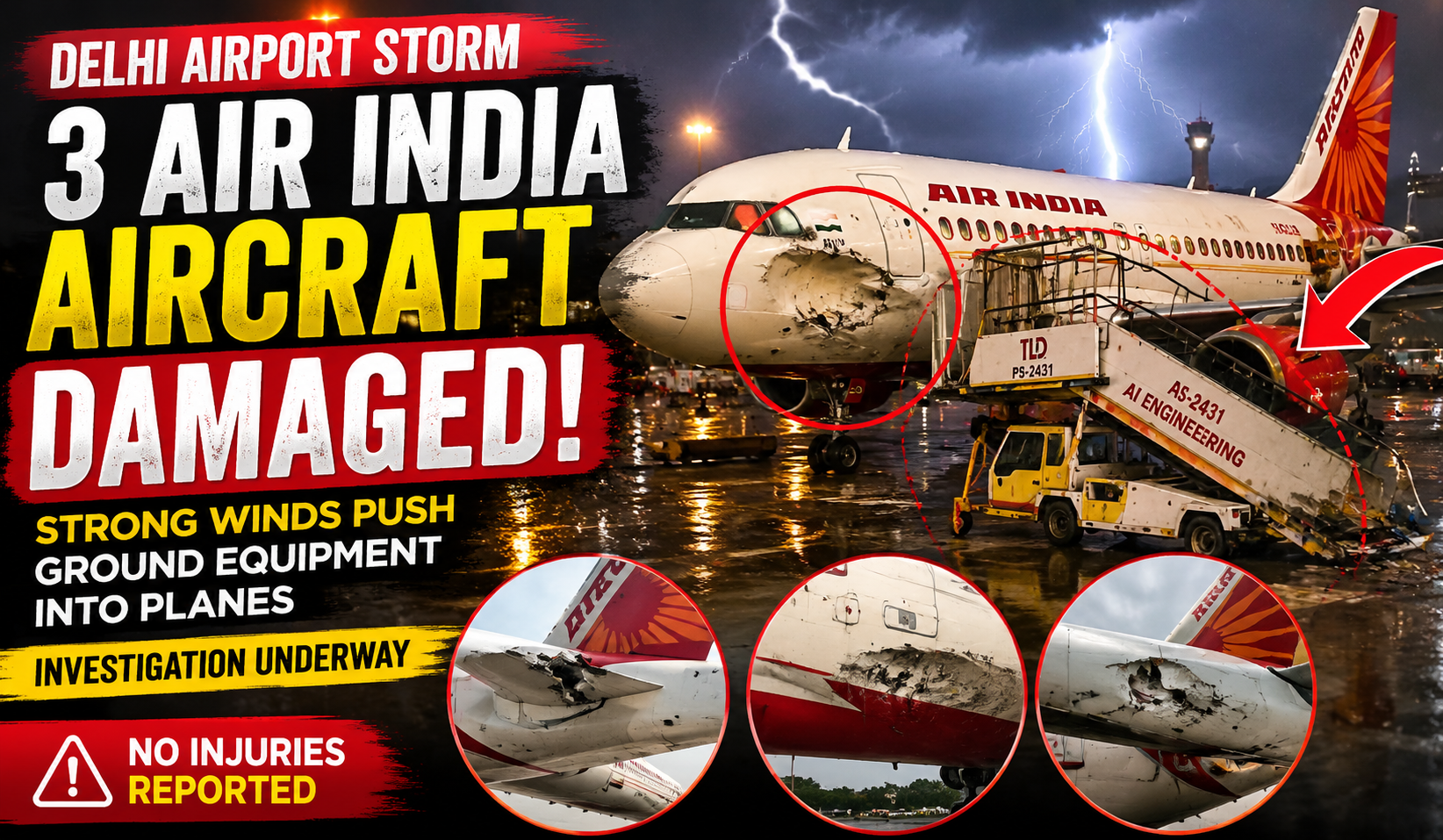
A powerful thunderstorm accompanied by heavy rain and strong winds struck Delhi on the evening of June 7, causing significant disruption at Indira Gandhi International (IGI) Airport. In a rare aviation-related incident, three Air India aircraft parked at the airport sustained damage after ground support equipment was reportedly blown into them by strong gusts of wind.
While no injuries were reported, the incident has raised serious concerns about airport ground handling procedures and preparedness during extreme weather conditions. Aviation experts believe the event serves as a reminder of the challenges airports face as severe weather events become more frequent.
What Happened at Delhi Airport?
According to reports, a sudden storm swept across Delhi and the National Capital Region (NCR), bringing intense rainfall, lightning, and powerful winds. During the storm, several pieces of ground handling equipment located near parked aircraft were displaced.
The equipment, which included passenger stairs and other support vehicles, reportedly collided with three Air India aircraft that were parked on the apron. The aircraft were not carrying passengers at the time of the incident.
Airport personnel quickly responded to assess the damage and secure the affected area.
Extent of the Damage
Initial assessments suggest that all three aircraft suffered varying levels of damage.
One of the aircraft is expected to remain out of service for several days while engineers conduct detailed inspections and carry out necessary repairs. The other two aircraft reportedly sustained less severe damage and may return to operations after safety clearances are completed.
Air India has not disclosed the exact cost of repairs, but even minor structural damage to commercial aircraft can result in significant maintenance expenses and operational disruptions.
No Casualties Reported
Fortunately, there were no passengers or crew members onboard the aircraft when the incident occurred.
Airport authorities confirmed that no injuries were reported among ground staff working in the vicinity. The absence of casualties has been viewed as a positive outcome considering the severity of the weather conditions.
How Did Ground Equipment Become a Hazard?
Ground support equipment plays an essential role in airport operations. Passenger boarding stairs, baggage loaders, catering vehicles, and maintenance equipment are routinely positioned near aircraft between flights.
However, during severe weather events, such equipment can become dangerous if not properly secured.
Strong wind gusts are capable of moving lightweight equipment across airport surfaces. In this case, preliminary reports suggest that powerful winds may have displaced equipment parked near the aircraft, leading to the collisions.
Aviation safety specialists note that airports typically have standard operating procedures for securing equipment during adverse weather. The ongoing investigation will determine whether these procedures were followed correctly.
Investigation Begins
Following the incident, Air India, airport authorities, and aviation regulators initiated inquiries into the circumstances surrounding the damage.
Investigators are expected to examine several key factors, including:
- Whether weather alerts were issued in advance.
- If ground equipment was properly secured.
- The speed and intensity of the wind during the storm.
- Compliance with airport safety protocols.
- Potential improvements to existing emergency response procedures.
The findings could lead to updated guidelines for handling severe weather events at major airports across India.
Impact on Flight Operations
Although the incident involved parked aircraft, operational disruptions are possible.
Aircraft taken out of service for repairs can affect airline schedules, resulting in delays, cancellations, or aircraft substitutions. Air India is expected to adjust its fleet deployment to minimize inconvenience to passengers.
Airport officials have stated that overall operations at IGI Airport continued despite weather-related disruptions.
Growing Challenge of Extreme Weather
The Delhi airport incident highlights a broader challenge facing airports worldwide.
Meteorologists have observed an increase in the frequency and intensity of severe weather events in many regions. Thunderstorms, heavy rainfall, and strong wind gusts can create operational hazards for airlines and airports alike.
As aviation infrastructure grows increasingly complex, ensuring the safety of aircraft on the ground is becoming just as important as maintaining safety in the air.
Experts suggest airports may need to invest in stronger equipment restraints, enhanced weather monitoring systems, and improved emergency response protocols to reduce future risks.
Air India’s Response
Air India has confirmed that the affected aircraft have been withdrawn from service pending detailed technical inspections.
The airline emphasized that passenger safety remains its highest priority and that all damaged aircraft will undergo thorough evaluations before being cleared for commercial operations.
Maintenance teams are currently assessing the extent of the damage and determining repair timelines.
Conclusion
The damage sustained by three Air India aircraft during a severe storm at Delhi’s IGI Airport serves as a stark reminder of how quickly extreme weather can impact aviation operations.
While the absence of injuries is reassuring, the incident has triggered important discussions about airport safety protocols, equipment management, and preparedness during adverse weather conditions.
As investigations continue, the aviation industry will closely watch the findings to identify lessons that can help prevent similar incidents in the future. Ensuring that ground equipment remains secure during storms may prove critical in protecting aircraft, reducing operational disruptions, and maintaining passenger confidence in air travel.