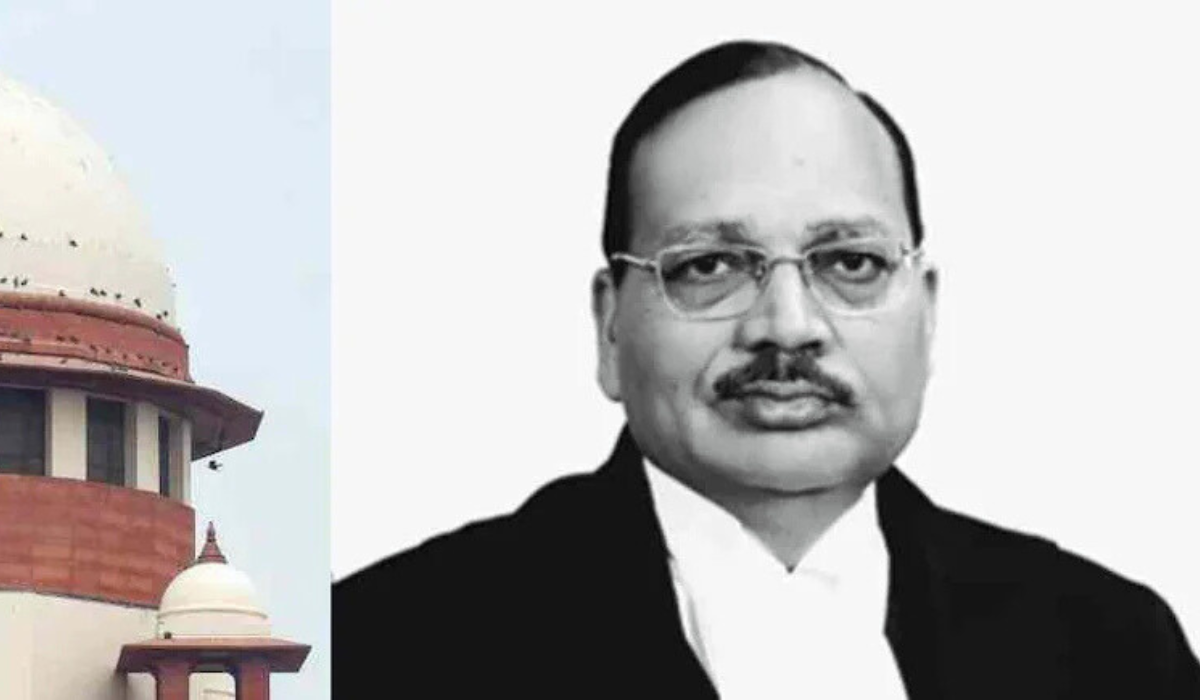
New Delhi: Justice Surya Kant was sworn in on Monday as the 53rd Chief Justice of India (CJI). President Droupadi Murmu administered the oath at Rashtrapati Bhavan in a ceremony that marked a significant moment in India’s judicial history. Justice Surya Kant succeeds Justice B.R. Gavai, whose tenure ended on 23 November. The new CJI will serve until 9 February 2027.
This year’s oath ceremony was historic, as for the first time, a large international judicial delegation attended the swearing-in of an Indian Chief Justice. Top judges from seven nations, including Brazil, Bhutan, Kenya, Malaysia, Mauritius, Nepal and Sri Lanka, were present.
International Judges Who Attended the Ceremony
The following dignitaries were present at Rashtrapati Bhavan:
- Bhutan – Chief Justice Lyonpo Norbu Tshering
- Brazil – Chief Justice Edson Fachin
- Kenya – Chief Justice Martha Koome and Supreme Court Judge Susan Njoki
- Malaysia – Federal Court Judge Justice Tan Sri Datuk Nalini Pathmanathan
- Mauritius – Chief Justice Bibi Rehana Mungly-Gulbul
- Nepal – Chief Justice Prakash Man Singh Raut, Supreme Court Judge Sapana Pradhan Malla, and former judge Anil Kumar Sinha
- Sri Lanka – Chief Justice P. Padman Surasena, Supreme Court Judges Justice S. Thurairaja PC and Justice A.H.M.D. Nawaz
This is considered one of the most prestigious gatherings ever witnessed at a CJI oath ceremony in India.
Justice Surya Kant: Early Life and Education
Justice Surya Kant was born on 10 February 1962 in Petwar village of Hisar district in Haryana. Raised in a humble, rural environment, he completed his schooling in the village, where even basic facilities like benches were not available.
He saw a town for the first time when he travelled to Hansi to take his Class 10 board examination.
His educational background includes:
- 1981: Graduation from Government PG College, Hisar
- 1984: Law degree from Maharshi Dayanand University, Rohtak
The same year, he began his legal career at the Hisar district court, and in 1985 moved to Chandigarh to practice at the Punjab and Haryana High Court.
Rise in the Legal Profession
- 2000: Appointed as Advocate General of Haryana, becoming the youngest person to hold the position
- 2001: Designated Senior Advocate
- 2004: Appointed permanent judge of the Punjab and Haryana High Court
- 2018: Sworn in as Chief Justice of the Himachal Pradesh High Court
- 2019: Elevated to the Supreme Court of India
Over the years, colleagues have described him as a thoughtful, balanced, and deeply knowledgeable jurist.
Key Judicial Contributions
During his tenure at the Punjab and Haryana High Court, Justice Surya Kant delivered several landmark judgments, including:
- Granting prisoners the right to conjugal visits and access to artificial insemination for having children
- Being part of the full bench that ordered a comprehensive cleanup and investigation into Dera Sacha Sauda after the 2017 violence following the arrest of its head
Significant Supreme Court Judgments
As a Supreme Court judge, he authored nearly 80 judgments, including:
- Setting aside the 1967 ruling related to Aligarh Muslim University (AMU), reopening the debate on its minority status
- Granting bail to Delhi Chief Minister Arvind Kejriwal in the excise policy case
- Hearing petitions challenging Section 6A of the Citizenship Act
- Being part of the bench in the Pegasus spyware case, which ordered the formation of an independent technical committee to investigate alleged unlawful surveillance
His work consistently reflects a focus on constitutional rights, environmental protection, democratic values, gender equality, and issues affecting marginalized communities.
Also Read: How Air Pollution Impacts Our Health
Tenure as the 53rd Chief Justice of India
Justice Surya Kant will serve as CJI for approximately 14 months, until February 2027. As the head of the judiciary, he is expected to lead important reforms and continue strengthening public trust in the justice system.
Conclusion
Justice Surya Kant’s appointment as the 53rd Chief Justice of India marks the beginning of a significant chapter for the country’s judiciary. The presence of top judges from multiple nations underscores the global recognition of India’s judicial leadership. With decades of experience, sensitivity toward public issues, and a reputation for strong constitutional reasoning, Justice Surya Kant is expected to play a transformative role during his tenure.