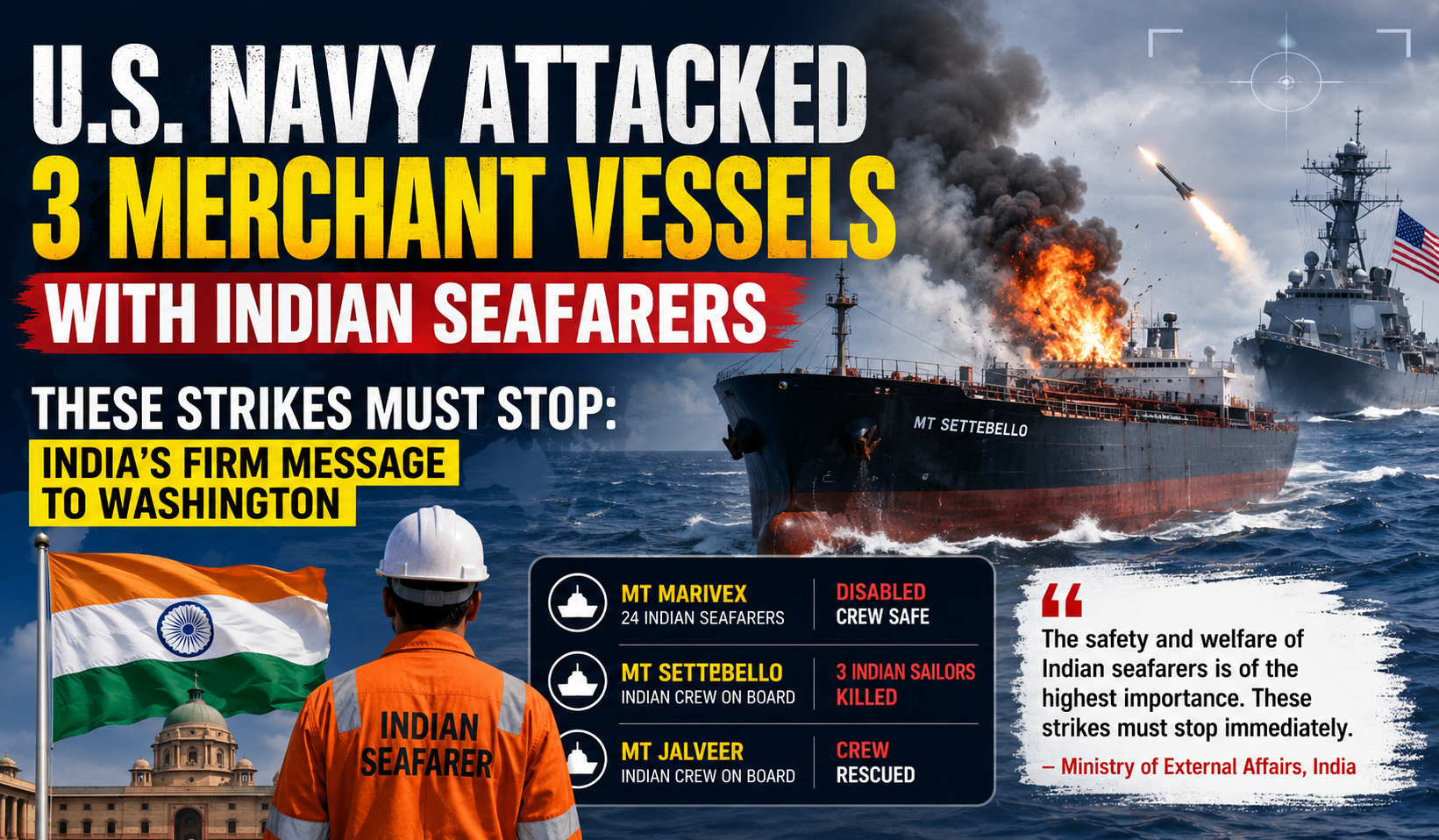
India has issued a strong diplomatic protest to the United States after three merchant vessels carrying Indian seafarers were reportedly attacked by U.S. forces in the Gulf region within a span of just four days. The incidents, which occurred near the coast of Oman amid escalating tensions in the Middle East, have triggered concerns about the safety of Indian sailors working on international shipping routes.
The matter gained further urgency after reports confirmed that three Indian seafarers lost their lives in one of the attacks, prompting New Delhi to demand an immediate halt to such military actions involving vessels carrying Indian nationals.
Three Merchant Vessels Reportedly Targeted
According to official statements and media reports, three merchant tankers carrying Indian crew members came under attack during ongoing U.S. maritime operations in the region.
The vessels identified include MT Marivex, MT Settebello, and MT Jalveer. While the exact circumstances surrounding each incident remain under investigation, all three ships were reportedly operating in waters near Oman when they were intercepted or attacked.
The most serious incident involved MT Settebello, where a U.S. strike reportedly resulted in the deaths of three Indian crew members. Several other sailors aboard the vessel were rescued following emergency response operations.
The attacks have intensified concerns over the growing risks faced by civilian merchant ships navigating through one of the world’s most strategically important maritime corridors.
India’s Strong Message to Washington
India’s Ministry of External Affairs (MEA) responded firmly to the incidents, emphasizing that the safety and welfare of Indian seafarers remain a top priority.
MEA spokesperson Randhir Jaiswal stated that India has formally taken up the issue with U.S. authorities and conveyed its serious concerns regarding the repeated attacks on vessels carrying Indian nationals.
The ministry stressed that merchant sailors are civilian workers and should not become casualties of geopolitical conflicts or military operations. India has urged Washington to ensure that adequate precautions are taken to avoid harm to civilian crews operating in international waters.
Officials also highlighted that such incidents could undermine maritime safety and threaten global shipping operations.
Why Were the Ships Targeted?
According to U.S. military sources, the vessels were allegedly linked to activities involving Iranian oil transportation and were operating in areas subject to increased surveillance and enforcement measures.
The United States has maintained a heightened naval presence in the Gulf region amid ongoing tensions involving Iran and its regional allies. U.S. authorities claim that warnings were issued before action was taken against the vessels.
However, questions remain regarding the circumstances of the attacks, particularly given the presence of civilian crew members on board. Maritime experts have called for transparent investigations to determine whether all necessary procedures were followed before military action was initiated.
Several shipping industry representatives have also urged governments to strengthen protections for commercial vessels operating in conflict-prone regions.
Growing Risks for Indian Seafarers
India is one of the world’s largest providers of maritime manpower. Hundreds of thousands of Indian seafarers work aboard cargo ships, oil tankers, container vessels, and other merchant fleets operating across international waters.
Many Indian sailors are employed on foreign-flagged vessels and often work in regions affected by geopolitical tensions. As conflicts continue to impact key shipping routes, concerns are rising over the safety of civilian crews caught in the middle of military operations.
Industry observers warn that escalating tensions in the Gulf could expose merchant sailors to increased risks, including attacks, detentions, and disruptions to navigation.
Diplomatic and Strategic Implications
The incident comes at a sensitive time for India-U.S. relations. Both countries share strong strategic, economic, and defense ties, with cooperation expanding across multiple sectors in recent years.
Despite the close partnership, India’s response reflects its commitment to protecting its citizens abroad and ensuring accountability when Indian nationals are harmed.
Analysts believe New Delhi will continue engaging with Washington through diplomatic channels while seeking assurances regarding the safety of Indian crew members operating in international waters.
The issue may also feature prominently in future discussions concerning maritime security, freedom of navigation, and the protection of civilian shipping in conflict zones.
Calls for Investigation and Accountability
Maritime organizations and shipping industry stakeholders have called for a thorough investigation into the attacks. Questions surrounding targeting procedures, communication protocols, and the protection of civilian seafarers are likely to remain central to ongoing inquiries.
Families of the affected sailors are seeking clarity regarding the circumstances that led to the fatalities and whether the tragedy could have been prevented.
Indian authorities are reportedly coordinating with shipping companies, foreign governments, and international agencies to gather detailed information about the incidents.
Conclusion
The attacks on three merchant vessels carrying Indian seafarers have placed maritime security and civilian safety at the center of international attention. With three Indian sailors confirmed dead and concerns mounting over the safety of commercial shipping routes, India has sent a clear message that such incidents cannot continue unchecked.
As investigations proceed and diplomatic discussions intensify, the focus remains on ensuring accountability, preventing further loss of life, and protecting the thousands of Indian seafarers who play a crucial role in global maritime trade.